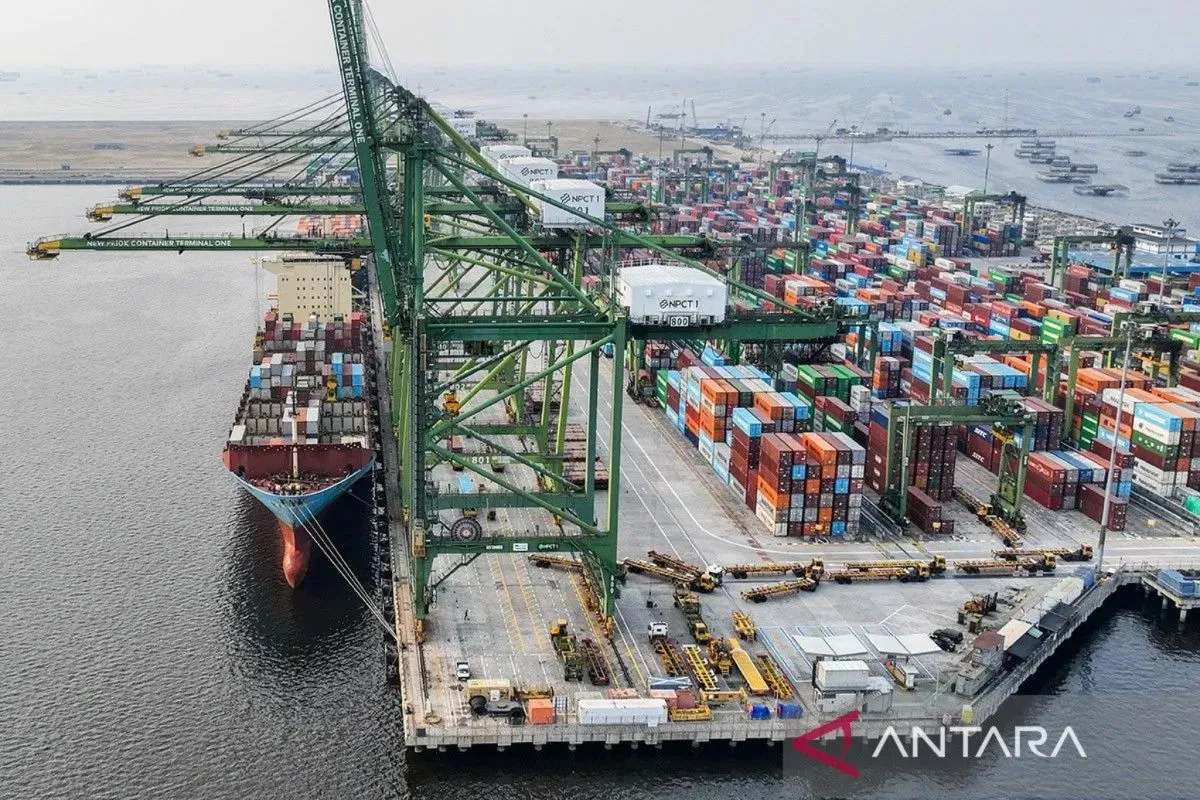
That was the broader proposition behind Indonesian President Prabowo Subianto’s participation as the guest of honor at the 11th Eastern Economic Forum in Vladivostok, Russia, on Thursday (Sept. 3).
Prabowo positioned Indonesia as a gateway for the EAEU to the ASEAN market of about 680 million people. Indonesia itself has more than 290 million consumers and is a central player in the Regional Comprehensive Economic Partnership.
But the opportunity is bigger than moving more Eurasian goods through Indonesia.
Indonesia needs to turn market access into investment, production, and stronger supply chains. That is what could transform its geographic position into lasting economic value.
The Indonesia-EAEU Free Trade Agreement provides an important foundation. Signed in December 2025, it covers 11,882 tariff lines, or 90 percent of traded goods. Indonesia has secured parliamentary approval and ratified the agreement through a presidential regulation signed in July 2026. Prabowo is urging EAEU members to complete their own ratification procedures.
Implementation is scheduled to begin in 2027.
That gives Indonesia time to prepare the commercial infrastructure behind the tariff reductions. An FTA can lower trade barriers, but it cannot by itself create buyers, cargo flows, factories, or competitive supply chains.
Opening the route
The first test is whether trade actually moves.
Indonesia-Russia trade reached about US$5 billion in 2025, up 21.7 percent from the previous year. Prabowo has proposed doubling that figure during the FTA’s initial review period.
Indonesia has products with potential in Eurasian markets, including palm oil, coffee, fisheries, rubber, textiles, and consumer goods. Russia, meanwhile, offers complementary strengths in wheat, fertilizer, energy, science, and engineering technology.
Yet market complementarity does not guarantee commercial success.
For businesses, the calculation is practical: How much does it cost to move a product? How predictable are delivery schedules? Can cargo be insured and payments settled reliably? Can exporters meet regulatory and technical requirements?
Those factors will determine whether tariff preferences translate into actual trade.
Prabowo has called for direct shipping between Indonesia and Russia with competitive costs, predictable schedules, transparent charges, reliable insurance, and consistent two-way cargo flows. He has also proposed direct air links.
Two-way flows matter. A sustainable economic corridor cannot depend on Indonesian exports alone. It also needs opportunities for Russian goods, technology, and industrial inputs to enter Indonesia and, where commercially viable, the wider ASEAN market.
Indonesian business delegations at the EEF have begun preparing pilot shipments, identifying buyers, and working through logistics, compliance, and payment arrangements. Prabowo has urged businesses to have goods, routes, and contracts ready when tariff reductions take effect.
That moves the FTA from a diplomatic achievement toward a commercial test.
But trade should be the beginning, not the end, of the strategy.
Building value
The bigger opportunity is to make trade generate investment and production.
Prabowo has invited Russian companies to invest in and develop 138 newly opened energy exploration blocks in Indonesia. Indonesia and Russia are also exploring cooperation in refineries and storage terminals.
Investment discussions have extended to fertilizer, mineral resources, and shipping. Pupuk Indonesia has signed a joint study to assess its potential investment in a urea fertilizer plant in Vladivostok.
These initiatives show where the relationship could go next: from exchanging goods to connecting production.
Trade connects markets. Investment connects production.
For Indonesia, the prize is not simply higher trade volumes. It is attracting capital, technology, and industrial activity that strengthen domestic capabilities while using Indonesia’s position in ASEAN to reach regional markets.
Russian companies producing in Indonesia could serve the domestic market while potentially using the country’s regional trade links to reach Southeast Asia. Indonesian businesses, meanwhile, could gain access to Russian technology, resources, and engineering capabilities.
That would allow Indonesia to capture more value from the relationship rather than simply facilitate the movement of goods.
Financing will be critical. Prabowo has urged Danantara and the Russian Direct Investment Fund to move beyond identifying opportunities toward financing bankable projects. He has also called for clear and measurable targets, milestones, financing schemes, and implementation stages for cooperation agreements.
This is where the strategy will be tested.
The FTA must enter into force. Shipping and air connections must become commercially viable. Indonesian companies must be able to meet Eurasian market requirements. Investment proposals must move from studies and commitments to financed and operating projects.
The Vladivostok forum can open doors, but agreements alone will not build an economic corridor.
Indonesia already has the market, ASEAN position, geographic advantage, and preferential trade framework. Its task now is to make those assets reinforce one another.
If trade creates demand, investment expands production, and connectivity lowers the cost of reaching markets, Indonesia can move beyond being a route between economies to becoming a platform that helps connect them.
That is the real opportunity.
And the measure of success will not be the number of agreements signed, but whether they produce factories, cargo, investment, and jobs in Indonesia.
*Martha Herlinawati Simanjuntak is a journalist at the ANTARA News Agency
Disclaimer: The views and opinions expressed here are those of the author and do not necessarily reflect the official policy or position of the ANTARA News Agency.
Copyright © ANTARA 2026


