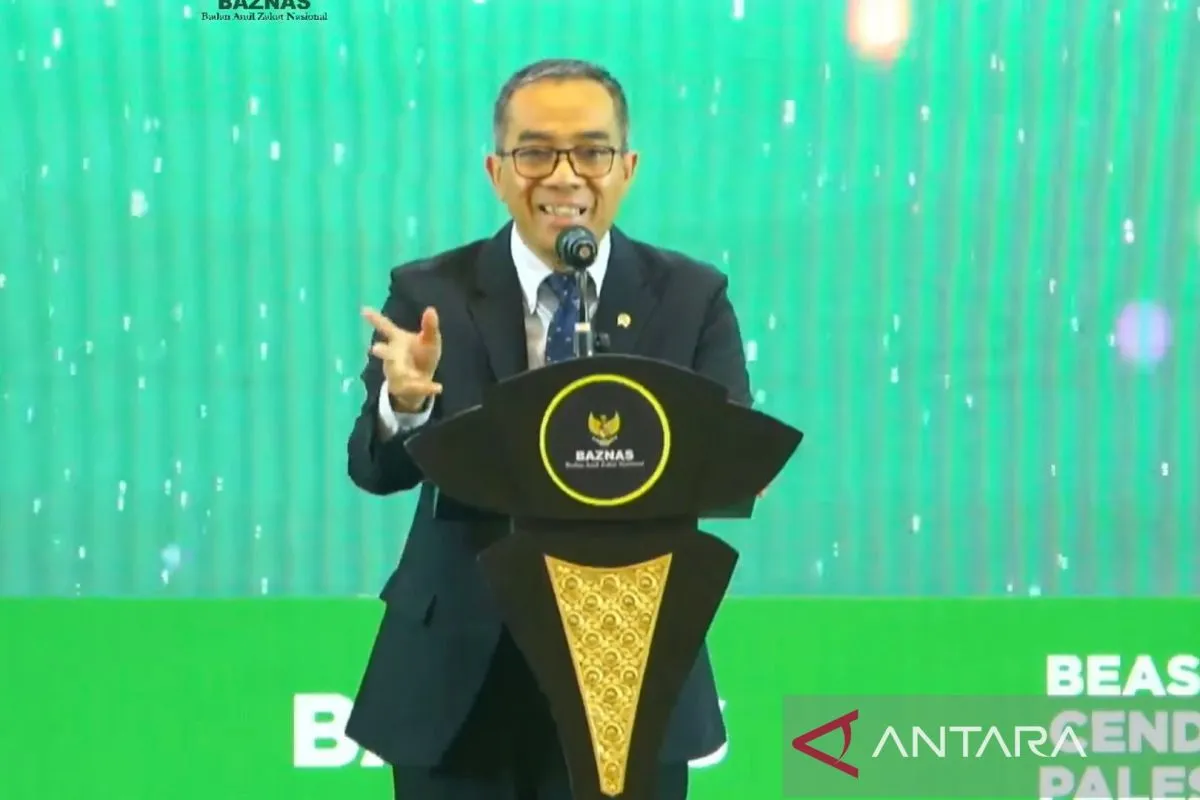
"We have also asked all state universities; we will at least instruct them to establish UPZ, later together with the Association of Indonesian Campus Mosques (AMKI)," Yuliarto said at the launch of the Cendekia Palestine Scholarship in Jakarta on Wednesday.
According to Yuliarto, establishing UPZs could provide an alternative funding source for students in need of financial assistance.
He expressed hope that universities with well-established UPZ management systems would share their knowledge and provide guidance to other universities that are still in the early stages of establishing such philanthropic units.
Additionally, National Board of Zakat (BAZNAS) Leader for Distribution, Utilization, and Empowerment Idy Muzayyad said the potential for managing zakat funds within the higher education ecosystem was substantial.
According to BAZNAS projections, the higher education ecosystem has significant potential for zakat collection, estimated at Rp220 billion annually.
In the education sector, BAZNAS had distributed Rp 1.56 trillion in zakat, infaq, and sadaqah funds nationwide through 2025, benefiting 2,870,976 people.
Muzayyad, therefore, encouraged universities across the country to establish UPZ so that the projected zakat collection could be realized and more students facing financial difficulties could receive assistance.
He said the UPZ establishment became a requirement for universities seeking to partner with BAZNAS in distributing funds for scholarships.
"We require every university seeking access to scholarships funded by zakat to establish a UPZ. The UPZ collects zakat, which is then primarily used for activities benefiting the university's academic community, most commonly for scholarships and payment of the Single Tuition Fee (UKT)," Muzayyad said, adding that BAZNAS continually encourages universities to establish active UPZs.
Related news: Indonesia's Baznas teaches disaster prep in 310 schools
Related news: Baznas, UNFPA plan reproductive health education for pesantren
Related news: Indonesia's Baznas focuses extreme poverty programs on 88 regions
Translator: Bayu Prasetyo
Editor: Azis Kurmala
Copyright © ANTARA 2026


