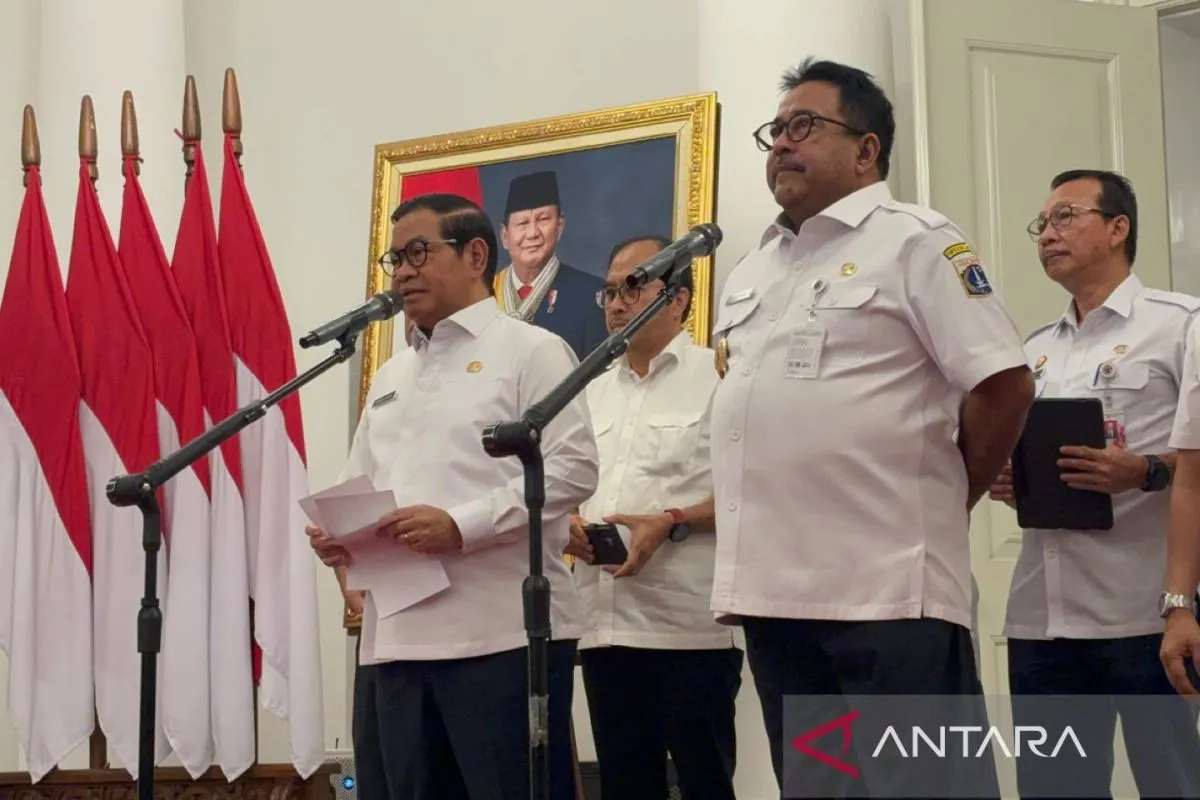
“After a series of meetings at the Wage Council involving workers, employers and the Jakarta provincial government, the 2026 provincial minimum wage has been set at Rp5,729,876,” Pramono said at City Hall.
The new rate marks an increase from the current Jakarta minimum wage of Rp5,396,761, representing a 6.17 percent rise or Rp333,115, equivalent to about $19, to take effect next year.
Pramono said the decision was based on Government Regulation No. 49 of 2025, which provides the legal framework and calculation formula for setting minimum wages nationwide.
Under the regulation, he explained, the adjustment uses an “alpha” value ranging from 0.5 to 0.9 to reflect workers’ contribution to economic growth at the regional level.
“In the Wage Council discussions, we agreed to use an alpha of 0.75. This ensures the minimum wage increase remains above Jakarta’s inflation rate and protects workers’ purchasing power,” the governor said.
Pramono urged all companies operating in Jakarta to comply fully with the new minimum wage, stressing that the policy applies across all sectors without exception.
“In Jakarta, every company must implement this wage. If there are violations, the provincial government will take firm action in accordance with the law,” he said.
He also expressed hope that the wage decision would be accepted peacefully, adding that dialogue should prevail over industrial action following the announcement.
Earlier, President Prabowo Subianto signed a government regulation on wages that sets the formula for increases in provincial, district and sectoral minimum wages across Indonesia.
Manpower Minister Yassierli said the president had considered input from multiple stakeholders, including labor unions and business groups, before finalizing the formula.
“The wage increase formula is inflation plus economic growth multiplied by alpha, with alpha set between 0.5 and 0.9,” Yassierli said.
Alpha, he explained, is an index designed to measure workers’ contribution to regional economic growth and ensure wage adjustments remain fair, transparent and economically sustainable.
Translator: Lifia Mawaddah, Resinta Sulistiyandari
Editor: Rahmad Nasution
Copyright © ANTARA 2025


