Ever imagine how hard it is—if not impossible—to convince your competitors to buy your products and resell them to their loyal customers? Now imagine making that agreement public.
Hard to picture? Just consider the recent episode involving Indonesia’s oil and gas giant Pertamina and private gas station operators.
In late September, PT Vivo Energy Indonesia signed a deal with Pertamina Patra Niaga, a subsidiary of Pertamina, to purchase 100,000 barrels of base fuel imported by the state-owned company.
The deal aimed to ease ongoing fuel shortages at private gas stations—a problem the Ministry of Energy and Mineral Resources (ESDM) has sought to address by encouraging private retailers to collaborate with Pertamina.
However, during a hearing with Commission VII of the House of Representatives (DPR) in early October, it was revealed that Vivo had withdrawn from the deal, citing the 3.5% ethanol content in the imported fuel.
The collapse of this high-profile fuel deal quickly made headlines and sparked widespread debate on social media. Much of the public discourse focused on claims that the base fuel was "contaminated" with ethanol.
In reality, blending 3.5% ethanol into base fuel does not violate any regulations or technical standards set by the ESDM. In fact, Ministerial Regulation No. 12 of 2015 explicitly allows fuel retailers to sell gasoline containing up to 20% ethanol.
So, what really drove Vivo to back out?
Infusing ethanol
Vivo defended its decision by pointing to discrepancies between its fuel specifications and Pertamina’s.
It is understood that Vivo and other private retailers prefer pure base fuel—free from additives like ethanol. While they were open to Pertamina’s support, the private players were adamant about maintaining their own blending processes.
Hadi Ismoyo, Secretary-General of the Indonesian Petroleum Engineers Association (IATMI), explained that base fuel specifications are critical in gasoline production.
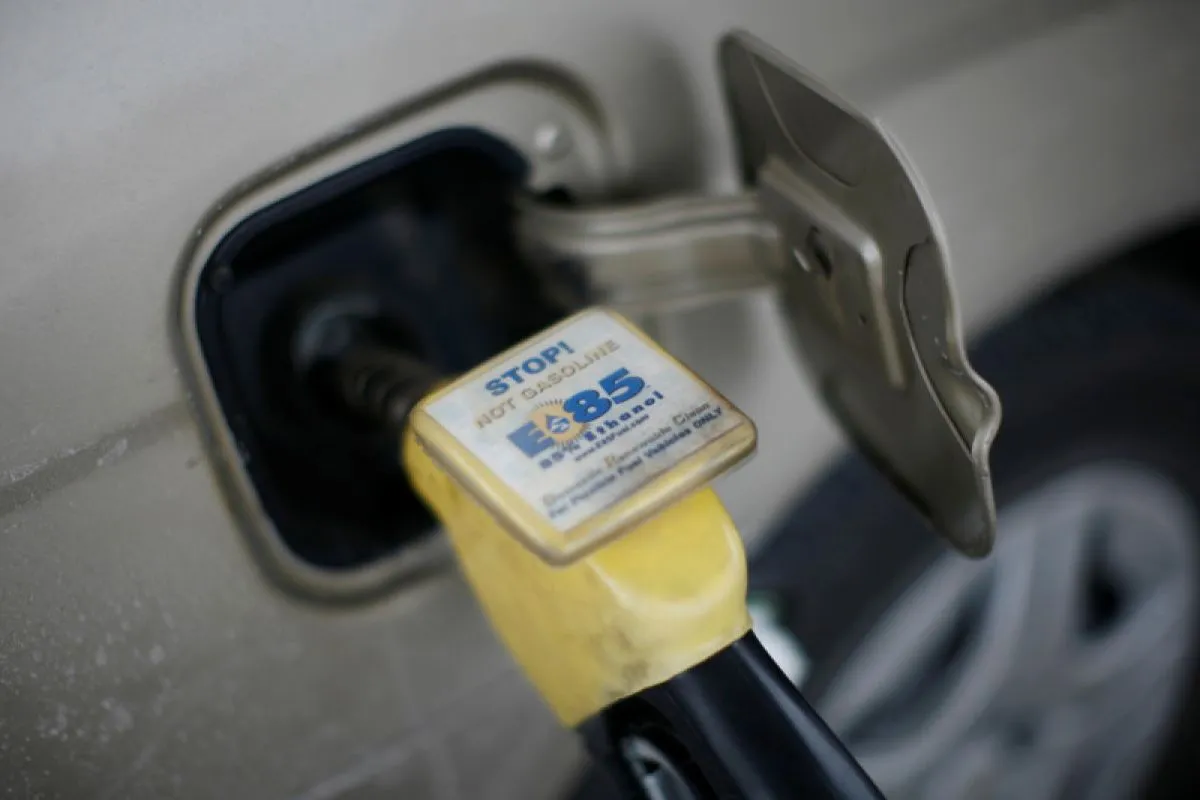
Ethanol is often added to boost a fuel’s octane rating. However, when ethanol is present in base fuel, it can interfere with the chemical processes used by private retailers, affecting their blending formulas and end-product quality.
Given that, it’s easy to understand why the Pertamina–Vivo agreement collapsed. Even a small amount of ethanol—as little as 1%, let alone 3.5%—can change a fuel’s properties.
In short, Vivo and others want base fuel with little to no additives, especially ethanol.
This, however, conflicts with Pertamina’s goal to produce higher-octane fuels like Pertamax, Pertamax Turbo, and Pertamax Green—all of which require ethanol-blended base fuel to differentiate them from subsidized Pertalite.
Ethanol and clean energy
According to the U.S. Alternative Fuels Data Center, over 98% of gasoline sold in the country contains some level of ethanol—most commonly around 10%.
This practice is supported by the U.S. Renewable Fuel Standard, which mandates fuel producers to use eco-friendly additives, with ethanol being among the most common.
Similarly, the European Union’s Renewable Energy Directive (RED) encourages member states to adopt cleaner fuel blends like E10, which contains 10% ethanol. E10 has become standard in countries such as France, Germany, and the UK.
Though RED III—effective since late 2023—does not mandate ethanol use outright, it offers two compliance pathways for EU nations to meet transport sector emissions goals by 2030: ensure 29% of transport energy comes from renewables, or cut emissions from fuels by 14.5%.
In Asia, India is pressing ahead with its own biofuel strategy, targeting E20 (20% ethanol in gasoline) by 2030. This not only supports emission reductions but also benefits the country’s sugarcane farmers.
Observing this global shift, Indonesia is beginning to follow suit.
Bioethanol for energy security
Indonesia’s ESDM Ministry plans to launch bioethanol production in 2027 in Merauke, South Papua. This biofuel, derived from plant-based sugars through fermentation, is part of Indonesia’s broader strategy to improve energy security while supporting global clean energy goals.
The bioethanol program stems from the government’s flagship food estate initiative, which aims to develop 500,000 hectares of sugarcane plantations. The project draws inspiration from Brazil’s success in turning sugarcane into renewable energy.
To enhance the competitiveness of bioethanol, the ESDM Ministry continues to push for streamlined licensing for excise exemptions on fuel-grade ethanol. Currently, one of the main barriers is the high excise duty of Rp20,000 (US$1.20) per liter, applied to both domestic and imported ethanol.
Accelerating excise exemptions is crucial to lowering the price of bioethanol and making it competitive with fossil fuels.
Indonesia’s clean energy ambitions were reinforced by President Prabowo Subianto during the 80th United Nations General Assembly.
In a speech that drew international attention, he announced that Indonesia is firmly moving away from fossil-fuel-based development toward a renewable energy-focused future.
All things considered, ethanol in fuel is not merely a technical detail—it’s a symbol of Indonesia’s commitment to cleaner energy and a global transition toward more sustainable transport.
That alone should be reason enough for the government to rally more stakeholders—including private fuel retailers—to align their practices with the green agenda.
At the same time, it remains essential to balance energy security and environmental goals with the practical needs of businesses that operate within this evolving landscape.
Related news: President Prabowo approves E10 fuel policy to cut imports, emissions
Related news: Indonesia begins B50 biodiesel road test ahead of 2026 launch
Editor: Rahmad Nasution
Copyright © ANTARA 2025


