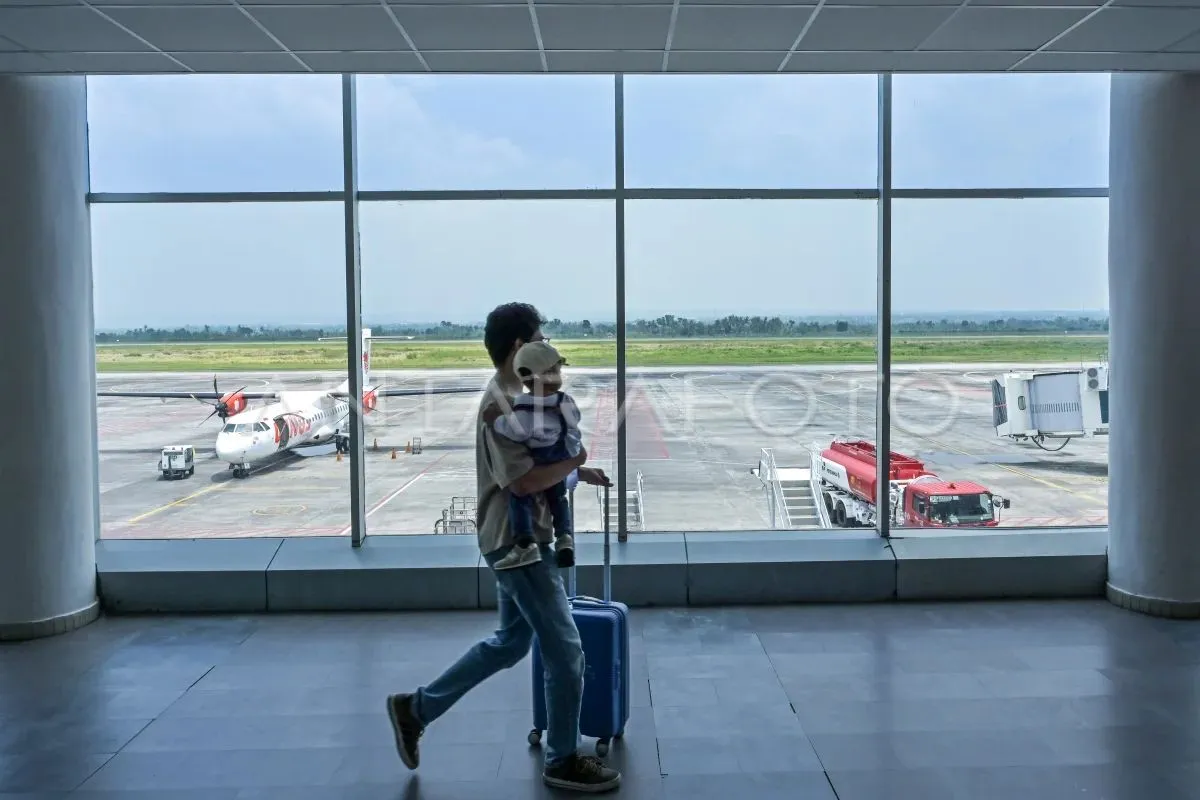
These include the Lombok-Labuan Bajo, Lombok-Waingapu, and Lombok-Tambolaka routes, on top of the possible direct flights to Perth, Jeddah, and Turkey that are currently being explored.
Behind the busier activities at Zainuddin Abdul Madjid International Airport, or Lombok International Airport, lies great optimism that NTB is establishing itself as a new connectivity hub in Eastern Indonesia.
The launch of new routes is not merely about planes arriving and departing; it is a signal that NTB is expanding its economic reach.
Tourism, trade, and logistics services all depend on one thing: ease of access. Without efficient connectivity, the beauty of Mandalika beach, the Sembalun woven fabric, or the panorama of Mount Tambora will remain isolated from the outside world.
The NTB Provincial Government understands the significance of connectivity. Thus, under the leadership of Governor Lalu Muhammad Iqbal, the strategy of strengthening air routes has become a priority.
Efforts are underway to develop Lombok into an air transportation hub for the central and eastern regions of Indonesia, transforming it from a mere tourist gateway into a hub for the movement of people and goods.
Connectivity
For years, air connectivity has been one of the challenges for NTB to grow its tourism. Foreign tourists generally have to transit in Bali or Jakarta before flying to Lombok.
This situation increases both cost and travel time, making NTB struggle to compete with other super-priority destinations like East Nusa Tenggara's Labuan Bajo or Yogyakarta.
Now, things are starting to move in a different direction. Lombok Airport is no longer merely a complement to Bali tourism; it is starting to emerge as a standalone destination.
The opening of domestic routes such as Lombok-Kupang, Lombok-Yogyakarta, and Lombok-Labuan Bajo is strengthening the previously fragmented Eastern Indonesian corridor.
From an international perspective, the exploration of routes to Perth, Jeddah, and Turkey reflects a broader strategy. Perth holds significant potential because Australian tourists occupy an important position in Lombok's tourism market.
Direct flights to Jeddah will also make it easier for Umrah pilgrims from NTB, who so far had to depart from embarkation points in other regions.
Flight activity in NTB is now showing tangible signs of revival. The number of passengers at the airport continues to climb from month to month, signaling that the mobility of tourists and business players is starting to recover.
Every new route that opens has a ripple effect on the local economy, leading to hotels recording higher occupancy, restaurants bustling with visitors, and the resurgence of micro, small, and medium enterprises (MSMEs), following the rise of tourism.
Challenges
However, clear skies also hide dark clouds. The opening of new routes is not without risk. Supporting infrastructure on the ground, ranging from passenger terminals and roads to the airport, as well as intercity transportation, still needs to be improved.
Some tourists still complain about the limited transportation options available from Lombok International Airport to key tourist areas like Mandalika, Senggigi, or Sembalun. The availability of airport buses and taxis is not yet fully adequate.
Moreover, sea and land connectivity are not yet well-integrated, meaning inter-island travel, such as Lombok-Sumbawa or Lombok-Flores, still takes a long time.
Another challenge is the economic sustainability of the routes themselves. Not every new flight route can last long; there are many cases in other regions where flight routes are closed after a few months due to low load factors or high operational costs.
Therefore, route sustainability must be considered from early on, requiring a mature business approach and support from a strong tourism ecosystem.
Furthermore, promotional strategies need to be enhanced. The opening of international routes does not automatically bring in foreign tourists. Thus, targeted tourism campaigns are necessary in potential markets such as Australia, the Middle East, and Southeast Asia.
NTB tourism needs to highlight local uniqueness by promoting halal tourism, captivating natural beauty, and authentic culture, showcasing the province's strong and distinct identity amid the fierce competition.
Sustainability
Air connectivity is beyond transportation matters; it is also part of regional development. Regional governments must regard it as part of an integrated system along with land and sea.
The opening of new routes must be accompanied by the strengthening of the supporting infrastructure, tourism human resources quality improvement, and investment-friendly policies.
The Lombok International Airport, for instance, can be directed to become a regional logistics hub for fisheries, agriculture, and local craft products, creating a new source of economy.
For the eastern regions of NTB, such as Bima and Dompu, the Sultan Muhammad Salahuddin Airport, which is currently experiencing an increase in daily passengers, also needs to be developed to accommodate larger aircraft.
The regional government and airlines can forge mutually beneficial cooperation. Fiscal incentive models for new routes, such as reductions in airport service fees during the initial phase, can help airlines survive at least until the flight route service reaches its break-even point.
Furthermore, joint tourism promotion by the government, business players, and local communities is also essential to strengthen the tourist destinations' appeal.
What is also important is preparing data and evidence-based planning. Every route opening should ideally begin with adequate market research.
Beyond increased flights, the opening of new flight routes in NTB is a manifestation of achieving a big dream to make the province more connected with the world.
Connectivity is the foundation of progress. It links people, opens business opportunities, and expands tourism reach for many areas that were previously isolated.
However, strong connectivity requires readiness on land. Roads, ports, public transportation, and tourism services must also grow in line with the increase in flights.
The regional government has a great responsibility to ensure that every arriving passenger enjoys their stay and returns in the future.
NTB has opened its skies. Now, it is time to ensure that from those skies, prosperity descends to the ground.
Related news: Ministry tightens supervision on illegal mining in Mandalika Area
Related news: NTB plays key role in global bird migration route: animal ecologist
Translator: Abdul Hakim, Raka Adji
Editor: Azis Kurmala
Copyright © ANTARA 2025


