“Making people’s minds like Habibie’s, but why is Mr. Oemar Bakrie’s salary as if it has been cut,” the lyrics suggest that teachers’ hard work in shaping the nation’s future is often undervalued.
Teacher welfare is not a new issue. Education ministers have come and gone, leaders have pledged to improve teachers’ wellbeing, and National Teachers’ Day is celebrated every November 25. Yet wage disparities and competency challenges remain persistent topics.
In 2025, increased transparency through social media and news reports shows that some teachers continue to receive unreasonably low wages, even below the regional minimum wage. Many of them are honorarium-based teachers.
The situation underscores an irony: teachers who nurture future innovators such as former President B.J. Habibie often receive far less welfare support than professions like influencers.
This contrast is striking because, although influencers have broad reach and significant impact, not all contribute positively to society, particularly to young students who represent Indonesia’s future.
Assistance programs
The government has introduced various assistance programs aimed at addressing these challenges, targeting civil servant teachers, teachers in frontier, outermost, and underdeveloped regions, and non-civil servant teachers.
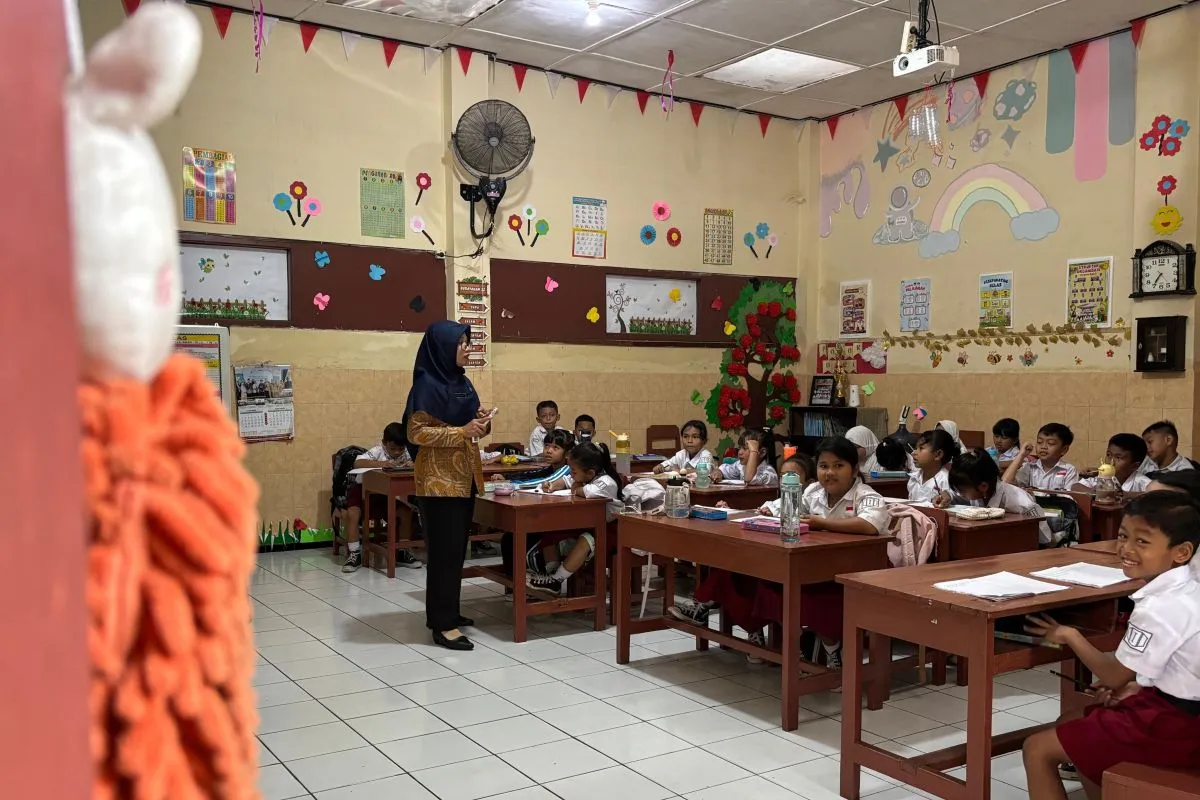
Tri Angga Wahyu Natalia is one of the teachers benefiting from such support. A teacher at SDN Banyuagung 2 in Surakarta, Central Java, she receives an additional Rp250,000 per month.
As a Government Employee with Work Agreements (PPPK), Natalia expressed gratitude, saying the assistance helps cover daily needs and teaching materials.
Although printed materials and media are provided by the school, teachers often supplement them with their own initiatives, including additional tools to enhance learning or small rewards for students.
This is particularly useful for her first-grade students. Diverse teaching materials support learning, especially in mathematics, where visual tools help children transitioning from kindergarten understand basic concepts.
The Ministry of Primary and Secondary Education is also promoting the National Numeracy Movement to strengthen children’s numeracy skills.
Similar benefits are felt by Ardi Pratama, a physical education teacher at the same school. He uses part of the additional income to buy teaching aids for his students.
With limited space in the schoolyard, creativity is essential in making simple equipment, sometimes using empty milk cans as sports tools.
“Before receiving the additional income, I often had to cover the costs myself. Now it really helps with buying equipment and small rewards for the children,” he said.
He added that giving small rewards to students who complete tasks well boosts their motivation, especially as he teaches six classes.
The experiences of these two teachers show that the additional income they receive not only supports their personal needs but also contributes directly to improving students’ learning experiences.
Efforts to Improve Welfare
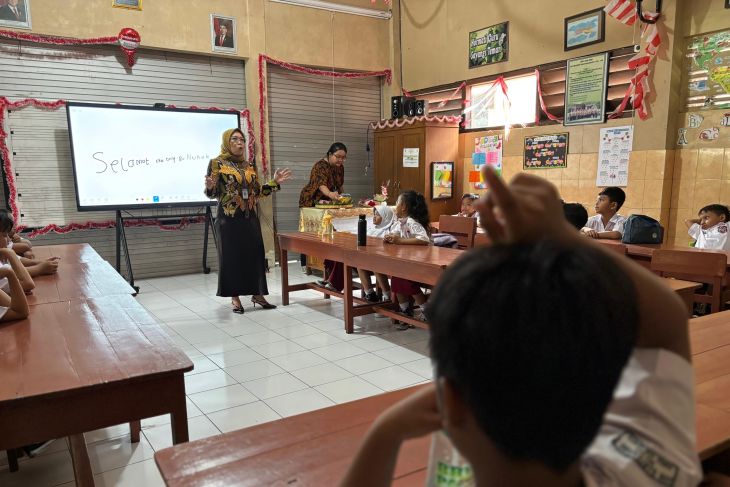
Director General of Teachers and Education Personnel Nunuk Suryani said the government continues to improve teacher welfare, including through various allowance programs.
Under a new mechanism that transfers funds directly to teachers’ bank accounts, the government expects to reduce bureaucracy and ensure more transparent disbursements from the central government.
As of November 17, 2025, Ministry data shows that the disbursement of regional civil servant teacher allowances (ASND) has reached 92.32 percent. This includes the Teacher Professional Allowance (TPG), the Special Teacher Allowance (TKG), and the Additional Income Fund (DTP).
For TPG, 1,472,687 teachers, or 99.73 percent of the target, received payments in the first semester, while 1,404,059 teachers have been paid in the second semester, totaling Rp62.961 trillion.
The disbursement rate for TKG stands at 61.97 percent, while DTP has reached 37.20 percent of total recipients. So far, Rp1.490 trillion has been disbursed for TKG and Rp274 billion for DTP.
The government allocated Rp70.064 trillion, or around US$4.2 billion, for these allowances in the 2025 fiscal year.
Beyond welfare, the government continues to strengthen teacher competency, as teacher capacity directly affects student outcomes.
According to Ministry data, the Teacher Professional Education (PPG) program has recorded significant progress, with 1.7 million teachers completing PPG over the past two years, compared with the 20 years previously needed to reach a similar figure.
The Ministry has also introduced new teaching approaches to ensure education aligns with social and technological developments.
These include deep learning, in which teachers are trained to promote higher-order thinking skills and apply knowledge to real-world issues. A total of 220,121 teachers and education staff from 67,671 schools have received deep learning training.
The Ministry also provides coding and artificial intelligence (AI) training to strengthen students’ logical and analytical abilities and to encourage the use of innovation and technology.
Teachers additionally receive training on student guidance and counseling, equipping not only counselors but all teachers to provide basic support, including bullying prevention.
These developments mark early steps in addressing long-standing challenges faced by teachers, particularly welfare and professional capacity.
No teacher should have to struggle in silence for being honest and dedicated. Well-supported and well-trained teachers will help build a stronger Indonesia.
Related news: Female teachers vulnerable to violence, discrimination
Related news: Biggest budget allocation for education, not defense: Prabowo
Editor: Primayanti
Copyright © ANTARA 2025


