While global climate funding and clean-energy innovation are vital for achieving a climate utopia, strong law enforcement and strict regulations on environmental governance are equally crucial.Jakarta (ANTARA) - “Utopia” was first introduced by Thomas More, a work of fiction published in 1516, which was later used to describe the concept of an ideal society and a perfect vision of the future.
For a while, the international community, particularly governments, has held a perfect vision of the future in which emission-reduction targets will be achieved by 2030, including Indonesia as well.
To achieve such targets, Indonesia has relentlessly advocated for global climate funding and achieved several significant milestones during 2025, while also laying the groundwork for more ambitious efforts going forward.
In May 2025, Indonesia introduced the GREEN for Riau program with support from UN-REDD and the United Kingdom to restore forest and peat ecosystems while enabling access to results-based financing. The initiative strengthens Indonesia’s standing as a major tropical forest nation.
Then, in July 2025, ahead of COP30, Indonesia emphasized its leadership among developing countries on climate finance. Officials stressed the need for stronger funding commitments and criticized the gap between developed countries’ US$100-billion pledge and actual delivery, urging faster and broader climate finance flows.
Continuing in August 2025, Indonesia received Green Climate Fund support under the REDD+ Results-Based Payment scheme to curb deforestation-related emissions. The funding strengthens forest management, expands social forestry, supports Indigenous forests, and improves local-level emissions reporting capacities.
In October 2025, Indonesia secured Rp 278 trillion (~US$17.6 billion) in green investment commitments at the ISF 2025, involving clean energy, marine, carbon, forestry, and green infrastructure partnerships. The forum emphasized a shift from discussion to concrete low-carbon action.
Also in October 2025, Indonesia reaffirmed its global leadership in REDD+, with UNDP reporting US$499.8 million in committed Results-Based Payments and US$340.7 million disbursed. Collaborative governance across government, communities, and partners supports national strategies such as the FOLU Net Sink 2030.
In the same month, Indonesia launched the Multi-Scheme Carbon Economic Value framework, integrating nature-based and technology-based carbon credit systems aligned with Article 6 of the Paris Agreement. Indonesia’s transparency report estimates climate finance needs of US$282 billion for mitigation and adaptation.
These initiatives demonstrate Indonesia’s consistent efforts to meet its 2030 emission-reduction targets, enabling the country to contribute to global climate goals.
Related news: Prabowo urges G20 to intensify climate action
Clean energy
The energy sector is a primary focus of climate finance because it contributes the largest share of emissions and plays a crucial role in expanding clean-energy use, enabling a faster and more effective transition to a low-carbon energy system.
Padjadjaran University international relations professor Teuku Rezasyah said Indonesia needs to be bold enough to declare that it has taken steps to convert straw into a fuel equivalent (Bobibos) as a source of clean energy.
The alternative fuel from agricultural waste, called Original Fuel Made in Indonesia or Bobibos, is an innovation from PT Inti Sinergi Formula, introduced to the public on November 2, 2025, in West Java, and was developed by M. Ikhlas Thamrin and his research team.
They claim that Bobibos is a high-performance fuel with a research octane number (RON) of 98 and is environmentally friendly.
According to Reza, the development of Bobibos demonstrates Indonesia's readiness for an energy revolution, even though the research is not yet complete. While still undergoing testing and not yet certified, this technology has potential and may even be more successful in other countries.
“This is a challenge for the world: let's learn from Indonesia to replace our dependence on fossil fuels. And to that end, Bobibos can be a model for best practices,” Reza said.
The Energy and Mineral Resources (ESDM) Ministry said it would study the innovation because the government did not want to rush into claims about new energy products without validating their technical, quality, safety, and commercial feasibility.
Nevertheless, Indonesia should proceed with developing Bobibos, given its potential to offer important insights for global energy transitions.
Related news: Indonesia ensures inclusive energy transition ahead of COP30
Strict enforcement
While global climate funding and clean-energy innovation are vital for achieving a climate utopia, strong law enforcement and strict regulations on environmental governance within the country are equally crucial.
Combating illegal logging, safeguarding national parks, and tightly regulating mining activities through rigorous monitoring can significantly support climate efforts.
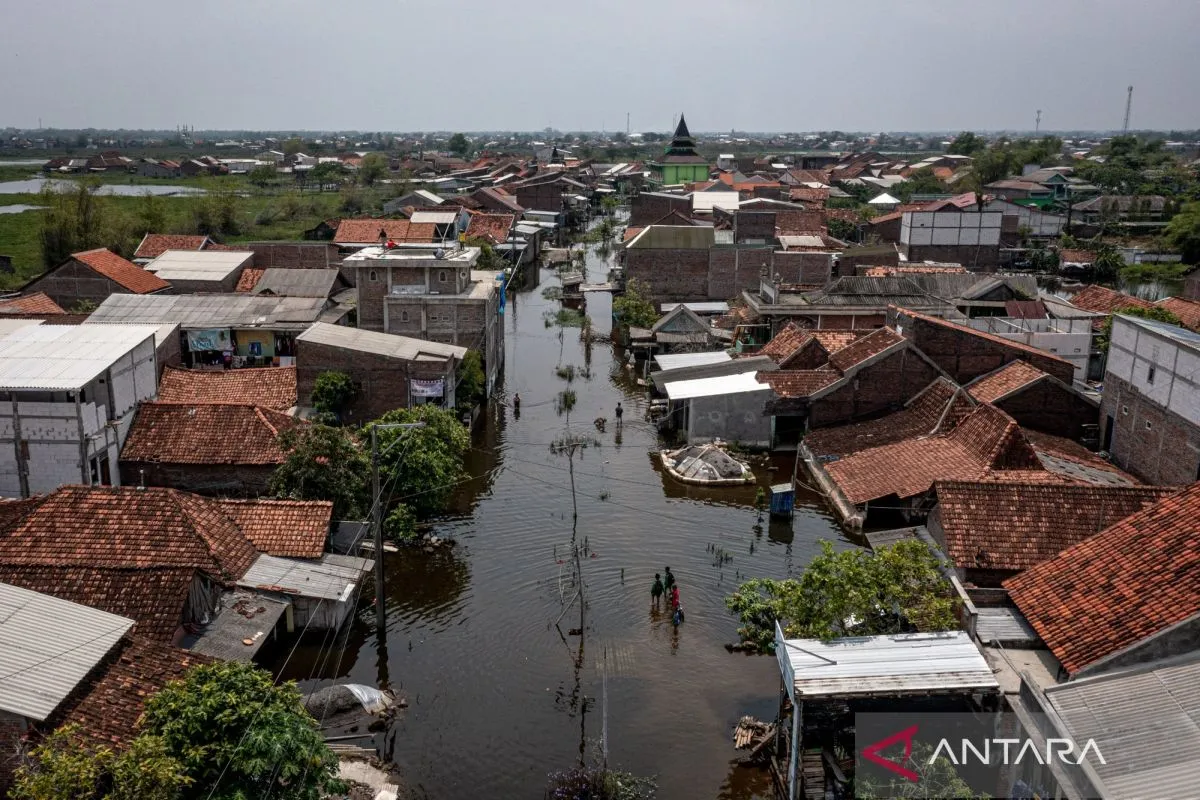
The recent floods and landslides on Sumatra Island highlight the importance of enforcing strong environmental laws and implementing strict regulations to address climate change.
Just as a tall tree withstands strong winds because of its deep roots and sturdy trunk, Indonesia’s climate diplomacy will be stronger if supported by strict law enforcement and robust environmental governance at home.
“Utopia” is often described as an ideal that is nearly impossible to achieve in reality, but having an ideal to pursue can motivate people to continue working without giving up.
The same can be applied in addressing climate change. And if Indonesia maintains its ideals and implements all regulations and law enforcement properly, achieving a climate utopia is possible.
And maybe, just maybe, Indonesia can become a leader in addressing climate change itself if it prepares itself for the long-term common good.
Related news: Indonesia launches blue carbon roadmap, action guidelines at COP30
Related news: Indonesia rallies children to protect Earth through new campaign
Editor: M Razi Rahman
Copyright © ANTARA 2025


