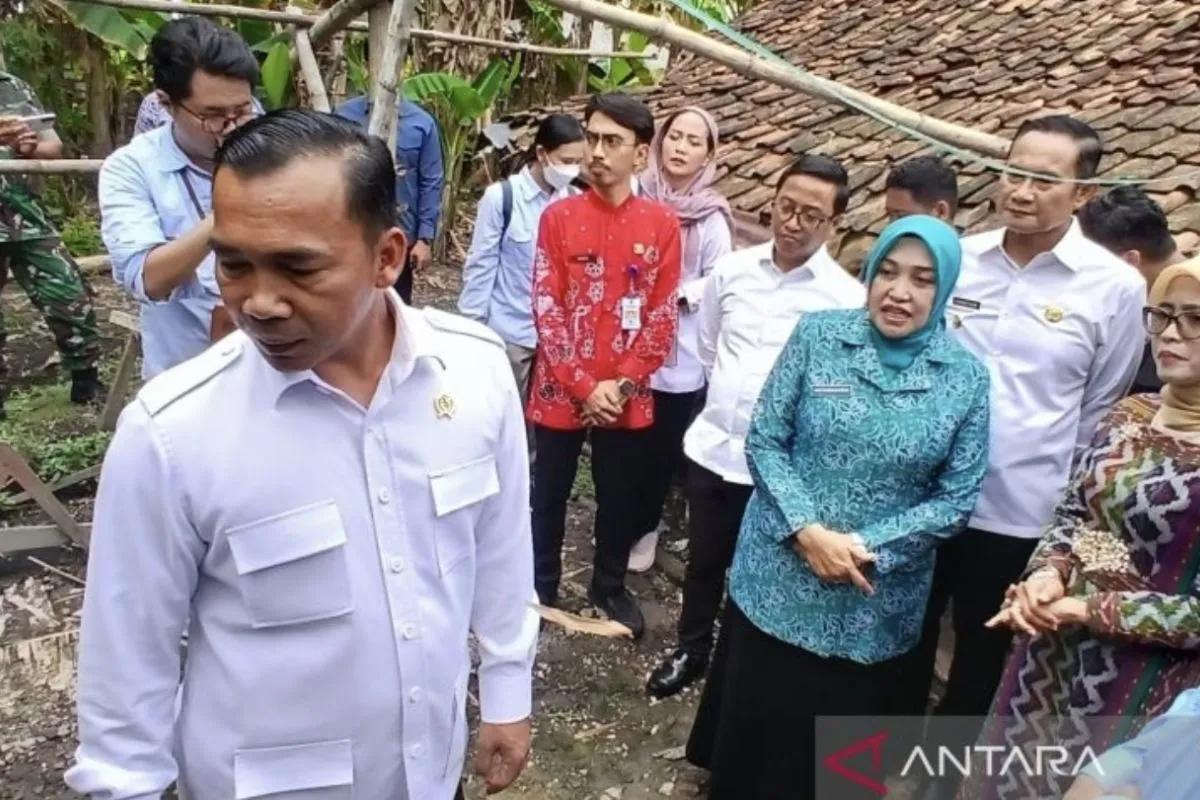
“President Prabowo’s directive is clear: fewer meetings, more fieldwork. Saving one child means saving an entire generation,” Wihaji said after inspecting stunting-risk households in Lamongan, East Java.
He said national stunting prevalence remains about 19.8 percent, requiring urgent intervention for poor families struggling with inadequate housing, sanitation, nutrition and limited income.
“Government assistance will focus on home repairs, access to clean water, and support for small businesses to ensure children have a healthy start,” he said.
Wihaji stressed that assistance for vulnerable households cannot be postponed and must involve coordinated efforts across agencies to reduce stunting risks from pregnancy onward.
Related news: National Food Agency boosts local B2SA foods to reduce stunting
Lamongan District Head Yuhronur Efendi said local stunting prevalence has dropped to roughly 6.9 percent, citing 2024 data from the local Health Office.
He said the district is expanding nutrition programmes for pregnant women, strengthening services at community health posts (posyandu), and scaling up support under the Integrated Stunting Handling Movement (Genting).
He added that the government is distributing locally sourced supplementary foods and using the LISA digital dashboard to track and identify at-risk families early.
Reducing stunting remains a flagship priority of President Prabowo Subianto’s administration, which has instructed ministries to speed up child-focused interventions nationwide.
Among the government’s key initiatives is the Free Nutritious Meals (MBG) programme, designed to improve nutrition for children under five, pregnant and breastfeeding mothers, and students through the senior-high-school level as part of a broader strategy to cut stunting and strengthen long-term human development.
Related news: Palu wins award for cutting stunting rate in Indonesia
Translator: Astrid F, Alimun K, Raka A
Editor: Rahmad Nasution
Copyright © ANTARA 2025


