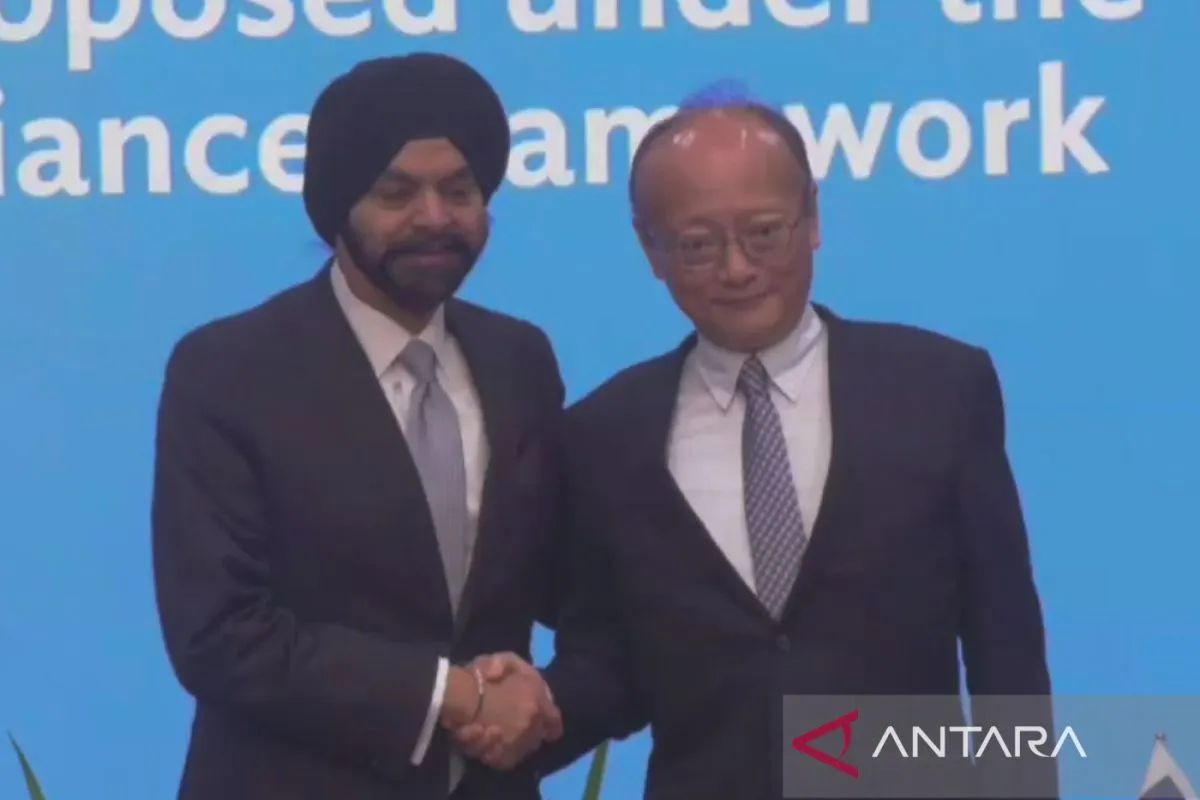
Speaking at the launch event in Manila, Philippines, on Thursday, President of ADB Masato Kanda described the FMRF as an innovative financing model that enables both organizations to operate more efficiently and effectively.
“This is a way to make development finance simpler, faster, and more effective," he remarked, as broadcast here through an online conference.
Under the new framework, beneficiary countries can receive funding from both institutions but are only required to adhere to the rules and procedures of a single lead lender.
Kanda said that the lead lender, whether the ADB or the World Bank, would oversee all aspects of the project, from design and preparation to supervision and evaluation.
According to him, the approach allows the institutions to jointly address complex challenges, ranging from strengthening disaster resilience to building better connectivity.
"This approach streamlines (financing) processes and eliminates duplication (of rules and procedures), allowing us all to concentrate on what matters most, which is the impact (of the projects for the people),” Kanda stated.
President of World Bank Group Ajay Banga echoed these sentiments, stating that the initiative is built on a shared commitment to delivering greater impact for recipient nations.
He noted that the FMRF scheme was developed in response to direct requests from beneficiary countries seeking to reduce administrative burdens.
He stated that nations with limited capacity were often overwhelmed by the differing rules, documentation requirements, and procurement procedures of the two institutions, which delayed the execution of the funded projects.
"There are these two projects now, but we have got 20 more in the pipeline across infrastructure, energy, agribusiness, healthcare, and social protection," Banga said.
The first two projects are a health sector modernization project in Fiji, with the World Bank acting as the lead lender, as well as an integrated transport and urban infrastructure project in Tonga, with the ADB serving as the lead lender.
ADB and World Bank signed the Full Mutual Reliance Framework Agreement in February 2025.
Related news: ADB approves US$180 million loan to support RI's geothermal projects
Related news: Indonesia, ADB partner to revitalize Bali tourism sector
Related news: ADB sees no serious impact from US tariffs on Indonesia
Reporter: Uyu Septiyati Liman
Editor: Azis Kurmala
Copyright © ANTARA 2025