The Minangkabau proverb, from an ethnic group from West Sumatra, carries a long-held philosophy urging people, especially the young, that when one’s place of origin no longer offers space to grow, the world beyond the hills and rice fields becomes the next destination.
That sentiment feels especially relevant today. Indonesia’s demographic engine continues to roar, but so does the competition it fuels.
As of August 2025, data from Statistics Indonesia (BPS) shows that the country has 146.5 million people of productive age in work, while another 7.46 million are still seeking employments.
In many towns and cities, the labor market is tightening, and young people often find themselves in long queues for opportunities that never seem to arrive.
On the other hand, the Ministry of Protection of Indonesian Migrant Workers (KP2MI) recorded a demand of 1.6 million job orders overseas in 2025, reflecting the number of requests for Indonesian workers from foreign employers.
Throughout 2024, the government managed to place 297,434 Indonesian Migrant Workers (PMI) abroad, with Hong Kong, Taiwan, Malaysia, Japan, and Singapore topping the list of destination countries.
Yet, the roles filled by Indonesian workers still lean heavily dominated by the informal sector. Around 33.7 percent work as housemaids, followed by caregivers at 17.5 percent. The rest are spread across other sectors, including plantations and construction.
The government recognizes that the global labor market is wide, and the window of opportunity must not remain half-open. BP2MI has raised its placement target for 2025 to 425,000 workers, with an even more ambitious target of 500,000 in 2026.
The increasingly tight competition in the domestic job market can be seen by many young Indonesians as a call to pursue opportunities in the rantau laweh—the wider world beyond home.
That Minangkabau proverb becomes not just a saying, but a possibility: a chance to grow where space still exists.
Related news: Gov't preparing empowerment program for migrant workers
The “hometown” situation
By the end of 2025, the government’s efforts to expand overseas worker placements still face significant challenges. BP2MI’s records show that from January to October, placements of Indonesian Migrant Workers (PMI) reached only half of the annual target—232,122 workers in total.
The map of destinations remains familiar. Hong Kong leads with 70,747 placements, followed by Taiwan with 53,602 workers, Malaysia with 44,178, and Japan with 16,198.
The types of jobs filled have also not changed significantly. Housemaids continue to dominate, accounting for nearly one-third of total placements, or 71,245 workers. Caregivers follow with 33,224 placements, while plantation workers come third with 22,480.
Teuku Rezasyah, Professor of International Relations at Universitas Padjadjaran, notes that this year’s placement figures still fall within the same range as last year.
In reality, he adds, the actual number of overseas workers may be higher, as legal documentation processes in Indonesia are not yet fully integrated with digital information systems, making comprehensive data collection difficult.
Information management across ministries and government agencies also contributes to the complexity of PMI placement.
Beyond documentation, Rezasyah highlights the information gap between the government and placement agencies both at home and abroad. Language barriers, limited legal understanding, and slow decision-making processes have all contributed to the pace of deployment.
Then there are the challenges beyond Indonesia’s borders: lingering negative sentiment from communities in destination countries and concerns about foreign workers.
Under President Prabowo Subianto’s Quick Win program, the government is expected to sharpen its strategy, turning the vast opportunities abroad into something concrete, something that benefits the millions who might otherwise remain stuck in a tightening job market at home.
Yet officials understand that sending workers overseas is far from simple. Regulations must be met, standards upheld, and competencies strengthened before departure.
To accelerate, KP2MI has begun diversifying its placement strategy, opening diplomatic channels with countries that have long remained outside Indonesia’s main migration corridors.
The ministry is exploring opportunities for sending skilled workers who can meet more specialized demands overseas. New targets include Croatia, Athens, and Greece.
The United Arab Emirates, Italy, and Turkey are also drawing attention sights. There are already Indonesian workers in these three countries, but only in small numbers. From January to October, placements reached just 1,209 in the UAE, 3,778 in Italy, and 6,431 in Turkey.
Related news: Indonesia scales up training to deploy skilled workers to Europe
Embracing the World
As Indonesia steps into 2026, the placement of migrant workers remains a central pillar of the nation’s employment strategy and economic vision.
The government knows that expanding the opportunity into the wider world is not just about opening doors abroad. It is also about ensuring that every Indonesian who walks through those doors is prepared, protected, and empowered.
Several foundations must be strengthened. These include expanding training and skill certification for migrant workers, strengthening regulations, ensuring accurate placement data, and diversifying destination countries.
Citing the Human Development Index, which shows that Indonesia’s education levels remain comparatively low, Rezasyah warns that this factor could hinder the expansion of PMI deployment.
For this reason, he stresses that every departing worker must understand Indonesia’s laws, the host country’s laws, and the terms of their employment contract.
Technical training at home, Rezasyah adds, is equally critical. So too is overcoming skepticism among many Indonesians toward information about overseas job opportunities.
To overcome these barriers, BP2MI has partnered with 12 ministries and regional governments overseeing vocational institutions to accelerate the preparation of medium- to high-skilled workers for deployment across various sectors in demand abroad.
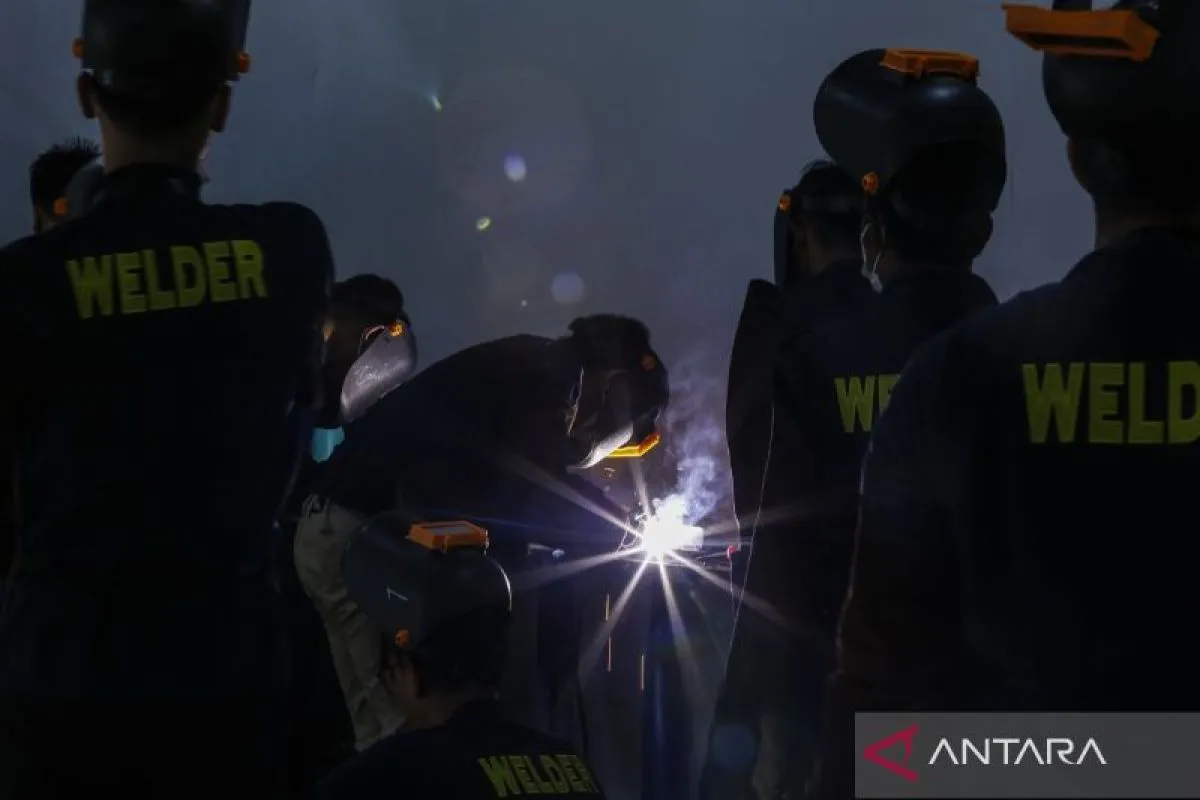
On October 22, the ministry launched a training program for 500,000 workers, covering skills such as welding, hospitality, caregiving, nursing, and manufacturing.
To fully optimize opportunities in the “wider world,” the government—especially BP2MI—could build a real-time digital dashboard displaying job orders from each country, along with required certifications and the availability of qualified workers.
Strategic promotion at international forums and during bilateral events with partner countries can also highlight the strengths of Indonesian workers.
The old stereotype—Indonesia equals domestic workers—must be left behind.
Indonesia, with its demographic dividend, is far more than a source of household labor. Its people are skilled, hardworking, and resilient. Redefining the image of Indonesian Migrant Workers is now a national responsibility.
The government must actively reshape how the world sees PMI, shifting them away from the narrow label of “domestic helper.”
Reducing reliance on the informal sector is key to preventing unfair treatment and enhancing dignity and protection.
Only then can Indonesia fully claim its place in the global workforce—not as a supplier of low-wage labor, but as a nation of capable, talented, and determined workers ready to grow wherever space still exists.
Related news: Minister calls for grand plan to protect Indonesian migrant workers
Related news: KP2MI-Foreign Ministry team up to strengthen migrant worker protection
Copyright © ANTARA 2025


