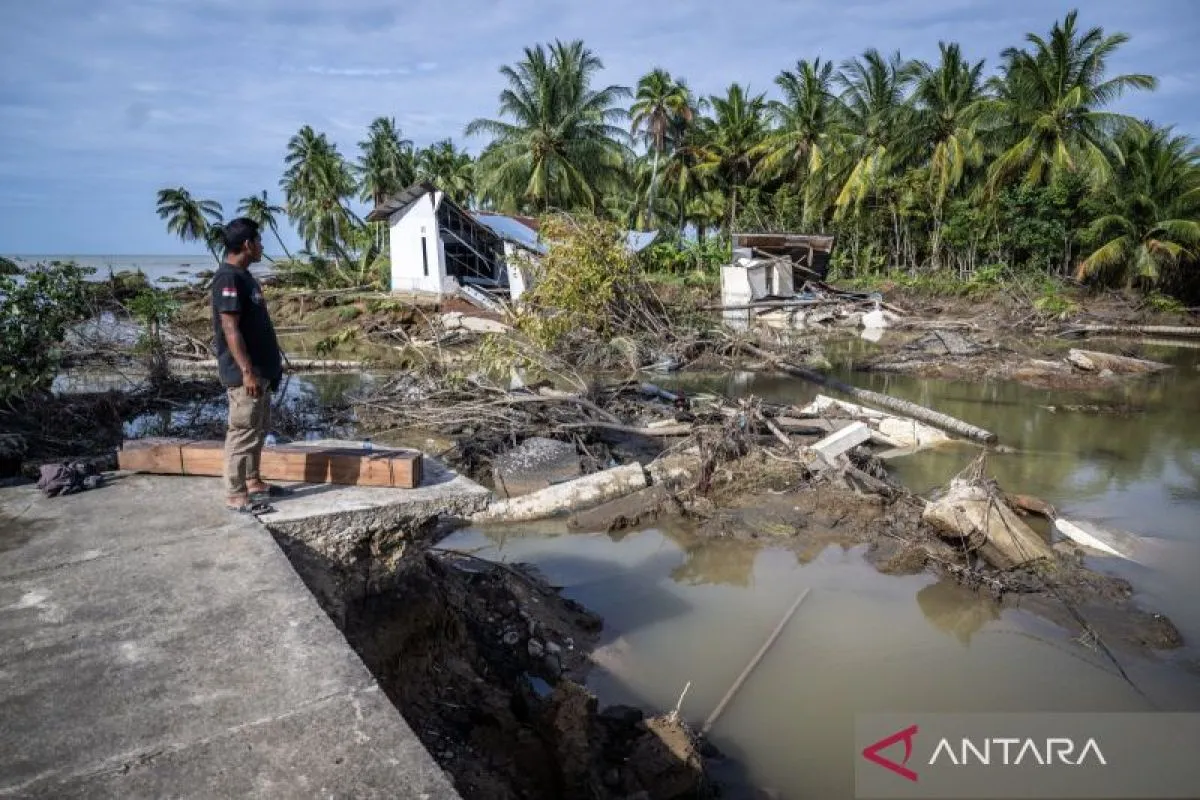
As forests shrink and watersheds lose their natural ability to absorb rainfall, extreme weather events increasingly trigger floods and landslides that devastate both human settlements and wildlife habitats.
These cascading effects reveal how the failure to preserve the environment not only endangers vulnerable species but also magnifies risks for millions of people living in disaster-prone regions.
The catastrophic floods and landslides that tore through Aceh, North Sumatra, and West Sumatra in late November 2025 left not only deep human suffering but also widespread environmental devastation.
In the hardest-hit areas, families lost relatives, homes, businesses, and livelihoods. Entire communities were displaced, their possessions swept away by raging waters. The human cost was staggering.
By Friday night, December 5, 2025, Indonesia’s National Disaster Mitigation Agency (BNPB) reported 867 deaths, 521 missing persons, and at least 4,200 injured across the three provinces.
The disaster also ravaged wildlife and forests. Torrential waters carried boulders and giant logs, destroying habitats and killing endemic species, including the critically endangered Sumatran elephant.
Dead Sumatran elephants
A stark example emerged on November 29, 2025, when a Sumatran elephant (Elephas maximus sumatranus) was found dead in Meunasah Lhok Village, Meureudu Subdistrict, Pidie Jaya, Aceh.
The carcass lay buried in mud and forest debris, its head angled downward. Villagers said the area was isolated and accessible only after a two-hour trek.
Muhammad Yunus, a local resident, noted that elephants had never been seen in their village.
“We’ve never seen a dead elephant here. It was likely swept from upstream forests,” he recalled.
This incident added to a troubling pattern. Six days earlier, a five-year-old female elephant was found dead in a production forest in Rikit Musara, Bener Meriah, Aceh - likely poisoned.
Ujang Wisnu Barata, head of Aceh’s Natural Resources Conservation Agency (BKSDA), confirmed that necropsy results showed no external injuries, pointing to the ingestion of toxic substances.
The team collected organ samples for laboratory analysis, and nearby collapsed huts containing pesticides were discovered, underscoring the risks of escalating human-wildlife conflict.
To prevent further incidents, teams were deployed to guide elephant herds away from villages using loud noises to steer them back into forested areas.
Barata urged residents to avoid planting crops that attract elephants.
Human-elephant conflicts
Despite these efforts, human-elephant conflicts remain deadly. On August 6, 2025, for instance, a male elephant killed 39-year-old Natalia Manalu in Bengkalis, Riau, after entering her farm alone.
Her husband survived but was injured while trying to intervene.
Such tragedies highlight the fragile balance between humans and wildlife in Sumatra, where shrinking forests increasingly push elephants into settlements.
Conservationists emphasize the need for vigilance and preventive measures to reduce casualties on both sides.
Amid the tragedies, a rare moment of hope emerged. On December 4, 2025, Way Kambas National Park in Lampung welcomed the birth of a female elephant calf to 12-year-old Yulia.
The calf weighed about 64 kilograms and was observed standing and nursing within hours - signs of robust health. Officials hailed the birth as a positive milestone for the critically endangered species.
Sumatran elephants are listed as critically endangered by the International Union for Conservation of Nature (IUCN).
Habitat loss, illegal plantations, and human encroachment continue to threaten their survival.
Revoke permits
In response to the deadly disasters across the three Sumatran provinces, the Indonesian Forum for the Environment (Walhi) Jambi Office is urging the government to revoke the permits of companies proven to have caused the floods and landslides.
“We urge the government to revoke the permits of any company whose activities are proven to have caused disasters in Sumatra. Immediately review all business permits in forest areas,” said Walhi Jambi Director Oscar Anugrah in Jambi on Friday, December 5, 2025.
Oscar also called on the government to strictly prosecute all forms of forest-related crime - not only in areas already affected by disasters but across all forestry zones - to prevent future catastrophes.
His organization is additionally pushing for a revision of forest management plans to prioritize ecological disaster mitigation, not just carbon trading.
The Indonesian government is well aware of the situation and the importance of protecting wild Sumatran elephants.
President Prabowo Subianto has therefore directed the Forest Area Enforcement Task Force (PKH) to rehabilitate Tesso Nilo National Park as a sanctuary for Sumatran elephants, beginning with 31,000 hectares of critical habitat to safeguard the park’s diverse wildlife.
Indonesia’s broader conservation efforts also include PKH operations to reclaim elephant habitats in the national park that were seized by illegal palm oil plantations.
These conservation initiatives offer hope amid repeated tragedies - from environmental disasters to lethal human-wildlife conflicts - reminding the nation that ecological preservation is inseparable from social responsibility.
The loss of human and elephant lives conveys a stark message: illegal logging, habitat destruction, and environmental exploitation must be met with firm legal action to protect both communities and wildlife.
Sumatra’s forests, home to some of the world’s rarest species, remain one of the last places where elephants, tigers, and orangutans coexist.
The struggle to preserve these landscapes will shape the island’s environmental future.
Editor: Primayanti
Copyright © ANTARA 2025


