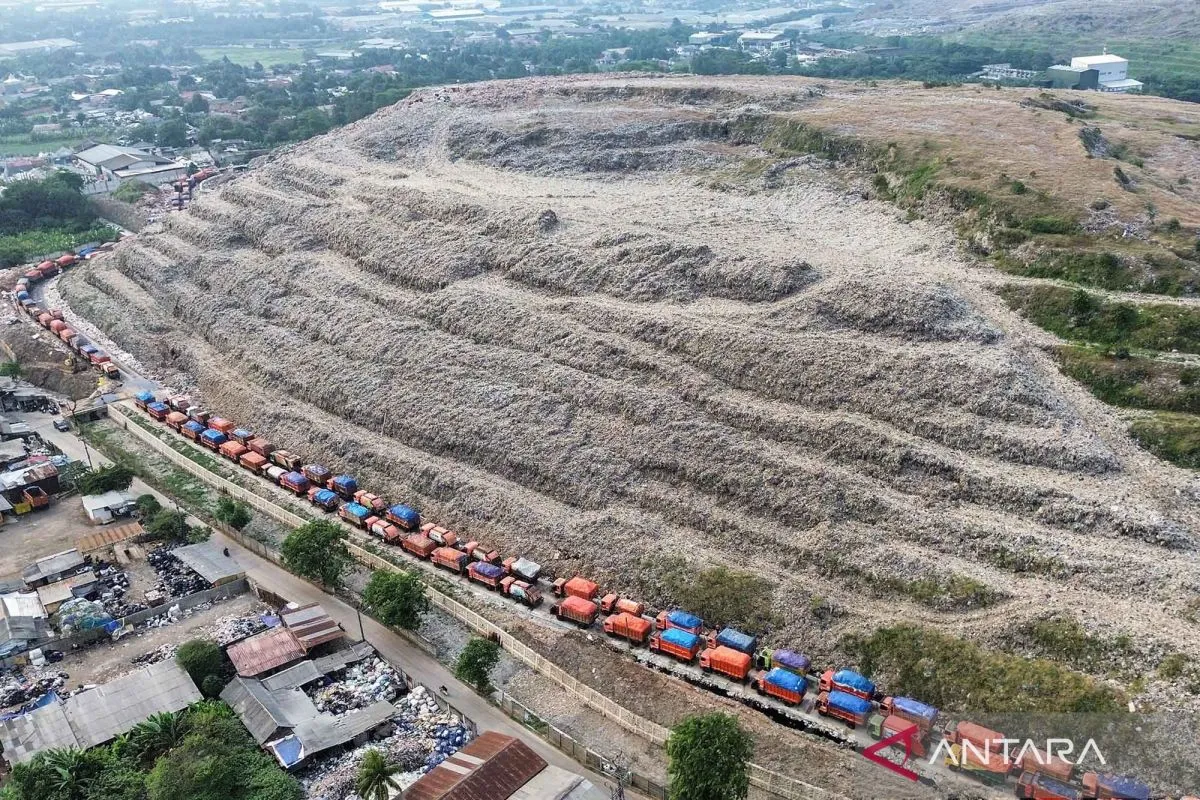
The sprawling facility handles most of Greater Jakarta's daily household waste.
"The same approach will apply to Bandung and other regions within two years," Coordinating Minister for Food Affairs Zulkifli Hasan said in Jakarta on Tuesday.
Hasan noted that only three WTE projects have been implemented over the past 11 years, mainly due to complicated and lengthy licensing procedures.
To address the issue, the government has issued a presidential regulation to streamline permits for converting waste into new and renewable energy (NRE).
The regulation is expected to reduce regulatory barriers, lower investment risks, and attract greater private-sector participation in the WTE industry.
Under the new framework, Hasan said, local governments are only required to prepare land, while licensing will be handled through the Ministry of Energy and Mineral Resources.
Indonesia's sovereign wealth fund, Danantara, will assess suitable technologies before finalizing power purchase agreements with state-owned electricity company PLN.
Hasan said seven WTE projects have already been finalized, with the government targeting the completion of 34 projects within the next two years.
"We already have seven. After further meetings, we may complete up to 20 projects. The target is 34 within two years, through full implementation and completion," he said.
Related news: Wood waste to energy: seizing opportunities from biomass co-firing
Related news: Indonesia targets 50 percent cut in ocean waste by 2029
Translator: Maria Galuh, Kuntum Khaira
Editor: Anton Santoso
Copyright © ANTARA 2025


