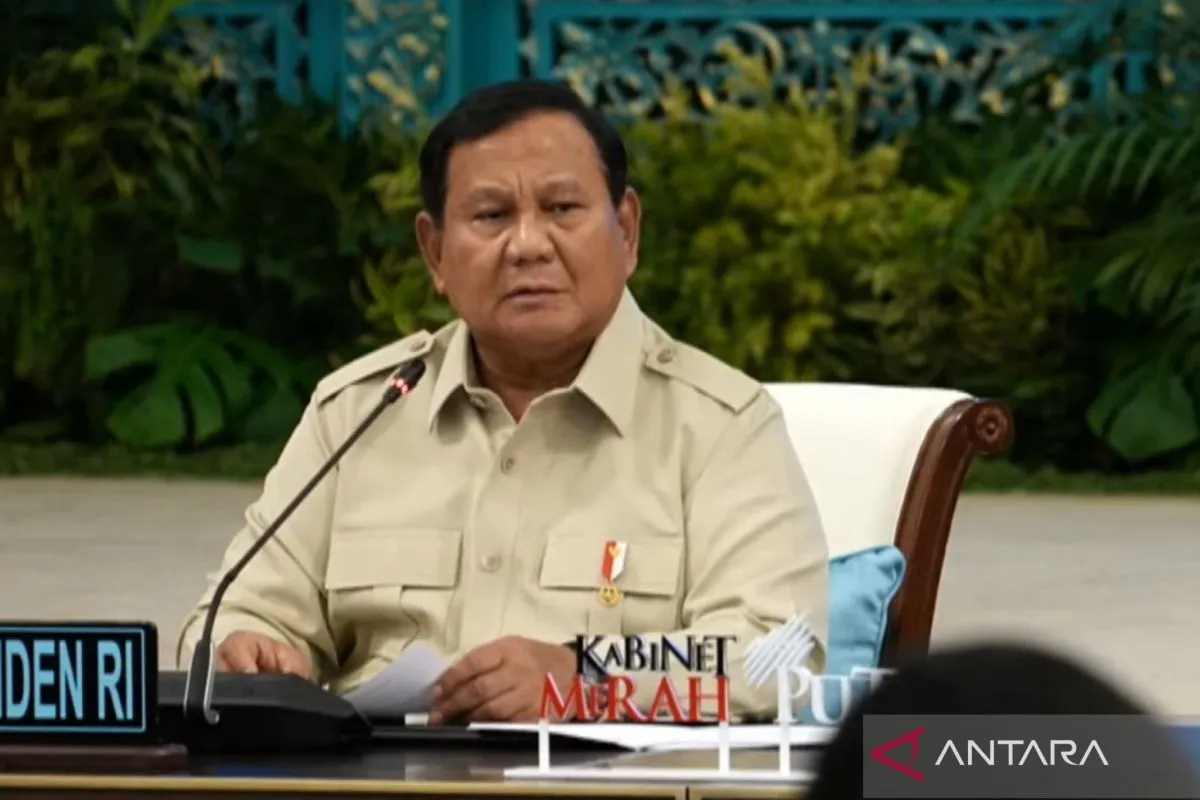
While delivering directives to ministries, agencies, and Papuan regional governments at the State Palace in Jakarta on Tuesday, he emphasized the urgency for Indonesia to halve its annual Rp520 trillion fuel import bill, saving the state more than Rp250 trillion (over US$15 billion).
“We have been incurring trillions of rupiah to import fuel every year. Can you imagine how many trillions we could save annually by cultivating oil palms, cassava, and sugarcane (for biofuel), while also promoting the use of solar and hydro energy?” Prabowo stated.
The president highlighted that under his administration, Indonesia has taken concrete steps toward energy self-sufficiency, including enforcing a ban on diesel fuel imports starting next year—a major move toward a complete halt of foreign fuel supplies.
He expressed confidence that Indonesia has all it needs to meet its energy demand independently, citing the country’s vast new and renewable energy resources across various regions, including Papua.
The government, he continued, has devised policies to ensure that energy-producing regions have maximum access to the energy they generate, ensuring fair and equitable distribution.
“It is essential that we promote the use of solar and hydro energy in remote regions, especially as solar power generation technology has become more affordable. Equally promising is the optimization of minihydro power plants to electrify these areas,” Prabowo affirmed.
Furthermore, the head of state highlighted Indonesia's potential to convert its abundant palm oil, sugarcane, and cassava into eco-friendly fuels, such as biodiesel and bioethanol, with the double objectives of reducing imports and strengthening regional energy security.
"Our plan is to plant oil palms and sugarcane in Papua to produce biofuels," he stated.
Related news: Fueling Indonesia's drive for energy security and green agenda
Related news: Indonesia to start 18 downstreaming projects worth Rp600 trillion
Related news: Bioenergy strategic in Indonesia's energy transition: Ministry
Translator: Maria C, Tegar Nurfitra
Editor: Azis Kurmala
Copyright © ANTARA 2025


