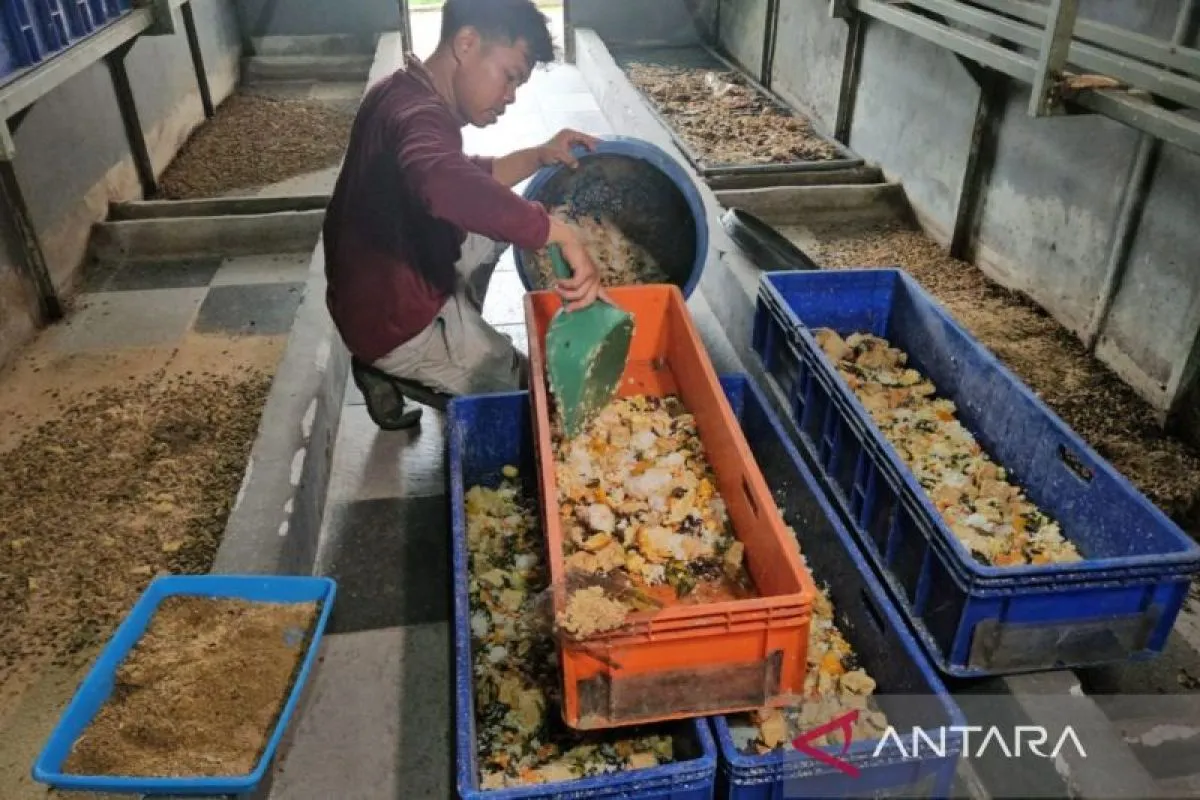
A spokesperson for BGN, Dian Fatwa, said in Bogor, West Java on Tuesday, that carbon credits can be generated from several sources, including mangroves, peatlands, and food waste. However, she noted that carbon trading involving mangroves and peatlands is more complex due to bureaucratic requirements, whereas food waste offers a simpler alternative.
"Can all waste be turned into carbon credits? No. Only waste that can be weighed, measured, and verified by international (standards)," she said.
Fatwa explained that carbon credits generated from food waste processing are traded in the voluntary market. This differs from the compliance market, where companies are required to purchase carbon credits to offset their emissions.
The issue with selling carbon credits in the voluntary market is that the carbon credits sold there do not constitute national efforts or commitment to the Paris Agreement for climate change, she pointed out.
The initiative was previously carried out by the Jimmy Hantu Foundation in Bogor, West Java, which runs a food waste recycling program in which leftovers from MBG are processed into compost and biogas, while some waste is used to feed maggots that later serve as feed for livestock.
She said the foundation was initially unaware that its simple waste management practices had the potential to create broader environmental and economic impacts.
"What Mr. Jimmy carries out has environmental benefits, social benefits, and actually has business potential," she said.
Based on this potential, BGN is exploring ways to strengthen the circular economy by monetizing carbon credits derived from food waste.
To support this effort, the agency plans to launch a pilot project, which will be announced at a later date.
Related news: Waste-to-energy development phase to begin in January 2026: Minister
Related news: Indonesia, Norway discuss plastic waste management at COP30
Reporter: Mecca Yumna Ning Prisie
Editor: Arie Novarina
Copyright © ANTARA 2025


