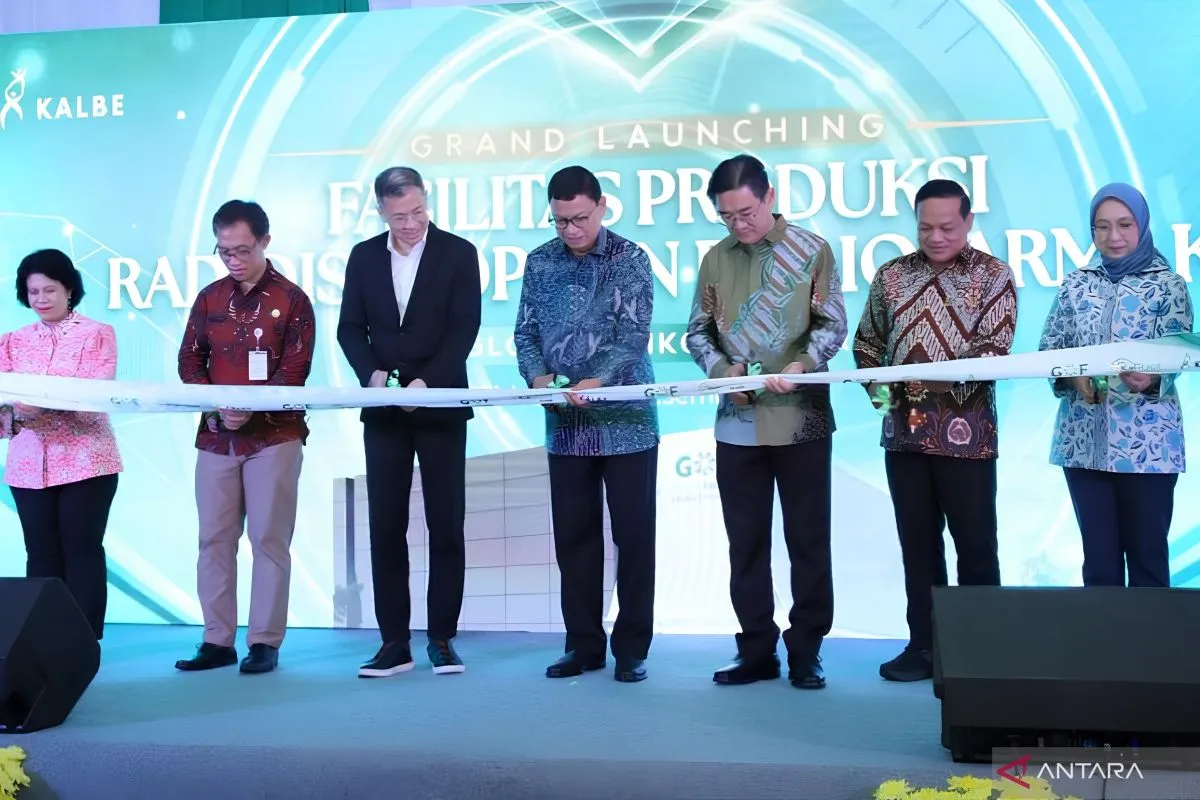
“This facility is an important step in the national health transformation, particularly in guaranteeing the availability of safe, high-quality, and internationally standardized vital products for cancer treatment,” BPOM Head Taruna Ikrar said in Jakarta on Tuesday.
He made the remarks at the inauguration of a radioisotope and radiopharmaceutical production facility operated by PT Global Onkolab Farma, a subsidiary of Kalbe Group, in Sidoarjo, East Java.
Radiopharmaceutical facilities are specialized units in hospitals or production centers equipped with infrastructure, equipment, and trained personnel to safely and controllably produce, prepare, and distribute radioactive medicines for diagnostic and therapeutic purposes, particularly in cancer care.
Ikrar said the facility is capable of producing the Radioisotope Fluorodeoxyglucose (FDG) for use in Positron Emission Tomography–Computed Tomography (PET-CT) scans at hospitals.
The radiopharmaceutical product in question, the radionuclide F-18 Fluorodeoxyglucose (FDG), received its marketing authorization on Sept. 2, 2025.
Beyond ensuring the availability of cancer treatment products, Ikrar said the presence of radioisotope and radiopharmaceutical facilities would help strengthen Indonesia’s pharmaceutical self-reliance ecosystem, as mandated under Law No. 17 of 2023 on Health.
The Sidoarjo facility, he added, would significantly expand access to radiopharmaceutical supplies in central and eastern Indonesia, addressing long-standing logistical constraints that have hampered services.
Ikrar also highlighted the urgency of the facility in the context of cancer cases in Indonesia.
“Cancer is the third leading cause of death in Indonesia. According to the Global Cancer Observatory (Globocan), in 2025 Indonesia is estimated to record 433,966 cancer cases, with 260,511 deaths (around 60 percent), attributed to the disease,” he said.
In carrying out its public protection mandate, Ikrar said BPOM had ensured the acceleration of licensing for the facility without compromising quality standards.
He added that BPOM has gained global recognition as a WHO Listed Authority (WLA), indicating that Indonesian product standards are on par with those of leading regulatory agencies worldwide.
Related news: ACTIVE 2.0 boots Indonesia's efforts to eliminate cervical cancer
Related news: Government backs AI partnership to fight cancer nationwide
Translator: Tri, Azis Kurmala
Editor: Arie Novarina
Copyright © ANTARA 2025


