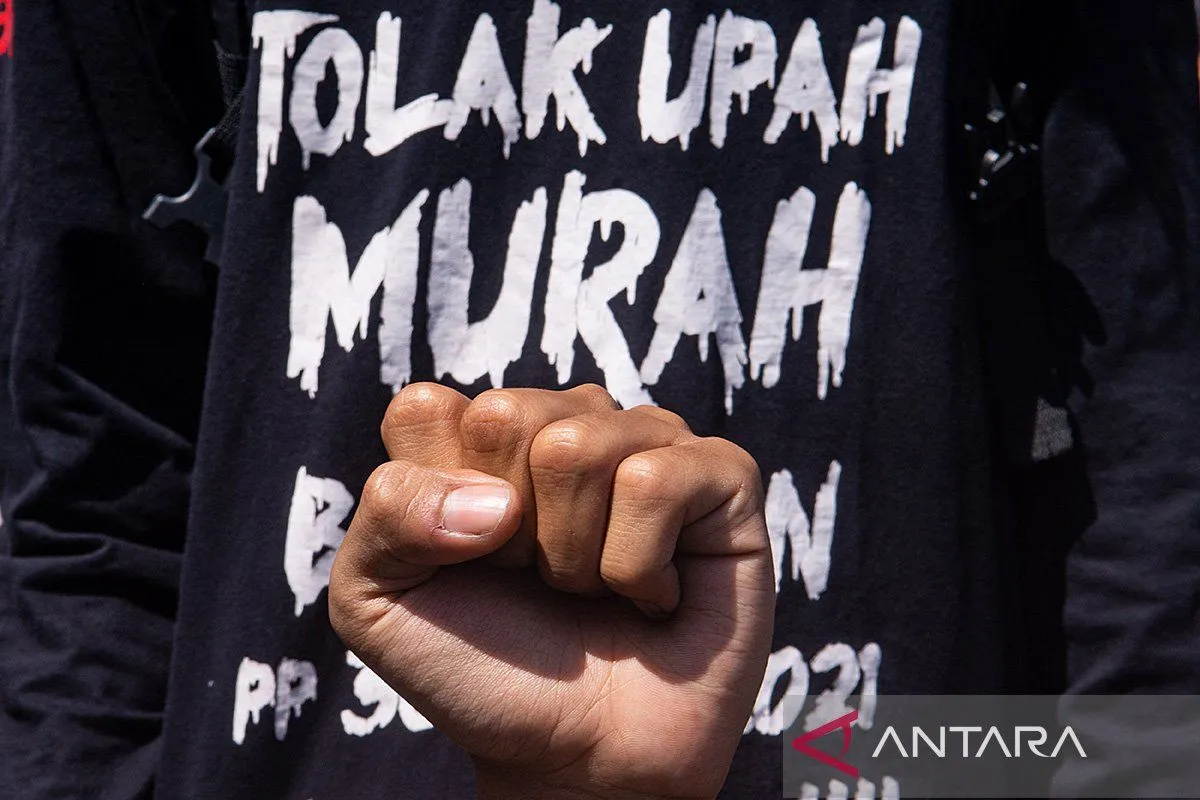
A data-driven approach is essential to ensure unions move beyond reactive rhetoric and can offer concrete solutions that support stable industrial relations, Daryanto told ANTARA in Cisarua, Bogor, on Saturday night.
He said the approach is increasingly relevant for unions at state-owned enterprises, including the ANTARA Workers Union, following plans by Danantara Indonesia to cut the number of SOEs and thousands of subsidiaries.
The plan, reported by Kompas on Dec. 14, 2025, forms part of a broader government effort to streamline state assets and improve efficiency across Indonesia’s sprawling SOE sector.
Daryanto said the ANTARA union’s national working meeting, held on Dec. 19–21 at BPJS Kesehatan’s Corporate University in Cisarua, West Java, was a timely moment to reaffirm labor’s role in structural transformation.
He described the meeting as an opportunity to shape an inclusive and sustainable national agenda for workers as state firms adapt to shifting economic and policy priorities.
“The national meeting serves as a forum to consolidate ideas and positions as unions face new dynamics in state corporate policy,” said Daryanto, a graduate of the University of Indonesia, Hogeschool Utrecht and Padjadjaran University.
Danantara’s restructuring drive, which Daryanto views as part of asset portfolio consolidation, could significantly reshape employment structures across SOEs, despite official assurances there will be no mass layoffs.
Such restructuring often fuels worker anxiety, including concerns over employment status, organizational changes and role uncertainty, he said, underscoring the need for early and sustained social dialogue.
Daryanto said unions play a strategic role in guarding two priorities during the process, beginning with ensuring efficiency measures do not sideline social sustainability and worker welfare.
The second priority is safeguarding post-restructuring governance models that uphold industrial democracy, allowing workers’ voices to be reflected in decisions that directly affect their livelihoods.
He said SOE restructuring should be seen as a chance to reset Indonesia’s industrial relations paradigm, rather than a narrow exercise in corporate rationalization. Active, solution-oriented and evidence-based union engagement could help deliver long-term stability for both workers and enterprises, he added.
The meeting, chaired by ANTARA union president Abdul Gofur and secretary general Adi Rusadi, produced recommendations to be submitted to the board of directors and supervisory board of state news agency Perum LKBN ANTARA.
Those recommendations are expected to inform labor policies as Indonesia’s SOE sector navigates structural changes in the years ahead.
Related news: Labor Leader welcomes Marsinah's recognition as national hero
Related news: Minister backs labor union collaboration to boost workforce reform
Related news: Dy Minister discusses new minimum wage formula with labor unions
Reporter: Rahmad Nasution
Editor: M Razi Rahman
Copyright © ANTARA 2025