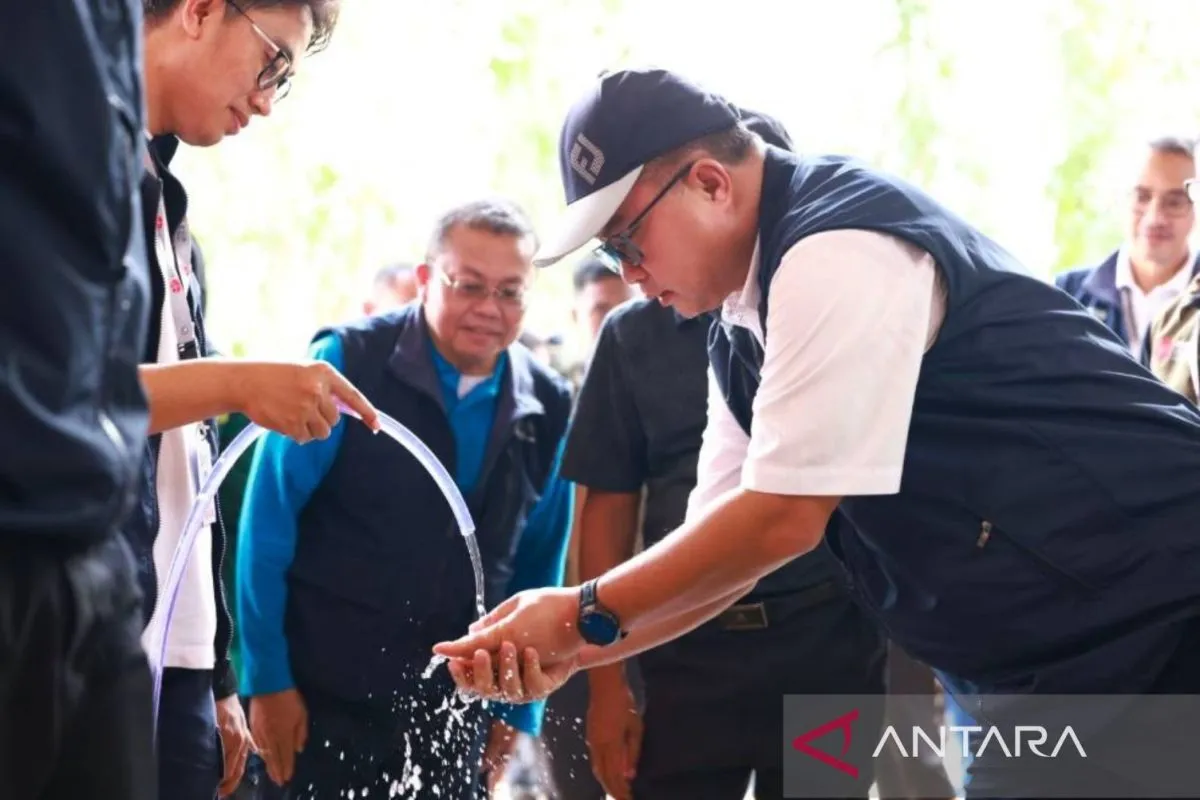
Through a statement here on Monday, Satria said that three drinkable water units are currently in operation, consisting of two units in Aceh Tamiang District and one unit to be placed in Central Tapanuli, North Sumatra.
“The presence of drinkable water units serves as a rapid solution to meet the basic needs of communities for clean water and safe drinking water amid limited post disaster infrastructure,” he said.
Besides drinkable water facilities, the BRIN head also ensured that health teams and mapping survey teams already assigned at disaster locations are in good condition and carrying out their duties optimally.
In handling the disaster, Satria said BRIN has also deployed unmanned aircraft or Ground Penetration Radar (GPR) drones to support reconstruction and evacuation processes.
This advanced technology is capable of detecting objects up to a depth of 100 meters below the ground surface, thereby assisting victim searches and mapping soil conditions in landslide prone areas.
According to him, the utilization of research based technology has become an important part of accelerating disaster response efforts.
Satria emphasized that innovation must not stop at laboratory development, but should be able to answer real needs in the field, ranging from clean water provision to technical support in evacuation and infrastructure recovery.
“Research and innovation must be present when needed, especially during critical post disaster periods, because tangible benefits are those directly felt by the community,” he said.
Through this step, he expressed hope that research and innovation outcomes can continue to serve as concrete solutions for communities, particularly in emergency situations.
Related news: BRIN deploys satellite imagery to speed disaster response in Sumatra
Related news: School-of-thought education key to shaping generation: BRIN
Related news: Indonesia sets Rp11B for heritage recovery after Sumatra floods
Translator: Sean, Kenzu
Editor: Azis Kurmala
Copyright © ANTARA 2025


