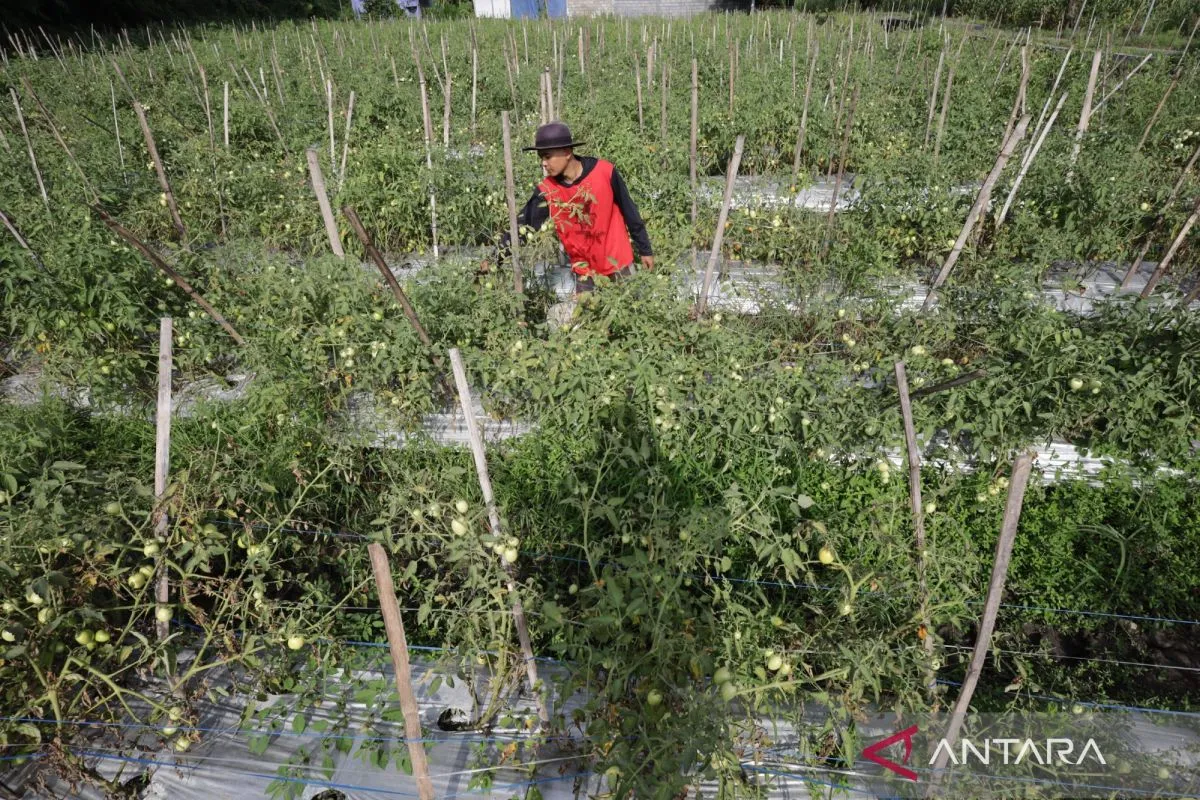
Officials stress that engaging young people is critical to regenerating the country’s aging farming population and ensuring long-term sustainability of the food system.
Assistant Deputy for Global Youth Development Esa Sukmawijaya said farmer regeneration is a cross-generational issue that requires innovative approaches to entrepreneurship and leadership.
“Youth participation in agriculture, livestock, and fisheries must be promoted to secure the future of food production,” he noted at the Farmers’ Regeneration Summit in Jakarta on Monday.
The summit marked the conclusion of the Petani Keren (Young Innovative Farmers) program, which trains young Indonesians in modern farming systems and agribusiness. Learning modules introduced at the event cover biodiversity mapping, technology-based sustainable practices, post-harvest processing, and market development.
More than 100 participants aged 17 to 35 have already applied these skills, with many becoming agripreneurs.
FAO Representative Rajendra Aryal emphasized that youth engagement is vital to transforming perceptions of farming.
“The Petani Keren program has enabled participants to see themselves as dynamic entrepreneurs in modern agriculture,” he said.
FAO also handed over a policy brief to the ministry, calling for cross-sector collaboration to provide young people with access to capital, land, and cooperative development.
Statistics Indonesia data show that nearly 80 percent of farmers are aged 40 and above, while half of the unemployed population consists of youth aged 15 to 29.
Officials warn that without stronger youth participation, Indonesia risks a widening generational gap in food production.
By positioning agriculture as a modern, entrepreneurial sector, the program aims to attract more young people to farming and secure Indonesia’s long-term food resilience.
Translator: Tri Meilani Ameliya, Primayanti
Editor: Aditya Eko Sigit Wicaksono
Copyright © ANTARA 2025