For decades known as “Indonesia’s Alcatraz,” Nusakambangan Island is no longer merely a place of iron bars and thick walls, even though the island, which is part of Cilacap District in Central Java, is still home to 13 correctional facilities.
As 2025 draws to a close, the atmosphere on the island south of Cilacap feels different. The hum of sewing machines, the thud of paving block presses, and the fresh scent from holistic agricultural land are beginning to balance the eerie impression long associated with the island.
Under the coordination of the Ministry of Immigration and Corrections, 2025 has become a new chapter in which the revitalization of correctional functions is truly tested and proven through a more humane approach.
Throughout 2025, the government has aggressively restructured the correctional ecosystem on the 210-square-kilometer island.
The main focus has been the realization of "correctional revitalization," which divides rehabilitation levels based on inmates’ risk levels, namely Super Maximum Security, Maximum Security, Medium Security, and Minimum Security.
One of the major events this year was the large-scale transfer of hundreds of high-risk inmates from various regions across Indonesia to several correctional facilities implementing a super-maximum security system, including Karanganyar Prison, Pasir Putih Prison, Batu Prison, and other prisons on Nusakambangan.
However, the policy is not merely intended to “lock up” serious criminals. The isolation aims to cut off drug trafficking and radicalism networks while providing space for more intensive and personalized mental rehabilitation.
Head of the Cooperation Subdirectorate of the Directorate General of Corrections at the Ministry Rika Aprianti said the placement of high-risk inmates in super-maximum security prisons is part of efforts to maintain security while ensuring that rehabilitation processes continue.
Although inmates are housed individually, religious activities and personal development programs are still carried out in their respective cells. In fact, every day they are given around one hour outside their cells simply to do light exercise or get some fresh air.
In super-maximum security prisons, there is also assistance from rehabilitation consultants who regularly monitor the condition and behavior of inmates. The guidance and assistance are still conducted inside each inmate’s cell, with the aim of encouraging positive behavioral change.
Every six months, inmates undergo evaluations to assess changes in behavior, allowing for a review of their placement status if they show positive development.
“If the assessment results show good behavioral change, the security level can be lowered. However, if no change is shown, they remain in super-maximum security cells,” Aprianti said.
Circular economy
The most visible transformation in 2025 is the surge in productive economic activity inside the prisons.
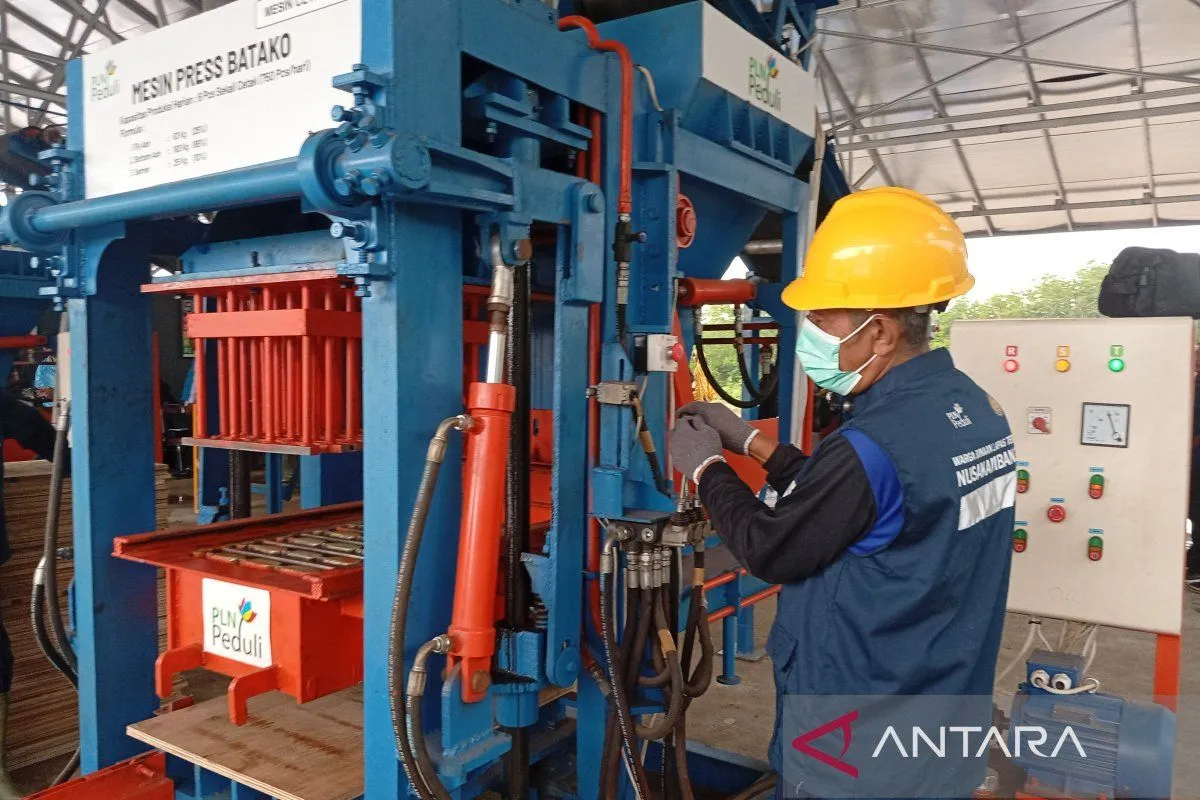
One of the innovations in 2025 is the utilization of Fly Ash and Bottom Ash (FABA), waste from coal combustion at steam power plants, which is processed by inmates into high-quality construction materials.
In special workshops, inmates are trained to operate modern machinery to produce paving blocks and concrete blocks made from FABA.
The program not only addresses environmental issues but also provides wages or incentives for inmates, which can serve as savings upon their release.
Beyond the construction sector, the garment and handicraft sectors have also undergone digitalization.
Products made by inmates, ranging from official uniforms to Nusakambangan’s distinctive teak wood crafts, are now being marketed more widely through digital platforms and national exhibitions.
This proves that physical limitations on an isolated island are not a barrier to connecting with modern industrial supply chains.
In line with the central government’s vision on food security, the Class IIB Open Prison of Nusakambangan this year successfully converted idle land into productive agricultural areas.
They cultivate various commodities, ranging from corn and soybeans to hydroponic vegetables.
For participating inmates, the program serves as a crucial form of “pre-release.” Working in open spaces, interacting with the soil, tending plants, raising livestock, and cultivating shrimp provide extraordinary therapeutic effects.
One inmate at Permisan Prison on Nusakambangan, Maman, said he was happy to be involved in the shrimp pond development, even though he had never been involved in fisheries before.
“Thank God, there are many benefits. I can gain experience and not feel bored. If you’re inside (the prison) all the time, you get bored,” said the inmate, who still has six years remaining on his sentence.
Reform from within
The year also marked full digitalization of correctional administration on Nusakambangan.
The use of a smart prison system enables real-time monitoring of inmates’ rehabilitation records. Every progress point, from attendance in religious sessions and discipline in workshops to psychological assessment results, is entered into a central database system.
The data serve as an objective basis for granting inmates their rights. If an inmate shows consistent behavioral improvement in a maximum-security prison, he has the opportunity to be transferred to a lower security level, which provides greater access to job training.
Some challenges like overcrowding remain in certain areas and the complexity of inmates’ backgrounds continue to pose systemic burdens.
However, Nusakambangan’s success in managing thousands of high-risk inmates while prioritizing empowerment programs has become a model that is beginning to be replicated in other regions of Indonesia.
As the sun sets on the western horizon of Permisan Beach, Nusakambangan, the shadows of iron bars no longer appear as frightening as before.
Under the lights illuminating several main roads on Nusakambangan Island, a brighter and more measurable future for Indonesia’s correctional system comes into view.
As inmates return to their housing blocks after a full day of work in the workshops, there is a pride in their eyes, certificates of competence in their hands, and an optimism that one day they will leave the island.
Related news: Govt building 1,500-capacity prison to ease overcrowding
Related news: N Sumatra transfers 68 inmates to Nusakambangan prison island in 2024
Editor: Rahmad Nasution
Copyright © ANTARA 2025


