Led by Minister of Culture Fadli Zon and Deputy Minister of Culture Giring Ganesha Djumaryo, who have served since October 2024, the new ministry recorded a number of achievements in 2025.
Music and film
Creative economy subsectors, namely music and film, have become a focus of the government. Both have shown positive trends and are expected to serve as soft power to introduce Indonesia’s strength and cultural richness to the global stage.
In the music sector, the Ministry of Culture has supported the development of the music ecosystem by facilitating intellectual property rights (HKI) protection, cross-sector collaboration, and culture-based innovation through the Dana Indonesiana Fund, which can be accessed by artists, communities, and other stakeholders.
In addition, the music industry ecosystem is being improved across various aspects, from workers and creative processes to royalties. These efforts are aimed at strengthening the national music industry in the future through the 2025 Indonesian Music Conference (KMI), which serves as a starting point for real change.
The KMI also produced a task force addressing various industry challenges, which is expected to help untangle longstanding issues in the music ecosystem.
Similar to music, Indonesia’s film industry has grown rapidly, reaching more than 75 million viewers nationwide. This presents major opportunities for domestic films to thrive not only at home but also on the global stage.
Film also serves as a form of soft power or diplomacy for Indonesia. Zon said the film ecosystem continues to be strengthened through various efforts, including the allocation of Rp2.5 billion from the Indonesiana Fund, which is expected to be utilized by local filmmakers to support production processes.
The ministry has also provided other forms of support, such as facilitating matching funds, organizing screenwriting workshops, developing the National Talent Management (MTN) program, and facilitating travel for film professionals attending international film festivals such as Cannes and Rotterdam.
Historical and cultural heritage
The government continues to strive to ensure that heritage from the past, including domestic cultural heritage sites, gains not only national recognition but also broad public benefits.
In mid-December, the government designated 85 cultural heritage sites, bringing the total number of national cultural heritage sites to 313. This designation symbolizes protection, preservation, and utilization of culture, providing stronger safeguards against damage, illegal removal, and loss of historical value.
At least 514 items of Indonesia’s intangible cultural heritage have also been designated, bringing the total to 2,727. In 2026, the target is to record between 1,000 and 2,000 cultural heritage items within a single year.
These heritages are expected to be registered under HKI so they can be further developed and passed on to younger generations.
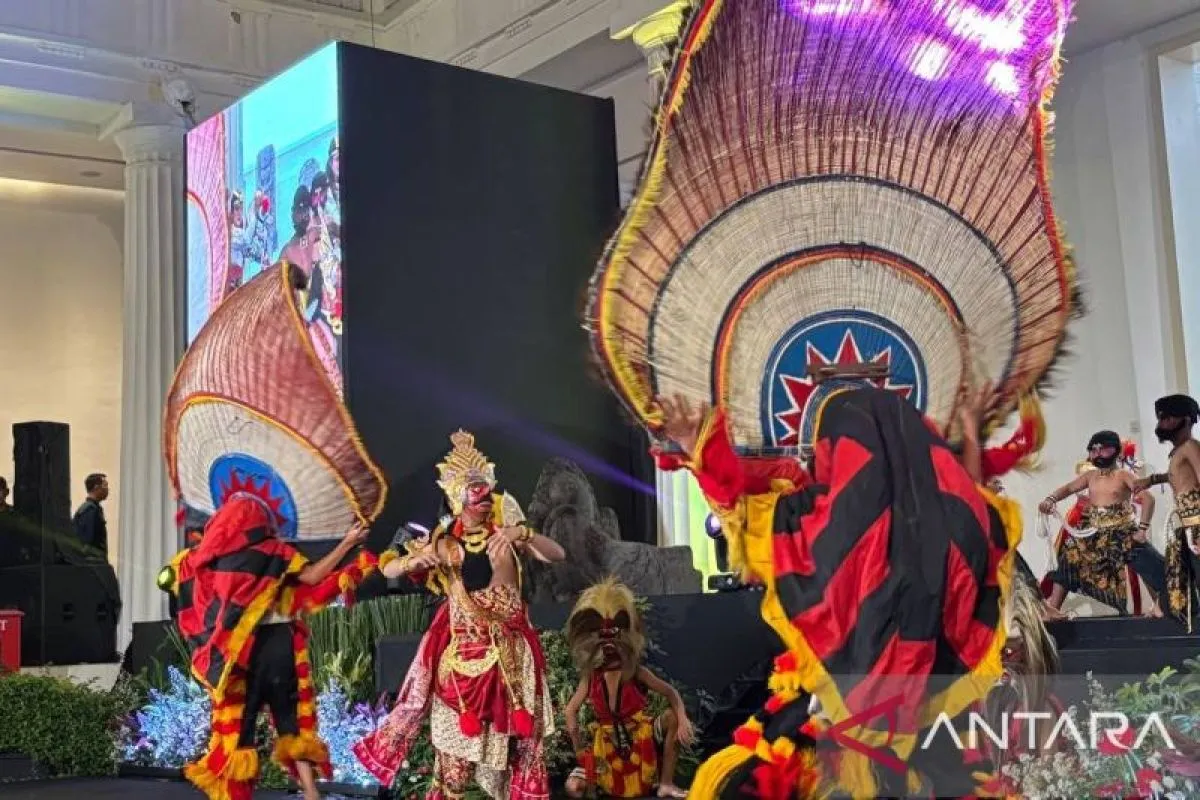
Meanwhile, UNESCO has awarded Intangible Cultural Heritage (ICH) certificates for reog Indonesian dance, kolintang (a traditional musical instrument), and kebaya traditional clothing.
These intangible cultural heritages, both nationally designated and UNESCO-recognized, are expected to be utilized by the community as core ideas in cultural and economic industries.
Kebaya, in particular, was proposed jointly with Brunei Darussalam, Malaysia, Singapore, and Thailand, showing women’s creativity and Southeast Asian historical heritage.
Kolintang was nominated through an extended multinational proposal with Mali, Burkina Faso, and Ivory Coast, and is expected to strengthen traditional music, and inspire new creativity and innovation in music.
Indonesia has also submitted tempeh to UNESCO for recognition as an intangible cultural heritage of humanity, which is expected to be approved in 2026.
This year also saw the inauguration of 15 museums, bringing the total number of museums in Indonesia to at least 481.
One of the hottest topics this year was the Ministry of Culture’s step to write the nation's history book. Despite drawing both support and criticism during its development, the book was launched in mid-December.
The 10-volume publication maps Indonesia’s national journey, from the roots of Nusantara civilization, through the colonial period, struggle for independence, the New Order era, and the reform and democratic consolidation period up to 2024.
According to Minister Zon, the book is not intended as the sole historical reference, but rather as one of many references in a democratic country. It involved contributions from 123 historians from 34 universities across Indonesia.
The return of "Java Man"
The Ministry has supported efforts to repatriate ancient fossils that serve as key references in the study of human evolution, reaffirming Indonesia’s position as one of the world’s oldest civilizations.
Homo erectus, or Java Man, fossils have been returned from the Netherlands, where they were previously part of the collection of paleoanthropologist Eugene Dubois. The fossils include a femur, molar teeth, skull fragments, and shells.
These fossils are now permanently stored and displayed at the National Museum and are expected to attract scientific research to deepen understanding of human history.
A total of 28,131 fossils from the Dubois collection in the Netherlands are set to be returned to Indonesia, with identified fossils prioritized for repatriation.
Beyond exhibition purposes, the fossils are expected to strengthen Indonesia’s role as a center for early human civilization research, while also supporting tourism, education, and economic activities.
Related news: Read Indonesia launched for promoting literature on a global stage
Related news: Indonesia taps literature, cuisine to boost cultural diplomacy
Related news: Indonesia promotes tempeh as a culinary tool of gastrodiplomacy
Translator: Sinta, Kenzu
Editor: Azis Kurmala
Copyright © ANTARA 2025


