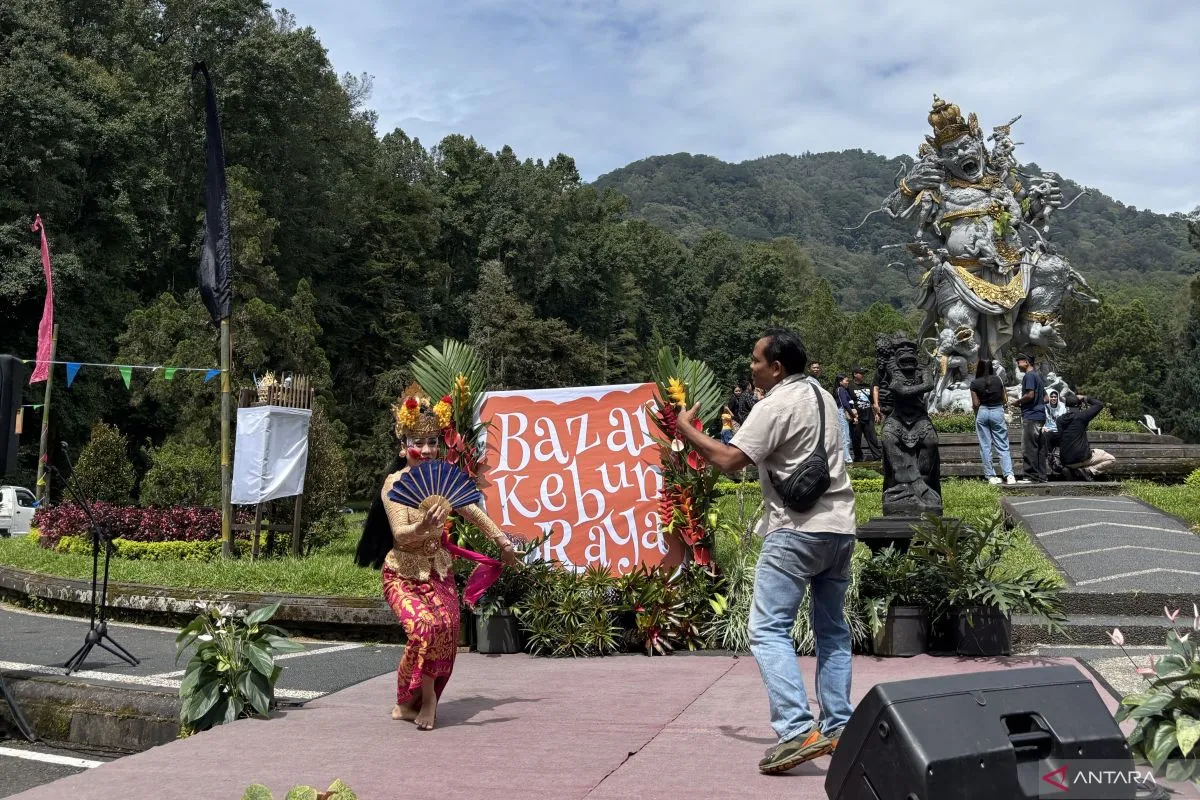
“The daily average of visits ranged between 3,000 and 5,000 people,” said I Dewa Putu Pasnadi Putra, the garden’s manager, in Tabanan on Sunday.
He noted that visitor traffic peaked at 10,000 people on January 1, 2026, representing a 77 percent increase compared with the New Year’s holiday in 2025.
Putra attributed the surge in visitors to a series of holiday programs and public activities hosted by the garden, including a year-end bazaar showcasing micro, small, and medium enterprise (MSME) products from December 31 until January 4, concluding at 5 p.m. local time.
While supporting local MSMEs, he continued, the bazaar also featured artistic performances, sports and fitness activities, a flower-arranging workshop, and acoustic music shows.
Spanning a 157.5-hectare area in Candikuning Village, the botanical garden has emerged as one of Bali’s notable tourist destinations, with entry tickets priced at only Rp15,500 (US$0.92) per visitor on regular days and Rp25,500 (US$1.52) per person on weekends and holidays.
With its cool air, the green open space offers visitors panoramic views, including the scenery of Lake Beratan, visible from an elevation of up to 1,500 meters above sea level.
In addition to its core function as a conservation zone for tropical plants from eastern Indonesia, the garden—established in 1959—has evolved into a center for research and education, as well as a recreational destination for the public.
Moreover, the public space is renowned for its collection of gymnosperms sourced from regions across the globe.
Related news: Bali's tourist tax brings US$22M, still short of goal
Related news: Bali plans savings rule for foreign tourists under new regulation
Related news: Bali to screen tourists' finances under quality tourism plan
Translator: Dewa Ketut, Tegar Nurfitra
Editor: Azis Kurmala
Copyright © ANTARA 2026


