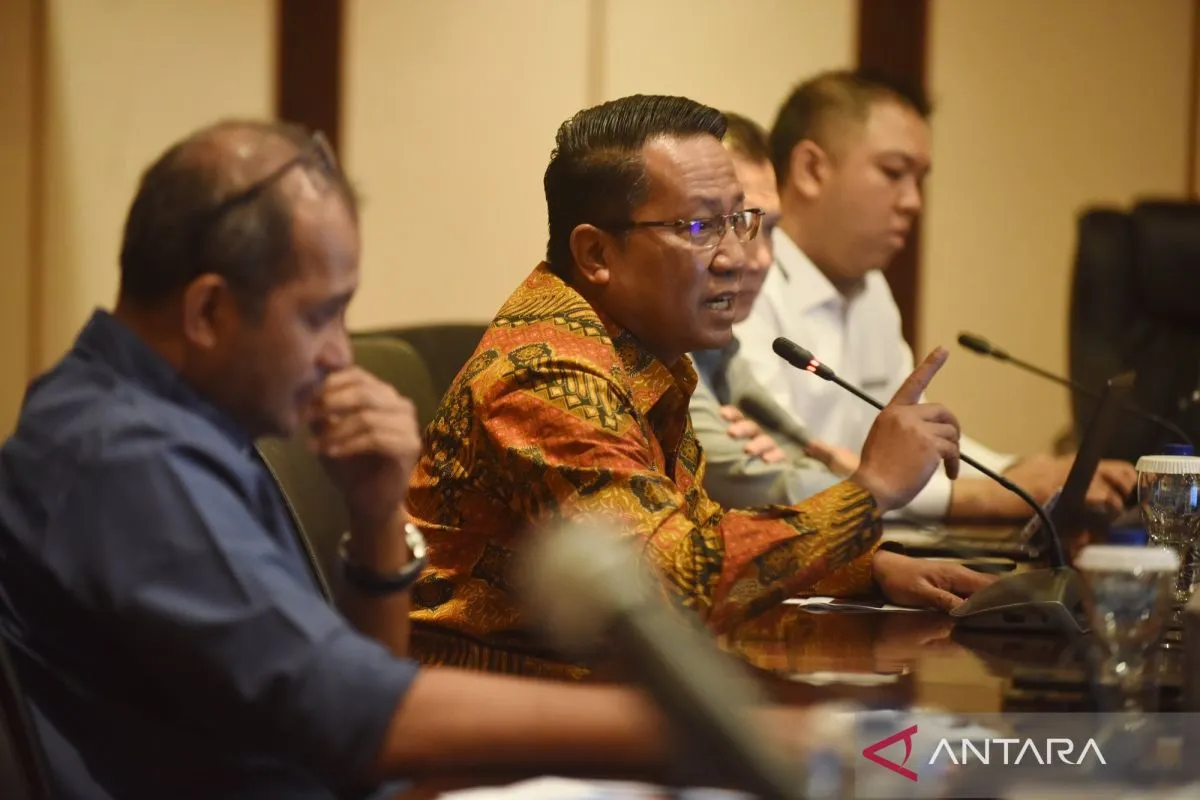
Law Minister Supratman Andi Agtas said the revision of the Criminal Procedure Code, known by its Indonesian acronym KUHAP, involved broader consultation than any similar legislation in the country’s history.
“For KUHAP, I believe there has never been public involvement as extensive as this, what we refer to as meaningful participation,” Agtas told reporters.
He said nearly all law faculties across Indonesia had been engaged in the drafting process, alongside civil society organizations that were invited to submit critiques and recommendations on key provisions.
The approach, Agtas added, complies with a 2020 Constitutional Court ruling that defines public participation in lawmaking as including the right to be heard, the right to have opinions considered, and the right to receive explanations on how public input is addressed.
According to the minister, the involvement of multiple stakeholders was intended to ensure that public aspirations were not merely symbolic but became an integral part of the legislative process.
Agtas described the new KUHAP as containing a number of progressive provisions designed to improve the criminal justice system and enhance accountability among law enforcement agencies.
One major change, he said, is the introduction of strict time limits for handling criminal cases, which he argued would provide greater legal certainty for suspects, victims and the wider public.
Related news: Prabowo approves Criminal Procedure Code Bill ratification into law
The draft code also requires investigators to use surveillance cameras during examinations, a measure aimed at preventing torture, intimidation or other forms of abuse against suspects, victims or witnesses.
In addition, the new KUHAP includes explicit prohibitions against arbitrary conduct by investigators and public prosecutors, as well as actions that degrade human dignity or violate professional standards.
“All of these measures are intended solely to protect human rights while maintaining public order,” Agtas said, adding that such protections are reflected both in the revised Criminal Code (KUHP) and the new Criminal Procedure Code.
Related news: Komnas HAM stresses human rights in KUHAP revision
Translator: Benardy, Kenzu
Editor: Rahmad Nasution
Copyright © ANTARA 2026


