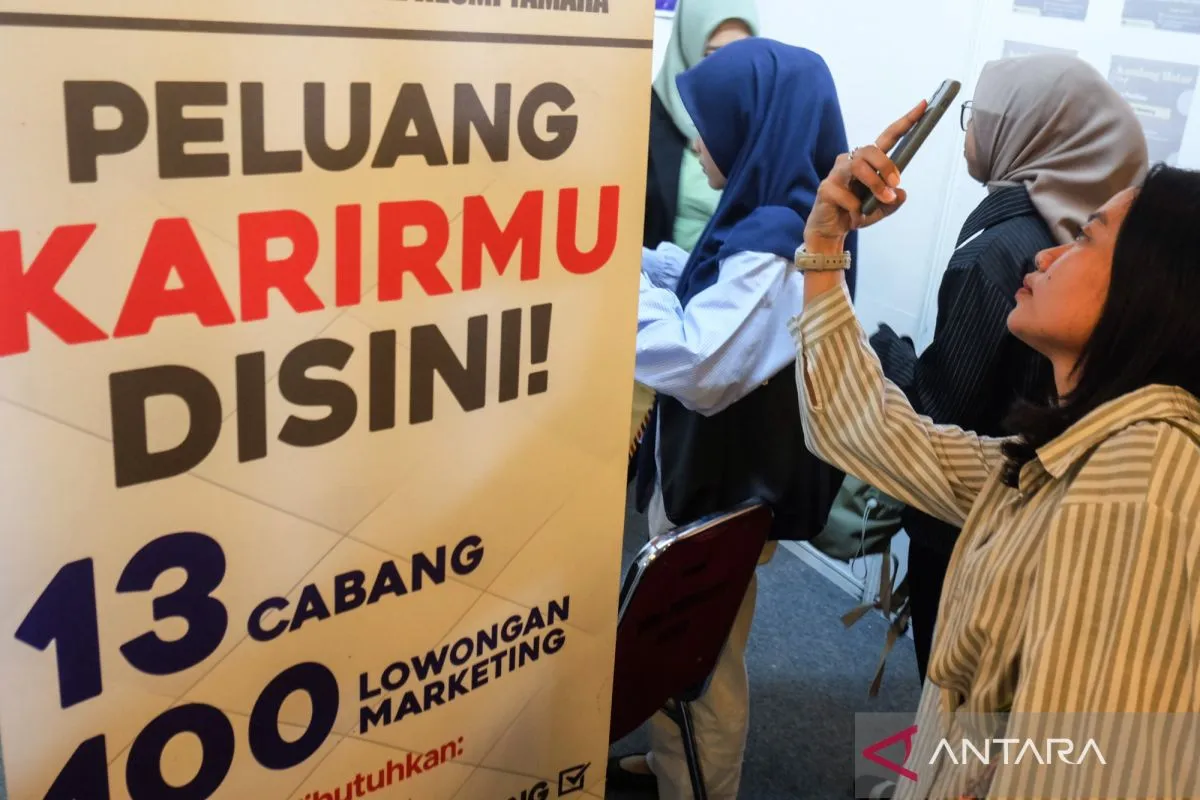
For many Generation Z individuals, the economy has triggered anxiety about stability, following inflation, high youth unemployment rates, and the relentless rise of artificial intelligence, which have dominated online discussions.
Job opportunities for the younger generation have become a critical issue that demands the attention of today’s policymakers.
According to data from Statistics Indonesia (BPS), Indonesia's population is expected to reach 284.4 million in 2025, with an estimated annual growth rate of approximately 1.11 percent.
The large population coincides with Indonesia's demographic dividend, projected to peak between 2020 and 2030. During this period, Gen Z—those born between 1997 and 2012—emerged as the largest demographic group in the country.
BPS data showed that in 2025, Gen Z made up 27.94 percent of the country's total population, or around 74.93 million.
However, the demographic dividend not only offers opportunities but also poses a problem if not utilized well to boost economic growth and welfare in the country.
The data also highlights significant challenges, with nearly 10 million members of Gen Z (aged 15–24) classified as NEET (Not in Education, Employment, or Training) as of 2023. This figure is predominantly made up of women and underscores ongoing issues with youth unemployment and the skills gap.
#KaburAjaDulu and AI transition
In early 2025, the #KaburAjaDulu hashtag, which translates to "Just Escape for Now," went viral among young Indonesians on X (formerly Twitter), being a collective call to leave the country in search of better opportunities abroad.
Many of those who use the hashtag highlight the struggle to find decent work, fair wages, and proper appreciation in Indonesia. They are also calling for more inclusive recruitment requirements and a sense of security for a more stable future.
This hashtag should serve as a wake-up call for the government to create more job opportunities for young people.
Manpower Minister Yassierli views #KaburAjaDulu not as an invitation to flee, but as a desire to improve skills and seek better work opportunities abroad, with the ultimate goal of returning to contribute to nation-building.
Beyond an increasingly competitive job market, the younger generation must now also navigate the challenges posed by the rapid rise of artificial intelligence (AI).
According to the World Economic Forum (WEF) report, around 23 percent of jobs will shift as a result of wider AI implementation in the workplace.
WEF projects that approximately 14 million jobs will be cut, with 83 million jobs eliminated while 69 million new ones emerge over the next few years.
Gen Z, a generation that grew up deeply connected to digitalization, especially following the COVID-19 pandemic, is now required to possess relevant skills to navigate this technological transformation effectively and ethically, without losing the "human" essence in the process.
Rhenald Kasali, a professor at the University of Indonesia, emphasized that it is vital for the state to step in and review strategies for job creation as digital technology development continues to accelerate.
In a world that is now moving and changing so dynamically, individuals are required to engage in lifelong learning. Furthermore, today’s younger generation is looking for more than just a paycheck; they seek purpose-driven work that offers appreciation and provides adequate protection.
Strategy
To respond to the current challenges, the Indonesian government has initiated a program for the younger generation, namely the National Internship program, inaugurated in 2025.
The internship program, which provides its participants with a city and district-level minimum wage, was carried out as part of the government’s comprehensive 8+4+5 economic stimulus package, which is generally expected to speed up Indonesia’s economic growth.
The Ministry of Manpower has reported that the program achieved its target of 100,000 participants in 2025 and is projected to continue in 2026 with the same number of participants, particularly fresh graduates.
Director of Public Policy at the Center of Economic and Law Studies (CELIOS) Media Wahyudi Askar assessed that the National Internship program can accelerate the transition towards better access to formal employment.
He noted that, ideally, the program will support Gen Z, a demographic significantly impacted by the current economic slowdown and the uncertainty caused by a lack of job opportunities.
However, Askar also cautioned that the program must be supported by a cross-sector strategy between the government and the private sector.
This ensures the initiative is not just a temporary fix, but serves as a meaningful solution for reducing youth unemployment in the country.
While 2025 was undoubtedly a challenging year for the youth, there is still hope that with the support of all national stakeholders, the younger generation can build stronger competitiveness and secure meaningful employment with fair pay and proper recognition, both in today’s economy and in the future.
Related news: RI Govt meets 2025 internship target, eyes 2026 extension
Related news: Minister targets 100,000 participants of national internship each year
Editor: Rahmad Nasution
Copyright © ANTARA 2026


