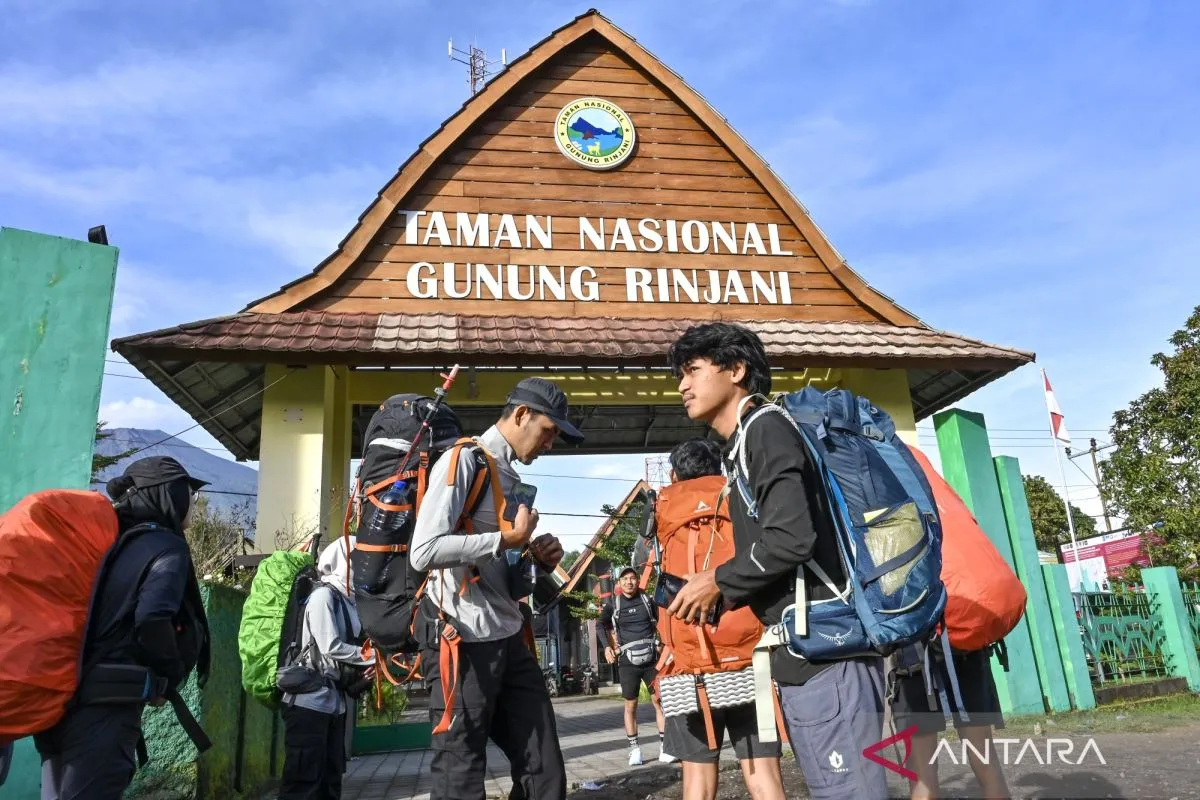
“This closure is for the safety of visitors and the future of Rinjani itself,” said Budhy Kurniawan, Head of the TNGR NTB Office, in Mataram on Tuesday.
The affected routes include the Senaru, Torean, Sembalun, Timbanuh, and Tetebatu trails, along with the Aik Berik educational trail.
Officials noted that the rainy season in early 2026 poses heightened risks, including slippery paths, thick fog, and overflowing waterways.
“The risk of hypothermia and accidents increases significantly, so safety is the top priority,” Kurniawan said.
He added that the closure will allow the mountain’s ecosystem to recover, giving soil and vegetation time to regenerate and wildlife space to settle.
“The pressure of human activity will also be reduced,” he explained.
During the three-month closure, authorities will carry out trail repairs, facility maintenance, and a review of climbing management.
“Route improvements are being made to enhance safety so that when Rinjani reopens, it will be better prepared,” Kurniawan said.
He emphasized that adherence to standard operating procedures (SOPs) is essential to protect nature and ensure the mountain’s sustainability.
“Safety and environmental preservation must remain our top priorities,” he stressed.
To mitigate hydrometeorological risks and restore the ecosystem, all hiking destinations within Mount Rinjani National Park will remain closed throughout the first quarter of 2026.
Translator: Arie Novarina
Editor: Aditya Eko Sigit Wicaksono
Copyright © ANTARA 2026


