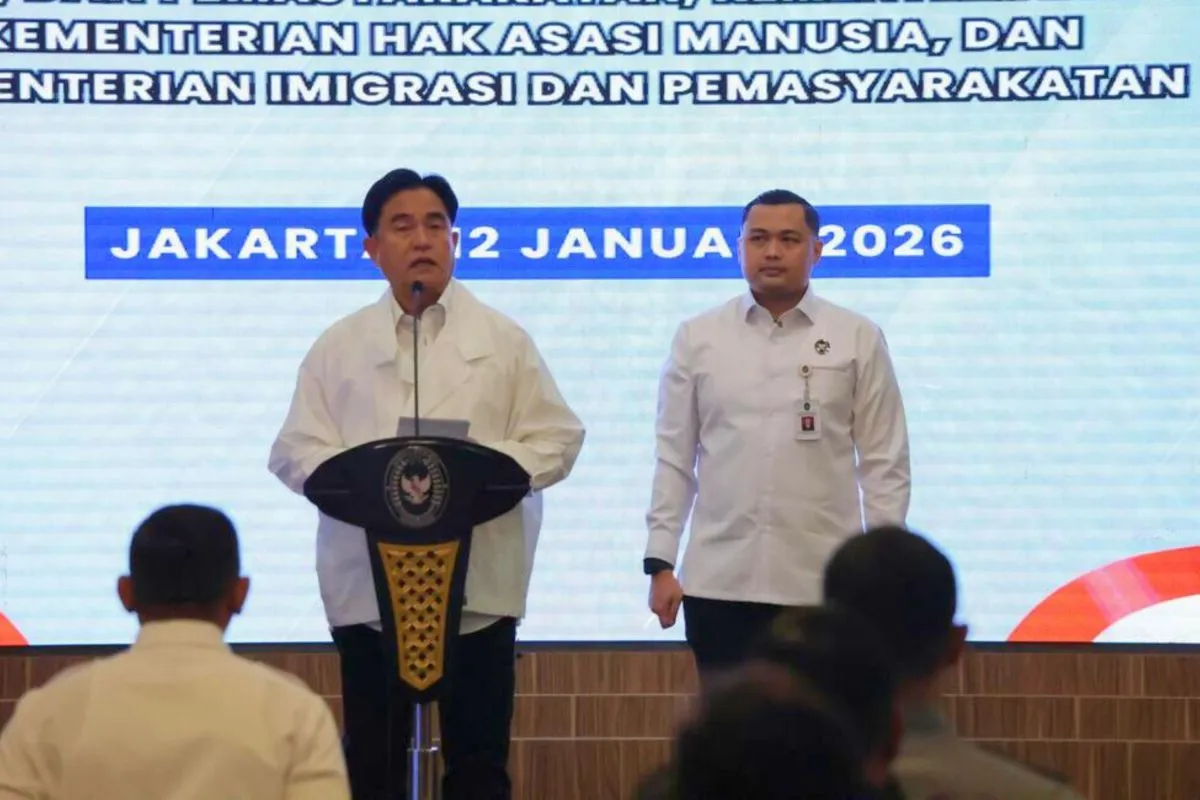
“This is not merely a regulatory change, but a major leap forward in efforts to realize a modern, just, and nationally rooted criminal justice system,” said Coordinating Minister for Legal, Human Rights, Immigration, and Corrections Yusril Ihza Mahendra in a statement on Wednesday.
He stressed that the successful implementation of the new codes depends not only on normative understanding but also on shifts in the mindset and attitudes of state officials.
Future law enforcement, he added, is expected to move beyond punishment to prioritize substantive justice, public benefit, and a balance between the interests of the state, society, and individuals.
“Law enforcement going forward will no longer be oriented solely toward punishment, but also toward substantive justice and usefulness,” he said.
Minister Mahendra emphasized the importance of strengthening national legal reform, inter-ministerial solidarity, and the integrity of the state apparatus as Indonesia moves through 2026.
Integrity and ethics, he noted, are the main foundations of public trust and must be reflected in every decision and action.
He also invited all state officials to embrace 2026 with stronger principles, closer cooperation, and a greater commitment to public service.
Reflecting on 2025, he described it as a year of dynamics and challenges that marked the first year of the Red and White Cabinet under President Prabowo Subianto. He praised all personnel for their dedication to maintaining national stability, upholding human rights, and ensuring professional immigration and correctional systems.
Related news: Government welcomes judicial review of new criminal codes
Related news: Indonesia enacts new criminal codes to reform justice system
Translator: Agatha, Kenzu
Editor: Arie Novarina
Copyright © ANTARA 2026


