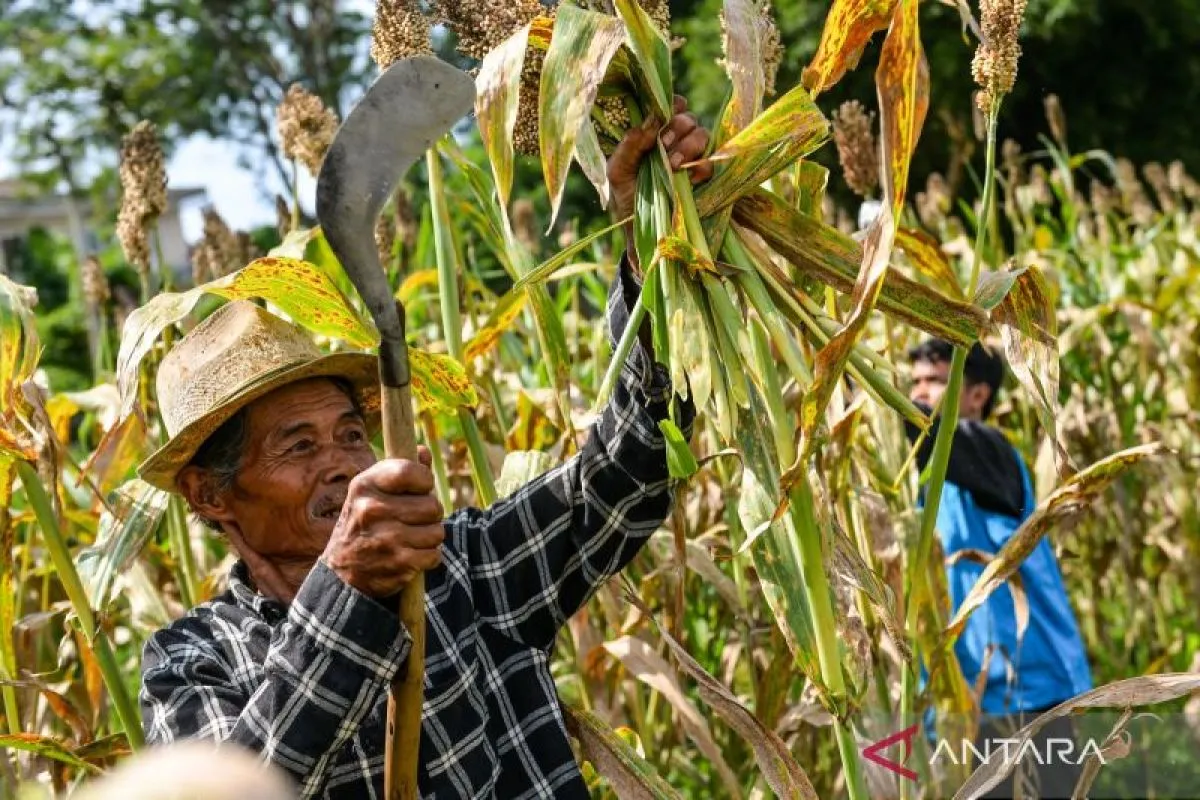
BRIN official Hens Saputra said in Jakarta on Wednesday that national food sovereignty and security need to be strengthened by utilizing alternative food sources beyond rice and corn, such as sorghum, which is considered a promising commodity well suited to Indonesia’s conditions.
“Sorghum is not yet widely known, but it is very suitable for cultivation in Indonesia and is rich in fiber. This crop is also relatively resistant to extreme weather,” Saputra said.
He highlighted that Indonesia’s high wheat consumption still depends on imports, as wheat cannot be optimally cultivated domestically. Meanwhile, public demand for bread and noodle products remains very high.
According to Saputra, this situation presents an opportunity to develop sorghum-based, non-wheat noodles as a healthy and sustainable food alternative.
To support this effort, BRIN is collaborating with several private companies to conduct technology transfer training so that the public can utilize and develop sorghum-based noodle products.
Looking ahead, Saputra expressed hope that the development of sorghum-based products will continue and encourage the formation of an integrated sorghum industry.
Such an industry would not only support food production, but also serve animal feed, renewable energy such as ethanol and biomass, and other sectors.
“The presence of a sorghum noodle industry is expected to spur the growth of small and medium-sized enterprises, open up business opportunities for local communities, and attract partners, including from abroad,” Saputra said.
In addition to noodles, various other sorghum-based products have been developed, including sugar, soy sauce, and flour. Sorghum is also being explored as a raw material for skincare products, such as facial mists.
Related news: BRIN collaborates with private firm on sorghum research
Translator: Sean Filo Muhamad, Cindy Frishanti Octavia
Editor: M Razi Rahman
Copyright © ANTARA 2026


