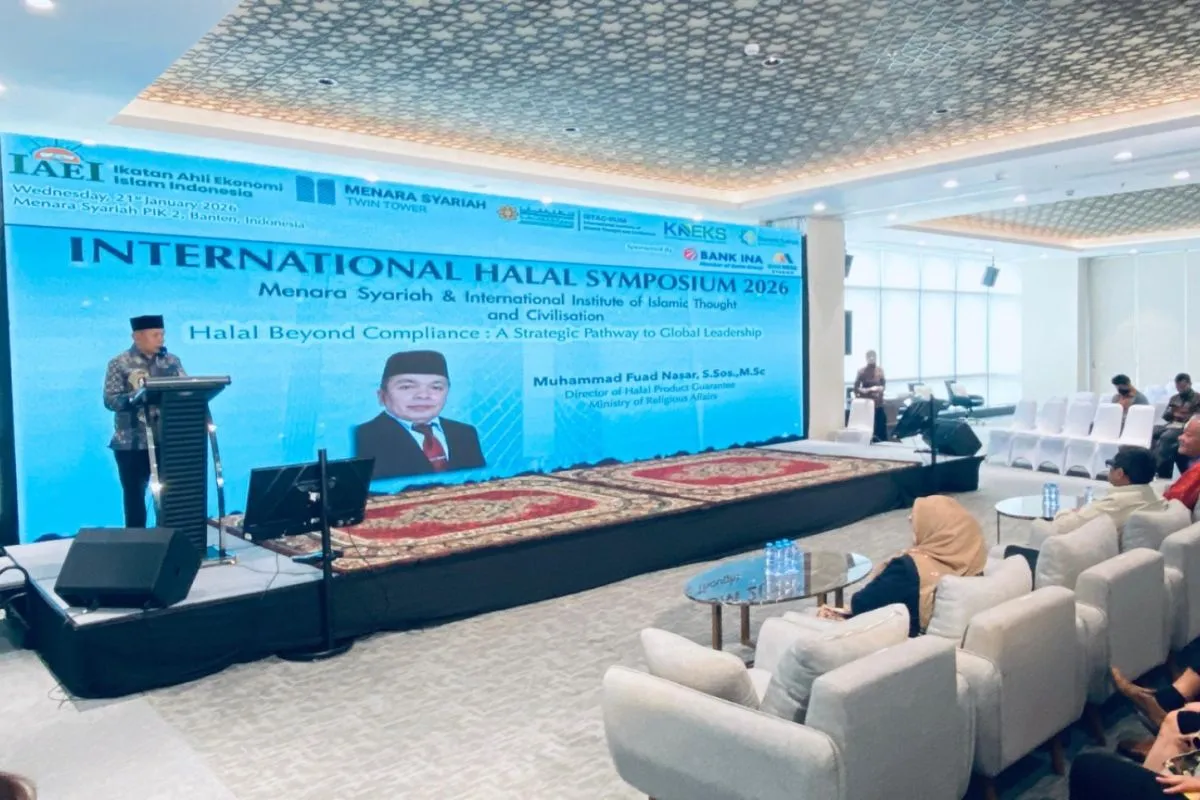
M. Fuad Nasar, Director of Halal Product Assurance at the Ministry of Religious Affairs, said in Jakarta on Thursday that during Indonesia’s D-8 chairmanship, the country will focus cooperation on two main issues, the halal economy and the blue economy.
As the country with the world’s largest Muslim population, Indonesia has significant potential to develop the halal industry at both regional and global levels, Nasar said.
However, he noted that the potential of the national halal industry has not yet been fully realized, making it necessary to strengthen the ecosystem and raise public awareness.
He added that halal is not only related to compliance with Islamic law, but has also evolved into a global trend that contributes to economic growth, as halal principles ensure health, cleanliness, nutrition, and environmental sustainability.
“Halal is certainly healthy, certainly clean, certainly nutritious, and certainly environmentally friendly,” he said.
In strengthening the national halal industry, the government has shown its support by facilitating halal certification for micro, small, and medium enterprises (MSMEs).
Through the Halal Product Assurance Organizing Agency (BPJPH), halal certification under the self-declare scheme is provided free of charge and subsidized by the state through the national budget (APBN).
“Currently, the quota for halal certification reaches one million per year and will be increased to 1.35 million certificates,” Nasar said.
Meanwhile, halal certification for large businesses continues to be implemented under the regular scheme. He said the development of the halal industry is expected to drive job creation, helping to reduce unemployment and poverty.
According to Nasar, employment generation is one of the key indicators of progress in the halal industry, in line with President Prabowo Subianto’s Asta Cita agenda.
“Employment absorption is an important barometer of the advancement of the halal industry. This aligns with the President’s Asta Cita agenda on equitable economic development and poverty eradication,” he added.
The D-8 is a cooperation forum comprising eight developing countries with predominantly Muslim populations: Indonesia, Malaysia, Iran, Egypt, Nigeria, Pakistan, Bangladesh, and Turkey.
Related news: UGM drives village-based halal economy through global forum
Related news: Ministry encourages youth role in making Indonesia halal industry hub
Translator: Asep Firmansyah, Kuntum Khaira Riswan
Editor: M Razi Rahman
Copyright © ANTARA 2026


