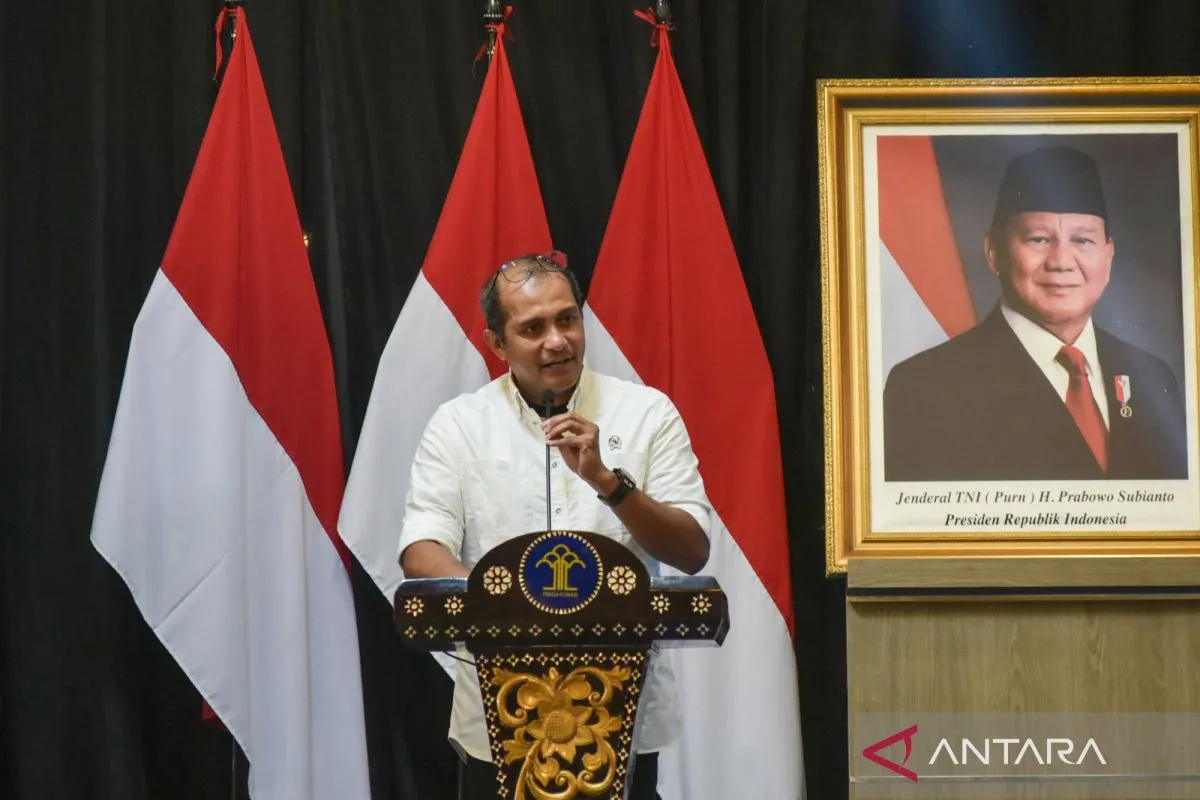
He cited a number of court rulings that have applied the restorative justice approach, including a recent case at the Muara Enim District Court in South Sumatra.
“In that case, the court granted a judicial pardon to a child who stole cables. Compensation had been paid, the company forgave the offender, and the judge issued a judicial pardon. As a result, the child did not receive a prison sentence,” Hiariej said on Monday.
Another example, he said, came from a ruling by the Kudus District Court in Central Java.
He explained that the court heard a case involving a member of the Kudus Regional Council who was arrested for gambling.
“The prosecutor demanded a six-month prison sentence, but the judge imposed four months of community service. The individual must work at a sub-district office for two hours each day,” Hiariej said.
According to him, the two cases demonstrate the function of restorative justice under the new Criminal Code, which is designed not only to punish offenders but also to restore the rights of victims.
He noted that many people still believe legal violations must be addressed through retributive punishment.
“This shows that our mindset still views criminal law as a tool for revenge,” he said during a Criminal Code socialization event at the ministry.
Hiariej added that the new Criminal Code adopts a modern criminal law paradigm oriented toward corrective justice, restorative justice, and rehabilitative justice.
He said the formulation of the new Criminal Code went through multiple stages, including discussions involving academics, legal experts, and the House of Representatives (DPR).
Related news: Government welcomes judicial review of new criminal codes
Related news: Indonesia enacts new criminal codes to reform justice system
Translator: Walda, Kenzu
Editor: Primayanti
Copyright © ANTARA 2026


