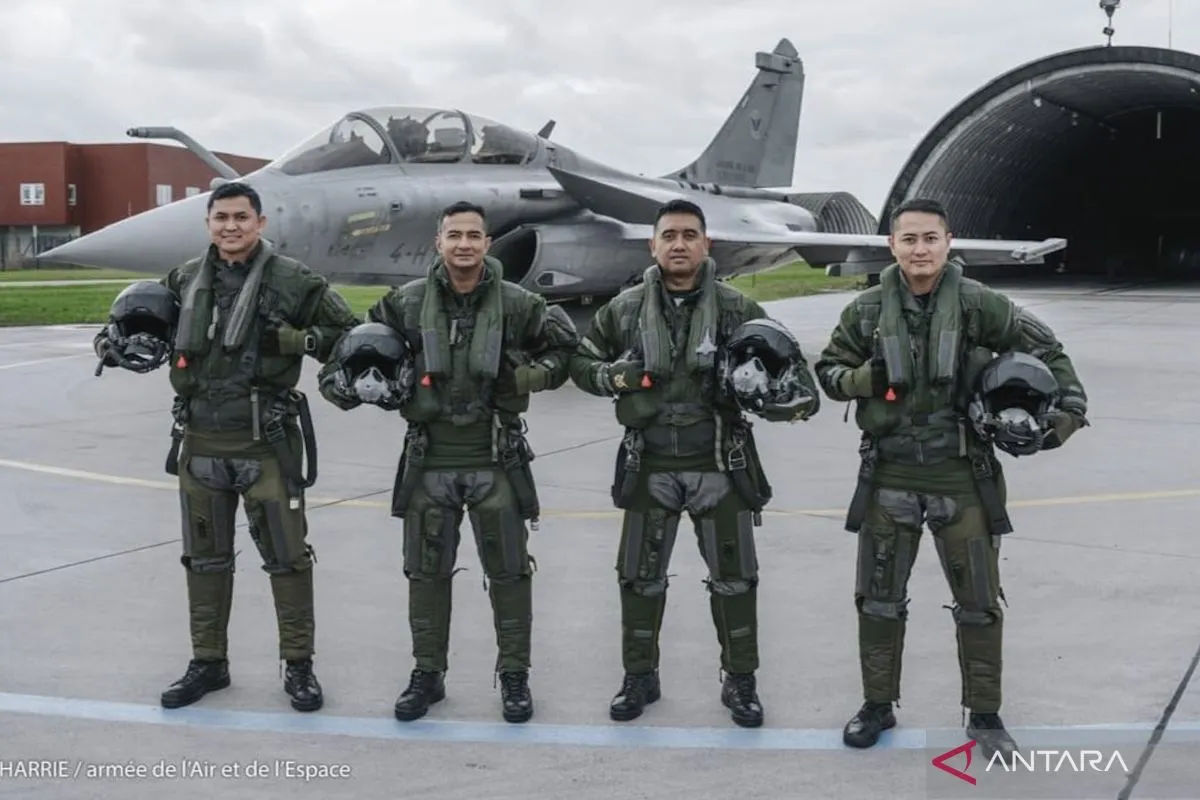
However, despite their appeal, fifth-generation fighters do not currently address the Indonesian Air Force’s (TNI AU) most pressing operational needs. Rather than prematurely pursuing these highly complex systems, Indonesia would be better served by prioritizing mature 4.5-generation fighters and developing robust network-centric warfare (NCW) capabilities.
Indonesia’s aspiration to operate fifth-generation fighters is not new. In 2020, Jakarta requested the purchase of F-35s from the United States, which was ultimately rejected. More recently, in July 2025, Indonesia procured 48 units of Türkiye’s Kaan fighter. These moves reflect a desire to remain technologically relevant in a region where advanced airpower is increasingly important for deterrence.
Yet, fifth-generation fighters are not standalone solutions; their effectiveness depends on a mature supporting ecosystem, an area in which Indonesia currently faces shortfalls. The primary appeal of fifth-generation fighters lies in their low observability and information dominance.
Their stealth characteristics reduce detectability and compress an adversary’s engagement window, while sensor fusion integrates onboard and offboard data into a unified battlespace picture. This enables the well-known fifth-generation combat paradigm: see first, decide first, shoot first, and disengage first. These qualities make such aircraft valuable for penetrating dense enemy air defenses.
However, these advantages are only realized when those fighters operate as nodes within a broader network. They are designed to function alongside airborne early warning and control (AEW&C) aircraft, intelligence, surveillance, and reconnaissance (ISR) platforms, surface-based sensors, and other combat aircraft, all connected through datalinks. Without this network, a significant portion of a fifth-generation fighter’s theoretical superiority is lost.
Foundational enablers required
At present, TNI AU lacks many of the foundational enablers required to support fifth-generation operations. Indonesia’s aerial refueling capacity remains limited, consisting of one aging KC-130B aircraft and a single A400M. This severely constrains sustained air operations across Indonesia’s vast archipelagic geography.
More critically, Indonesia lacks dedicated AEW&C aircraft that provide long-range radar coverage and aerial battle management. In Southeast Asia, only Singapore and Thailand currently possess such capabilities, whereas Indonesia continues to rely primarily on ground-controlled intercept (GCI), which has limited coverage.
Operating fifth-generation fighters in the absence of AEW&C, robust tactical datalinks, and an integrated command-and-control would not meaningfully enhance TNI AU’s combat effectiveness. Instead, it risks turning a costly platform into an isolated asset with limited situational awareness, undermining the very advantages that justify its acquisition.
Recent operational experience further reinforces the primacy of networking over platform generation. During the India-Pakistan clashes in mid-2025, the Pakistan Air Force leveraged an integrated network of ground-based radars and Erieye AEW&C aircraft connected via an indigenous datalink system.
As a result, Pakistan Air Force J-10CE fighters-classified as 4.5-generation aircraft-were able to engage Indian Air Force fighters at BVR ranges exceeding 200 kilometers. This episode illustrates that information superiority and situational awareness, rather than stealth alone, are decisive in modern air combat.
Modern 4.5-generation fighters are designed explicitly for such networked environments, emphasizing data fusion, connectivity, and interoperability. The Rafale F4, for example, significantly enhances networking capabilities, enabling the aircraft to exploit data from AEW&C platforms, ISR assets, surface sensors, and other fighters.
When integrated into a mature NCW framework, such aircraft remain highly lethal. They can conduct BVR air combat, defensive counter-air missions, and long-range precision strikes without entering heavily defended airspace.
TNI AU’s primary mission
This capability set aligns closely with Indonesia’s operational requirements. TNI AU’s primary mission is the surveillance and defense of Indonesian airspace, a task dominated by patrol operations, defensive counter-air, and air- and sea-denial.
These missions do not require stealthy penetration of hostile territory, the niche in which fifth-generation fighters offer their advantage. Whereas a sufficiently sized fleet of advanced 4.5-generation fighters, supported by AEW&C aircraft, aerial refueling, and integrated networks, can provide credible air defense across the archipelago.
Concerns that delaying fifth-generation acquisition will leave Indonesia behind its regional peers overlook a more fundamental issue. In terms of NCW maturity, Indonesia already lags far behind Singapore and Australia. Acquiring fifth-generation fighters without first addressing this structural gap will do little to close the capability divide.
Financial constraints further reinforce this logic. Between 2025 and 2029, Indonesia has allocated approximately USD 28 billion in foreign loans for defense modernization, to be shared among the army, navy, and air force. Attempting to simultaneously acquire fifth-generation fighters, AEW&C aircraft, tankers, datalinks, and supporting infrastructure risks spreading resources too thin and reducing overall effectiveness.
Technology maturity also matters. Contemporary 4.5-generation fighters are well-understood, low-risk systems refined through decades of operational use. By contrast, the Turkish Kaan remains under development, with service entry planned for the 2030s.
Given the complexity of fifth-generation programs, delays and capability shortfalls are common even among established aerospace powers, posing an elevated risk to Indonesia’s limited resources.
Indonesia’s most urgent airpower requirement, therefore, is not fifth-generation fighters, but a coherent and resilient NCW architecture.
Investing first in 4.5-generation fighters, AEW&C aircraft, refueling assets, datalinks, and integrated air defense would yield immediate gains in combat effectiveness.
Only once these foundations are firmly in place should Indonesia commit resources to fifth-generation fighters, ensuring they enter service as part of a genuinely modern air combat system rather than as isolated symbols of ambition.
Related news: Falcon 8X jet aircraft officially joins the Indonesian Air Force
Related news: Airbus A400M to boost air defense capability: Prabowo
*)Alfin Febrian Basundoro is a junior lecturer of international relations at Universitas Airlangga in Surabaya, Indonesia. He graduated with a Master of Strategic Studies (Advanced) from The Australian National University.
*)Muhammad Teguh Ariffaiz Nasution is a defense and security researcher at The Horizon Indonesia. He graduated with a Master of Strategic Studies from The Australian National University.
The views and opinions expressed on this page are those of the authors and do not necessarily reflect the official policy or position of ANTARA News Agency.
Copyright © ANTARA 2026


