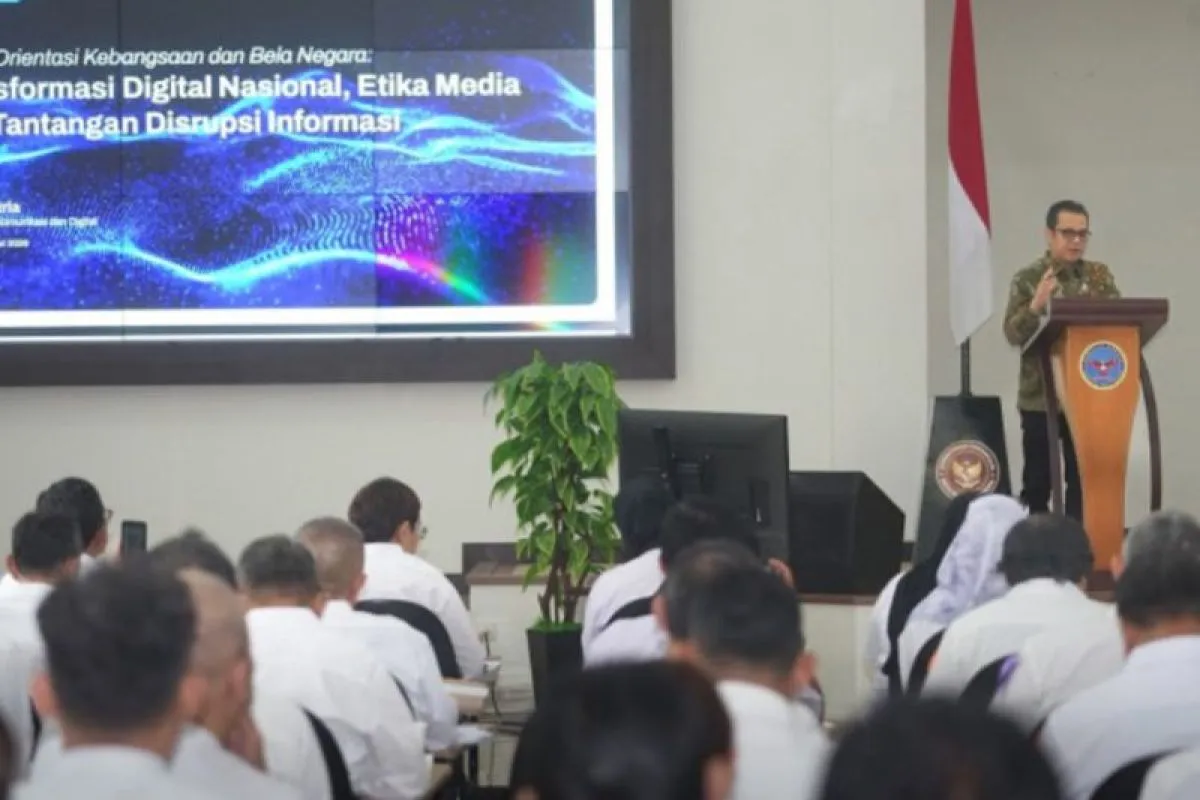
Nezar explained that after the media industry shifted from traditional platforms to digital, a new wave of disruption emerged—driven by the dominance of digital platforms and algorithm-based technologies that increasingly shape how audiences access information.
Speaking at the 2026 Indonesian Journalists Association (PWI) Retreat on Friday, he noted that news distribution is no longer fully controlled by editors and publishers.
“Instead, it is also determined by platforms powered by artificial intelligence, which influence visibility, reach, and consumption patterns across global audiences,” he said.
Nezar warned of a growing “zero-click phenomenon,” where the public consumes AI-generated summaries without visiting original sources.
“This has a direct impact on media traffic and the sustainability of the press industry,” he said.
He cited global research by the Reuters Institute and the University of Oxford showing declining optimism among media professionals about the future of journalism amid technological disruption and shifting audience behavior.
Digital media traffic has fallen by more than 40 percent, Nezar said, as audiences increasingly rely on AI-driven platforms, search engines, and automated news aggregation services rather than original news websites.
He also highlighted sustainability challenges as technology companies increasingly use journalistic content to train and power AI systems, raising concerns over fair compensation, copyright protection, and the long-term viability of independent media.
Strengthening copyright protections and developing fair cooperation models between digital platforms and news organizations have become strategic priorities, Nezar said, requiring coordinated responses from governments, industry, and civil society.
As a concrete step, the Communications and Digital Ministry has issued Presidential Regulation No. 32 of 2024, which establishes publisher rights rules and outlines the responsibility of digital platforms to support quality journalism.
The government is also drafting a National Artificial Intelligence Roadmap to guide AI development and use in Indonesia. Nezar said the roadmap aims to foster mutually beneficial cooperation between media and platforms while safeguarding the future of quality journalism.
Translator: Farhan AN, Rahmad Nasution
Editor: Aditya Eko Sigit Wicaksono
Copyright © ANTARA 2026