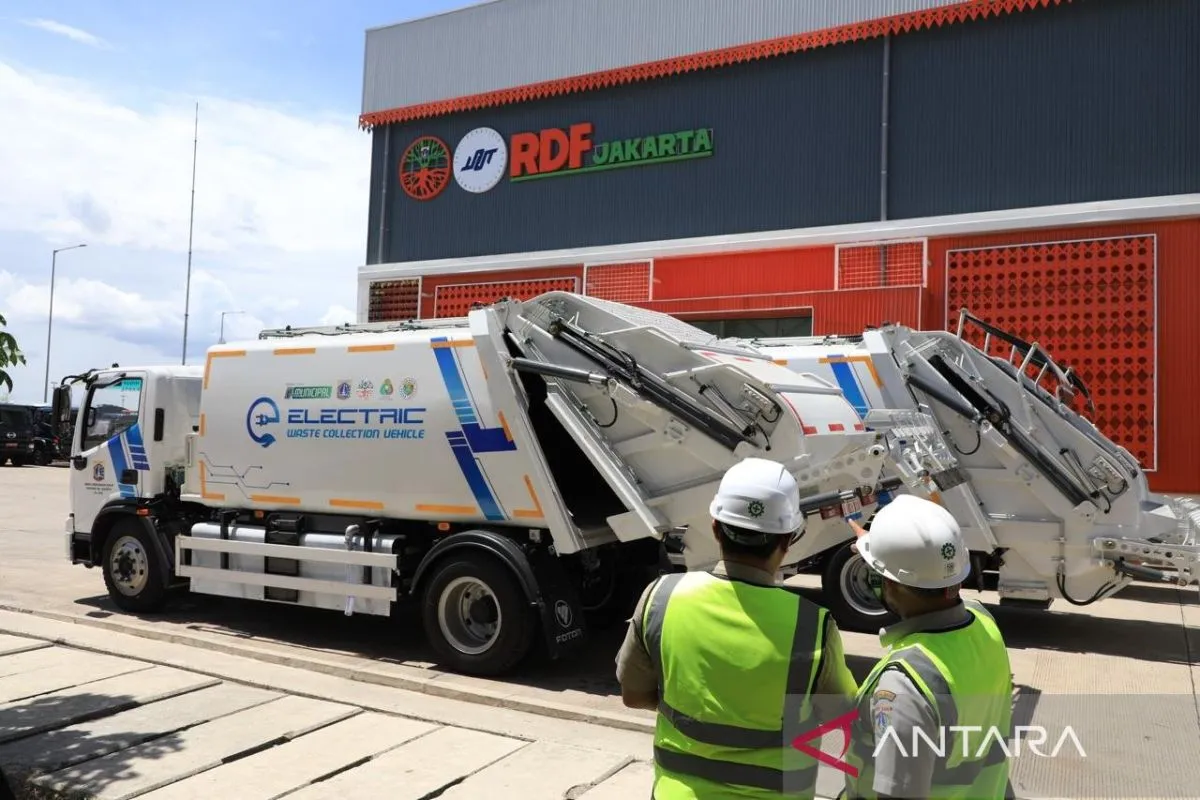
"The Rorotan RDF Plant is a strategic regional infrastructure built to address the challenges of Jakarta's future waste management," the Head of the Jakarta Environmental Agency (DLH), Asep Kuswanto, conveyed on Saturday.
According to Kuswanto, the plant’s operations are conducted in measured stages and are closely monitored to ensure safety for both the environment and the surrounding community.
“The entire process is under strict supervision to ensure the system functions optimally and does not negatively impact local residents,” he added.
He said his office also ensures that any potential impacts experienced by the local community are evaluated directly in the field and not overlooked.
“Residents’ complaints, including those related to odor and vehicle activity, are addressed promptly through technical operational adjustments,” he said.
In addition, Kuswanto noted that input from the surrounding community serves as an important wake-up call for continuous improvements.
As a concrete measure, the agency ensures that all emission and odor control systems are functioning properly.
Furthermore, he emphasized that waste transportation to the Rorotan RDF Plant will only use enclosed compactor trucks procured in 2024 and 2025 that meet technical standards, thereby minimizing the potential for odor and leachate spills at the site.
Supervision is also carried out directly in the field through two monitoring posts located at the main access points from East Jakarta and North Jakarta.
At these posts, strict inspections are conducted on all transport vehicles to ensure sealed containers, leak-proof leachate tanks, and the absence of leachate spills on public roads.
Kuswanto added that the continued operation of the Rorotan RDF Plant is part of the Jakarta Provincial Government’s long-term efforts to reduce reliance on landfill-based waste management and promote more modern and sustainable waste processing.
The Rorotan RDF facility converts waste into alternative fuel for power plants, cement factories, and other industries requiring thermal energy.
The facility is expected to have a waste processing capacity of up to 2,500 tons per day.
Related news: Jakarta governor committed to solve Rorotan RDF odor problem
Related news: Jakarta acts after study finds microplastics in rainwater
Related news: Jakarta to expose open waste burners on social media
Translator: Ilham Kausar, Resinta Sulistiyandari
Editor: M Razi Rahman
Copyright © ANTARA 2026


