According to the World Health Organization (WHO), this disease claiming more than 340,000 women’s lives annually. Alarmingly, around 90 percent of these deaths occur in developing nations.
In Indonesia, cervical cancer is the second most common cancer killing Indonesian women after breast cancer.
The 2022 Globocan report by WHO’s International Agency for Research on Cancer revealed that the country recorded around 36,964 new cases, with more than 20,000 women losing their lives to the disease annually.
The incidence of cervical cancer per 100,000 population in Indonesia was 23.3, lower than breast cancer, which had an incidence rate of 41.8. Meanwhile, the mortality rate per 100,000 population was 13.2, lower than the mortality rate from breast cancer, which was 14.4.
These numbers lie the fact that cervical cancer is widely regarded as one of the most preventable and curable forms of cancer-provided it is detected early.
Dr. Siti Nadia Tarmizi, director of non-communicable diseases at Indonesia’s Ministry of Health, stressed that cervical cancer is relatively easier to eliminate through early detection and intervention among sexually active women aged 30 to 59.
“Screening for early detection is essential to prevent cancer from progressing to more advanced stages. The odds of survival are far higher when a case is detected and treated early,” she told ANTARA.
Cervical cancer in Indonesia is associated with a very high mortality rate, primarily due to inadequate screening rates; 70 percent of cases are usually detected at an advanced stage.
Therefore, starting this year, the Ministry of Health is intensifying screening for cervical cancer using the Human Papillomavirus Deoxyribonucleic Acid (HPV DNA) self-sampling procedure.
Targeting 1.5 million women in the country, this procedure can be performed independently by allowing individuals to collect vaginal samples using a specialized swab or brush kit.
Cervical cell samples will be taken to a laboratory to be tested for HPV.
The HPV DNA test is included in the government’s Free Health Check (CKG) program, which can be used routinely every year by all Indonesians for early detection of diseases and risk factors, and to improve quality of life.
Convenient and accurate
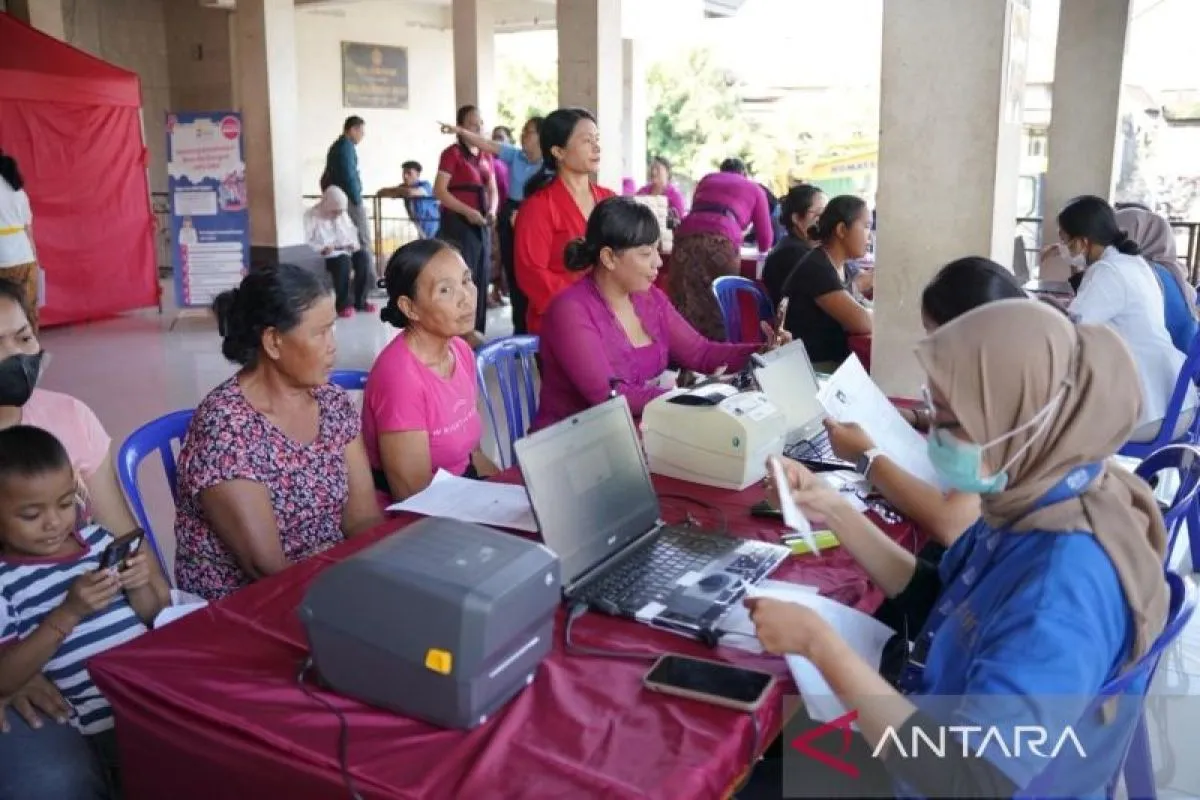
In 2025, based on the government’s data, approximately 666,000 women took the HPV DNA test. Of that number, 4 percent (around 23,000 women) tested positive for HPV.
The provinces with the highest cervical cancer screening coverage in 2025 were Jakarta (89,000), Central Java (161,000) and West Java (87,000).
However, Siti Nadia highlighted the low level of treatment. From the screening results, only 155 women were referred for treatment.
She also noted the numerous challenges facing health workers in encouraging these women to follow up.
By including HPV DNA test into the CKG program, the screening is expected to be carried out on more Indonesian women, thereby reducing the number of cases.
Based on a study in Surabaya conducted by the Ministry of Health and partners-including Jhpiego, Biofarma and Roche-the HPV-DNA procedure using swabs has high accuracy, with an invalid rate of only 1.1 percent.
In addition to being highly accurate, this test is also considered more convenient because everyone can perform it independently-thus overcoming the embarrassment often felt by women during health check-ups.
It is equally effective as clinician-taken samples, significantly increasing participation rates.
In an effort to expand the coverage of HPV self-sampling testing, the Ministry of Health along with its partners have conducted a pilot project in 2025 in several regions, including Surabaya, Sidoarjo, Depok, Jakarta and Jayapura.
The procedure was also introduced in Bukit Tinggi, Surakarta, Southeast Maluku, Jayapura and North Penajam Paser, with approximately 1,000 participants.
In addition to expanding HPV test services in primary healthcare facilities, the government is carrying out education on the importance of screening through health workers and campaigns.
The government considers HPV DNA screening crucial to detect HPV infections before cancer develops, increase the chances of recovery by ensuring early treatment and support the national target of eliminating cervical cancer by 2030.
Vaccination
In addition to intensifying screening and treatment, the Indonesian government is including a target of 90 percent HPV vaccination for boys and girls, in its 2023-2030 National Action Plan for Cervical Cancer Elimination.
"The goal is for at least 90 percent of girls and boys in the country to be vaccinated against HPV before the age of 15 by 2030," the ministry's director of immunization, Prima Yosephine, said.
In the immunization regime, she explained, the government is administering a single dose of vaccine to all girls in the 5th grade of primary school, or those aged 11, with the same approach applying to children not attending school.
If a child misses the immunization at age 11, it can be caught up in the 6th grade of elementary school, or in the 9th grade of junior high school, or when they turn 15.
The immunization program will also target school-age boys starting in 2026, with the same dose as girls: a single shot at age 11 or in the 5th grade.
This strategy will be implemented in phases, starting this year in three provinces first and gradually rolling out across the rest of Indonesia.
Studies show that HPV vaccines are highly effective, potentially preventing over 90 percent of HPV-related cancers by targeting high-risk types 16 and 18, which cause most cervical cancers; as well as types 6 and 11, which cause genital warts.
WHO recommends vaccination for girls aged 9-14 before sexual exposure, with studies showing 91-100 percent efficacy in preventing HPV 16/18 infections.
Of course, these efforts must be supported by increasing public awareness of the dangers of HPV, eliminating the stigma or taboo surrounding the disease and providing full support from families for patients undergoing treatment.
Related news: Indonesia's push to tackle cervical cancer through early detection
Related news: Indonesia targeting 90% children vaccinated against HPV by 2030
Editor: Primayanti
Copyright © ANTARA 2026


