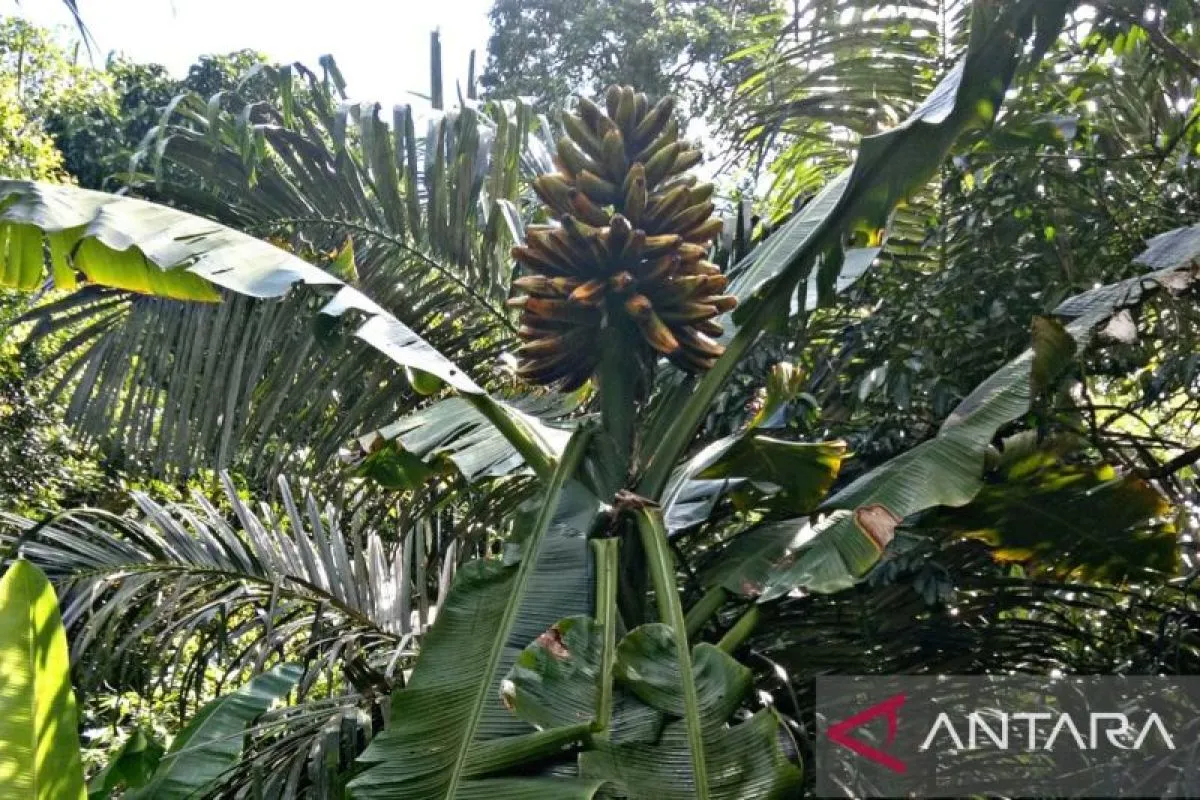
Head of BRIN’s Center for Genetic Engineering Research Ratih Asmana Ningrum explained that bananas are among the world’s most important food commodities, serving as a staple for millions of people in Indonesia and across Africa.
Banana production, however, faces serious threats from diseases such as Panama wilt, caused by the soil-borne fungus Fusarium oxysporum f. sp. cubense, and Banana Bunchy Top Virus (BBTV), spread by insects.
“Breeding banana varieties resistant to pests and diseases is the most sustainable long-term solution,” Ningrum said.
She noted that soil-borne Fusarium pathogens are particularly difficult to control, as they can persist for long periods. Indonesia’s rich diversity of wild bananas, believed to be ancestors of cultivated varieties, offers valuable genetic resources for developing disease-resistant strains.
BRIN’s research focuses on collecting and characterizing wild banana germplasm to identify resistance traits and other useful characteristics.
These will be used to develop superior genotypes resistant to Fusarium and BBTV, which can serve as parental lines for new banana varieties.
The genotypes will be distributed through international partners such as the International Institute of Tropical Agriculture (IITA) for use in Africa, while BRIN and Indonesian ministries will oversee distribution in Southeast Asia.
Translator: Sean, Kenzu
Editor: Aditya Eko Sigit Wicaksono
Copyright © ANTARA 2026


