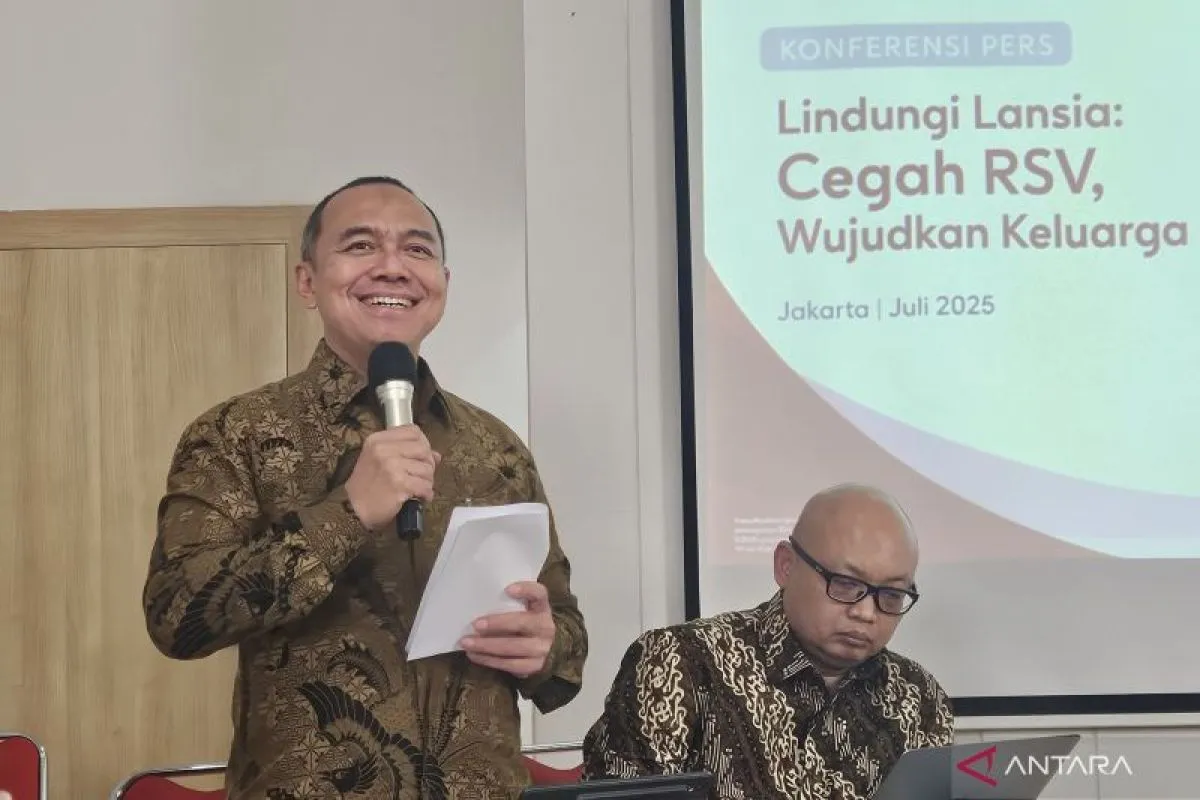
The ministry's Director of Vulnerable Groups' Health Services, Imran Pambudi, said in Jakarta on Tuesday that this year's International Day of Zero Tolerance for Female Genital Mutilation is commemorated with the theme of "No End to FGM Without Sustained Commitment and Investment."
He noted that the latest data from the 2024 National Women’s Life Experience Survey (SPHPN) shows that the prevalence of FGM practice has only dropped slightly over the last decade, from 52 percent in 2013 to 46 percent in 2024.
More than half of these cases are carried out symbolically.
"Symbolic forms, such as nicks, pricking, or rituals without actual cutting, are often seen as 'milder' by the public. In fact, they still maintain the social legitimacy that keeps the practice alive," he remarked.
He explained that the practice is still found across Indonesia, with higher prevalence in specific regions and communities. Studies and reports frequently highlight West Nusa Tenggara, Lampung, and parts of Jakarta.
The practice is also reported across other communities on major islands and in coastal areas, though it varies significantly by region. Local factors such as tradition, local religious rulings, and the medicalization of the practice all influence how it spreads.
From a health perspective, Pambudi underlined that FGM has no medical basis. It carries risks of short-term complications like pain, bleeding, and infection, as well as long-term effects such as scarring, sexual health issues, and psychological distress.
The Indonesian government has introduced several regulations to end FGM, including Government Regulation No. 28 of 2024, which officially bans the practice, and Health Minister’s Regulation No. 2 of 2025, which prohibits health facilities from performing it.
He assessed that this year's International Day of Zero Tolerance for Female Genital Mutilation—observed every February 6—must drive coordinated measures between the government, health workers, religious leaders, community leaders, and families.
Pambudi emphasized that while changing social norms does not happen overnight, with the right strategies, such as firm regulations, communication that respects local values, and protection for those working on the ground, Indonesia and other nations have a real chance to speed up FGM elimination.
Related news: Collaboration key to end female genital mutilation: commission
Related news: Ministry to involve teenagers to prevent female genital mutilation
Related news: KPPPA seeks action plan to prevent female genital mutilation, cutting
Translator: Mecca Yumna, Raka Adji
Editor: Azis Kurmala
Copyright © ANTARA 2026


