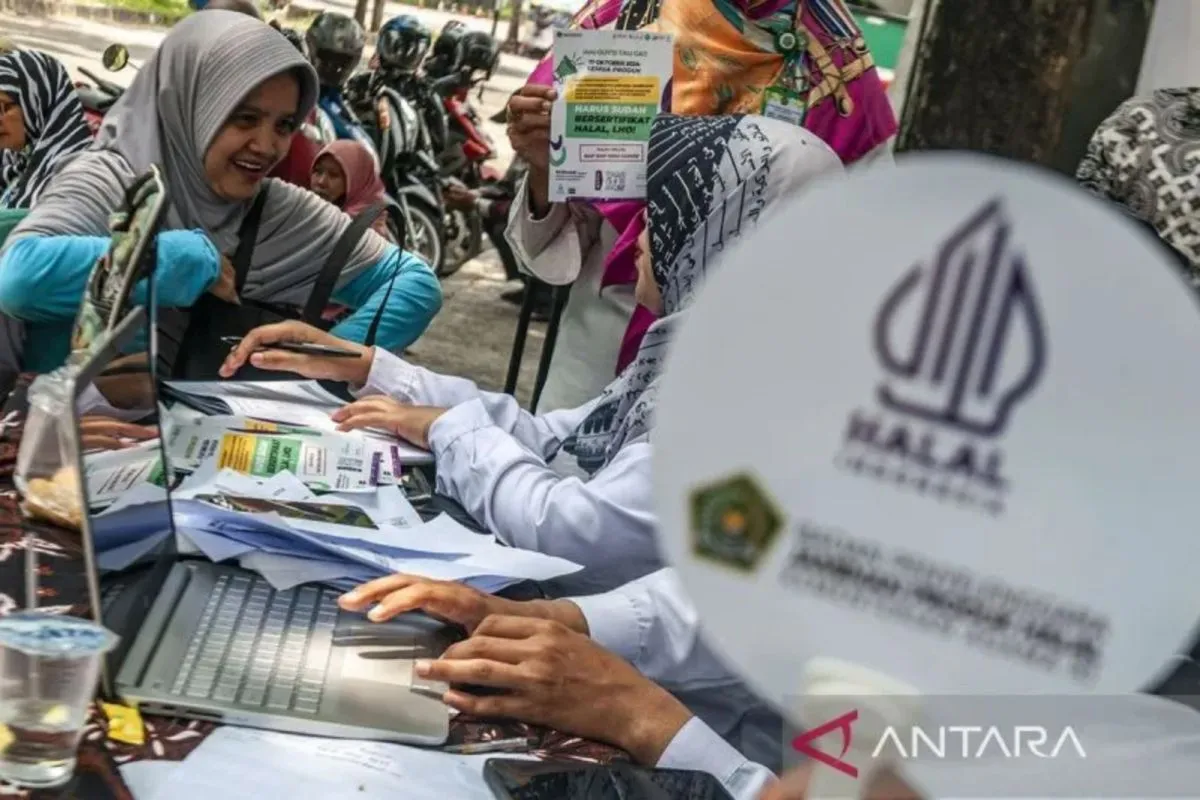
Emmy Suryandari, head of the ministry’s Industry Standardization and Services Policy Agency, said the dependence on imports requires tighter oversight to protect the halal ecosystem from upstream to downstream.
Speaking at the 99th Indonesian Sharia Economists Forum in Jakarta, she said the government’s New National Industrialization Strategy applies backward and forward linkage approaches to trace supply chains.
“Raw materials are one of the main challenges. If upstream production is domestic, tracing is easier. But when most inputs are imported, it becomes more complex,” Emmy said.
To address the issue, the ministry is preparing measures to ensure imported materials can qualify as halal, including stricter documentation, coordination with the Halal Product Assurance Agency (BPJPH), and efforts to harmonize international halal standards.
She said industries often face difficulties when required to produce halal goods while their inputs do not fully meet standards or when halal markets are still developing.
To strengthen the ecosystem, the ministry has issued a 2025–2029 halal industry development roadmap under Industry Minister Regulation No. 40/2025.
The roadmap includes six key programs, such as drafting technical rules to embed halal standards into industrial operations, expanding infrastructure including halal inspection bodies, raw material centers and logistics systems, and upgrading information platforms.
Additional measures focus on developing skilled human resources through cross-ministerial collaboration, facilitating halal certification with BPJPH and the Trade Ministry, and offering incentives in designated halal industrial zones.
Emmy cited pharmaceuticals as a critical sector, noting it imports up to 90 percent of its raw materials, requiring gradual substitution.
“Substitution takes time, including regulatory approvals. We are coordinating with BPJPH to identify materials that are difficult to certify while ensuring compliance,” she said.
The government is also pushing industries to increase domestic sourcing while designing transition policies for sectors that remain dependent on imports.
Related news: Indonesia enforces halal rule on U.S. products despite MRA
Related news: Indonesia boosts halal checks on Chinese imports
Translator: Shofi Ayudiana, Primayanti
Editor: Rahmad Nasution
Copyright © ANTARA 2026


