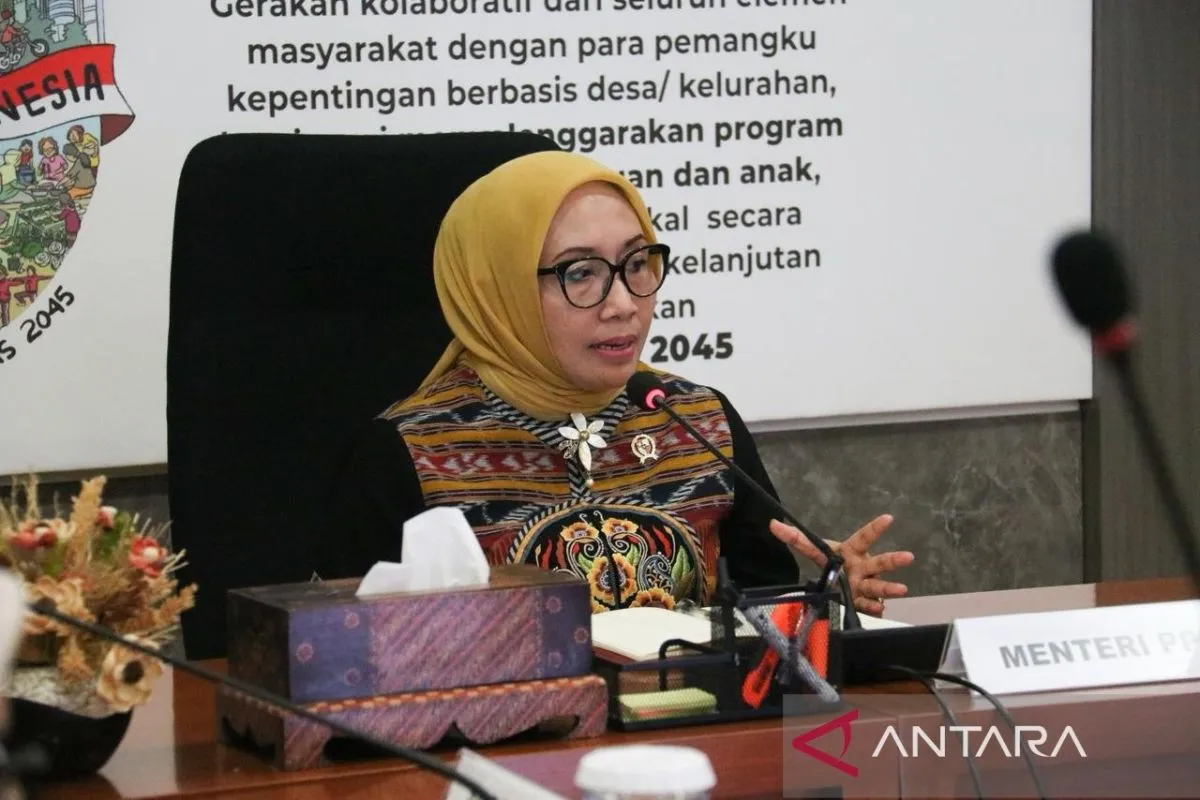
Women’s Empowerment and Child Protection Minister Arifah Fauzi said domestic workers play a crucial role in supporting family welfare and the broader economy but frequently remain overlooked in labor protections.
“Equality is not just a goal; it is the foundation of a nation’s progress. Today reminds us that we must break down structural barriers that hold women back, especially domestic workers,” Fauzi said in Jakarta on Sunday.
She made the remarks as Indonesia marked International Women's Day, which is observed annually on March 8.
Fauzi said domestic workers are a key pillar of household well-being and an important yet often unrecognized driver of economic activity.
Despite their essential role, she noted that domestic work is still inadequately protected under existing labor regulations. Many domestic workers lack clear employment contracts, legal protection against abuse and guaranteed access to basic labor rights.
Fauzi said the government believes domestic workers deserve protection, recognition and respect for their human dignity.
She added that developing regulations to ensure legal certainty for domestic workers is an important step in strengthening Indonesia’s commitment to justice and humanity.
Such efforts also reflect the values of Pancasila, which emphasizes social justice and respect for human dignity.
As part of this effort, Indonesia’s House of Representatives has initiated the Domestic Workers Protection Bill to improve legal safeguards for workers in the household sector.
The proposed legislation has undergone extensive public consultations and a lengthy legislative process involving various stakeholders.
Fauzi said the bill is expected to provide a clear legal framework governing employment relationships between domestic workers and their employers.
The draft law includes provisions regulating the rights and responsibilities of both parties.
It also addresses protection from violence, exploitation and unfair treatment while promoting decent and humane working conditions.
Related news: Minister calls for ratification of domestic workers protection bill
Related news: May Day: MPR presses for passing domestic worker protection bill
Translator: Anita Permata, Raka Adji
Editor: Rahmad Nasution
Copyright © ANTARA 2026