Meanwhile, in the cities, small workspaces are filled with graphic designers, content creators, and app developers working from their laptops. All of these activities share a common thread: creativity that is gradually transforming into an economy.
In the last few years, the creative economy has been regarded not merely as a complement to the tourism sector but as a new engine of growth in the region.
The government has set the Bali-Nusa Tenggara region as an international-level superhub of tourism and the creative economy in its long-term development plan until 2045.
Amidst this shift, NTB has reached an interesting turning point. While it is rich in cultural heritage and local creativity, the region is being positioned as a national laboratory for creative economy policy, particularly through the government’s subsidized micro-credit program People's Business Credit (KUR) for entrepreneurs in the creative economy sector.
This momentum raises a vital question: Is NTB truly ready to establish the creative economy as the foundation of its future?
Power of creation
Fundamentally, the creative economy relies on one inexhaustible resource: human ideas. This sector spans at least 17 subsectors, ranging from culinary arts, crafts, and fashion to film, music, digital applications, and game development.
In NTB, this potential is evident in various culture-based economic activities.
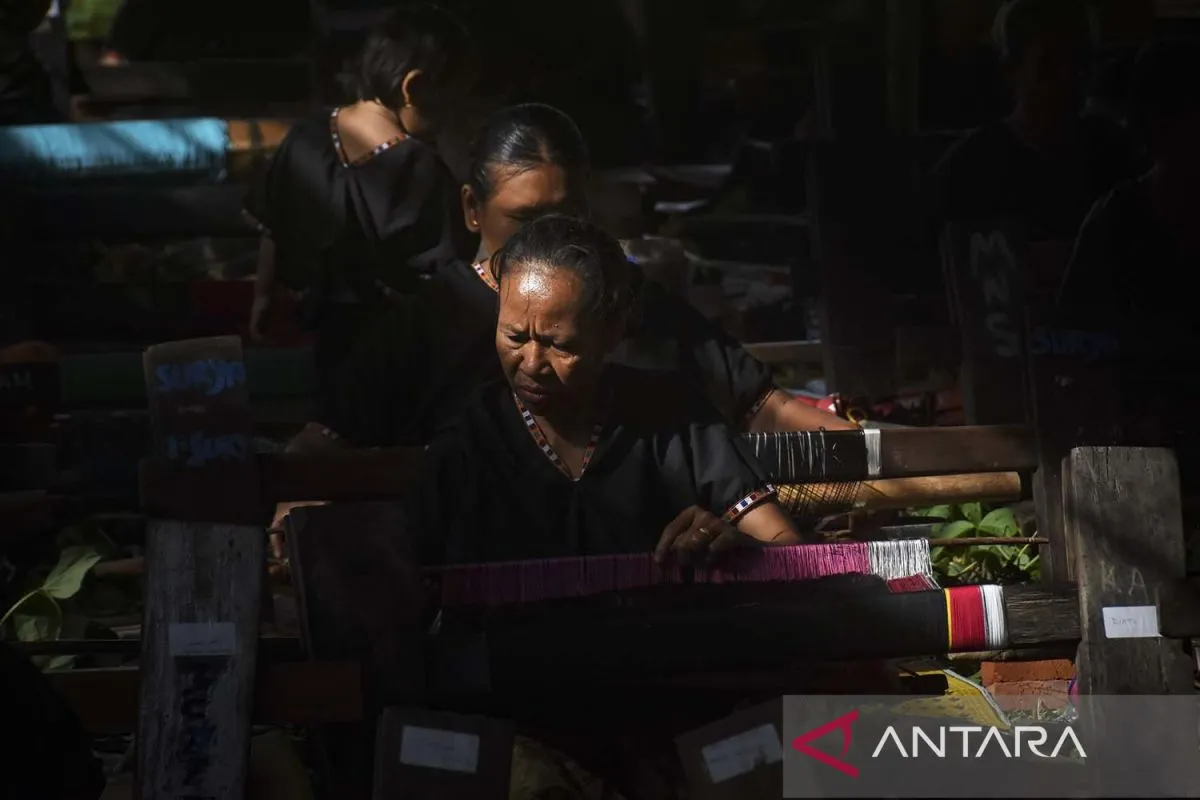
Traditional weaving in Lombok and Sumbawa, for instance, serves not just as a cultural legacy; it is a main source of income for thousands of families.
In West Sumbawa District, the local government organized a 20-day training program on weaving motif development to boost product quality and competitiveness. The initiative goes beyond technical skills; it paves the way for new designs with higher market value.
Beyond crafts and fashion, the creative economy is also thriving through various festivals and local product exhibitions. Events like Karya Kreatif NTB and the Lombok Sumbawa Tenun Festival serve as prime examples of how cultural promotion can be packaged into an opportunity for small business owners to showcase their products.
The festival also featured a craft bazaar, performing arts, and culinary markets, demonstrating the creative economy's broad multiplier effect, spanning from production to consumption.
Furthermore, villages are beginning to use culture as a foundation for the creative economy. The establishment of village museums in parts of Lombok shows how historical preservation can be integrated with new economic activities.
Village museums no longer serve as mere places to store artifacts; some have transformed into community hubs where young people turn cultural stories into tourism experiences that generate economic value.
From traditional tenun (woven fabric) to village museums, and from cultural festivals to digital products, the creative economy in NTB demonstrates one vital characteristic: it is rooted in local identity.
Challenges
Despite the enormous potential, there are still structural challenges that threaten the growth of NTB's creative economy sector. One of the most significant ones is access to financing.
Many creative economy players operate their businesses on a small scale with a model that is not yet fully understood by financial institutions.
Creative products are created based on ideas, designs, or intellectual property, which are difficult to use as collateral under the conventional banking system.
This is why the government's decision to make NTB a pilot project in the KUR scheme for the creative economy is a strategic move. The scheme opens new possibilities where intellectual property can be factored into credit assessments.
If this scheme is successful, creative entrepreneurs who previously struggled to access capital could secure hundreds of millions of rupiah in financing to scale their businesses.
However, funding alone is not enough for creative economy players to grow.
Statistics Indonesia (BPS) notes that the development of the creative economy in Indonesia still faces three major hurdles: limited access to financing, low human resource capacity, and insufficient digital infrastructure.
The human resource challenge is a particularly vital issue in regions like NTB. Many creative workers possess strong skills in production but have yet to fully master business management, digital marketing, or brand development.
Meanwhile, in the era of the digital economy, having good quality is not enough for products to attract people. They must have a story to convey, strong visuals, and the right marketing strategy to compete in the increasingly open market.
Furthermore, digital infrastructure also plays a decisive role. High-speed internet, digital marketing platforms, and access to global markets are necessary for creative economy players to grow.
Without the support of a proper digital ecosystem, local creative potential will struggle to reach beyond local markets.
Creative ecosystem
If the goal is to make the creative economy a pillar of NTB's economic future, policy approaches can no longer be partial. Developing a complete creative ecosystem is a must.
This ecosystem should have at least four primary pillars:
First is talent. Developing creative human resources must begin with education and training that can meet industry needs. Programs focused on digital talent, design, multimedia, and content production are vital investments for the younger generation.
Second is financing. The KUR program for the creative sector must be paired with an effective curation system, ensuring that funding is directed toward businesses that truly have growth potential.
Third is market access. Creative products need a platform. Festivals, exhibitions, and digital platforms must be utilized to showcase local work, allowing it to reach a broader audience.
Fourth is creative spaces. Cities and villages need to provide public spaces where creative communities can gather, collaborate, and experiment. Many innovations are born not in formal meeting rooms, but through free and open community interactions.
In the context of NTB, the Mandalika Special Economic Zone (SEZ) also holds great potential to become a hub for a digital-based creative ecosystem.
This zone should be developed by not focusing on hotel investment and sporting events, but also on supporting digital creators and creative industry players.
If designed well, Mandalika could evolve into a meeting point for tourism, technology, and creativity.
NTB's future is not only decided by its natural resources or large-scale infrastructure development projects, but also by its ability to nurture the creativity of its residents.
The creative economy teaches a vital lesson: economic power is not always born from mines or large factories, but from simple ideas cultivated through imagination and hard work. The question is no longer whether West Nusa Tenggara possesses such potential—that is now undeniable.
The focus must now shift toward ensuring this local creativity can evolve into sustainable economic power for both the region and the nation.
Related news: Weaving profit with purpose in West Nusa Tenggara
Related news: NTB Tourism Office to optimize local weaving promotion at WBSK, MotoGP
Editor: Rahmad Nasution
Copyright © ANTARA 2026


