Efforts in promoting waste sorting at source, operating RDF facilities, and constructing the PLTSa, are expected to serve as "redemption" for Bantargebang,Jakarta (ANTARA) - "Whether we like it or not, we have to get used to sorting our waste,” Jakarta Governor Pramono Anung said, while urging residents to adopt the habit of sorting their waste at home.
His statement is related to the condition at the Bantargebang Landfill, which has long served as Jakarta’s primary waste disposal site and has now reached its capacity. For 37 years, the site has accommodated approximately 80 million tons of waste from Jakarta.
Environment Minister Hanif Faisol Nurofiq called this excessive long period of a landfill as the tip of the iceberg, reflecting Jakarta's failed waste management.
Therefore, the Jakarta Provincial Government must close the site and ensure that every area, including terminals, shopping centers, markets, and restaurants, to manage its own waste.
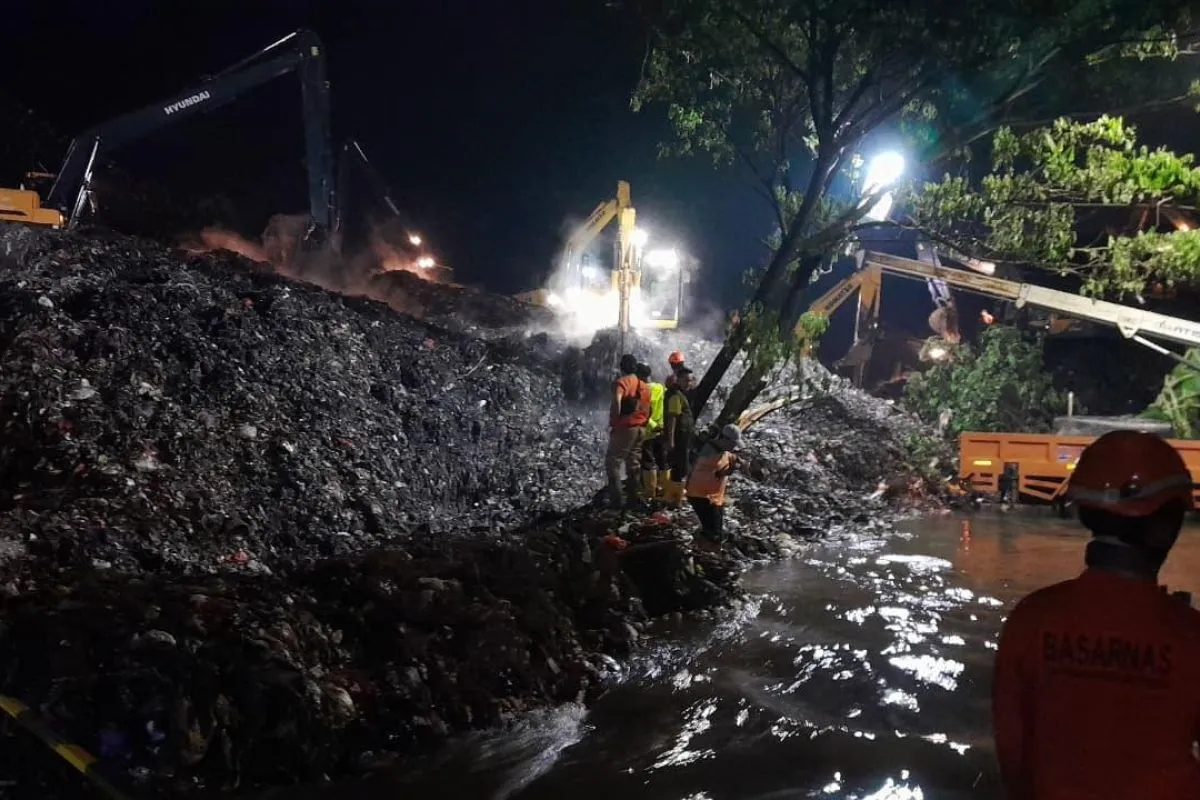
The DKI Jakarta Provincial Government has adhered to the directive by shutting down the Zone 4A at the Bantargebang Landfill following a landslide in early March, which impacted 13 individuals and caused seven fatalities.
Prior to this, landslides had occurred multiple times, in 2003 where it hit a residential area. Then, in 2026, when Zone 3 collapsed and burying dozens of scavengers, resulting in two deaths.
However, the provincial government only closed the Zone 4, while Zone 3 and Zone 2 remain open to accommodate Jakarta daily waste.
In order to reduce the daily burden on the remaining zones, the practice of sorting and reducing household waste has been reinvigorated.
This is a crucial part of Jakarta's long-term waste management strategy and also reduces the daily volume of waste entering the landfill.
For several years, Jakarta has promoted the adoption of this practice among its residents, with efforts intensified over the past two years.
Waste reduction at the source can be achieved through practical measures that communities can adopt, including segregating waste into biodegradable, recyclable, residual, and household hazardous and toxic (B3) categories. Furthermore, communities are encouraged to compost food waste and reuse items that retain value.
The implementation of Gubernatorial Regulation Number 77 of 2020 concerning Waste Management at the Neighborhood Unit (RW) has been carried out sustainably since 2021, through the establishment of the Community Waste Management Unit (BPS RW).
Data from the Jakarta Environmental Agency shows that by 2025, 2,755 BPS RW units have been established, acting as the vanguard in community-based waste management at the neighborhood unit level.
BPS RW also implements waste reduction initiatives, where data from the fourth quarter of 2025 shows that of the 2,755 BPS RWs established, 2,351, or 85.34 percent, are categorized as active.
This initiative is reflected in the implementation of waste sorting at the community level, the application of 3R (reduce, reuse, recycle) practices, the processing of organic waste within neighborhood associations (RT), and the establishment and operation of waste banks at the RW level.
By December 2025, waste management within neighborhood associations had driven the growth of households waste sorting.
The number of households sorting reached 236,494, equivalent to 11.47 percent, exceeding the fourth quarter target of 11 percent.
Meanwhile, the number of active waste banks reached 2,083, with a waste reduction of 10,004 tons from January 2025 to December 2025.
However, this figure remains insufficient. Jakarta requires binding regulations to mandate waste sorting. A gubernatorial regulation (Pergub) or regional regulation (Perda) on household waste sorting should be enacted.
Residents must sort waste into four categories: biodegradable waste that can be processed into compost; and recyclable waste, such as plastic, paper, and metal, which can be distributed to waste banks.
Furthermore, there is B3 waste, or hazardous and toxic materials, and residual waste that cannot be recycled.
Last but not least, the Jakarta Provincial Government must tighten its waste sorting system to ensure that not all waste is transported to Bantargebang. With improved waste sorting, only residual waste should be directed to the final disposal site.
Related news: Minister says Bantargebang Landfill exposes waste system failure
Rorotan
The Jakarta Refuse Derived Fuel (RDF) Plant in Rorotan, North Jakarta, is also in operation to support the processing of the city’s waste and to maintain the stability of the post-landslide waste management system at the Bantargebang Landfill.
The Rorotan RDF started operation on March 10, 2026, with an initial capacity of around 300 tons per day, which will then be gradually increased to 1,000 tons per day.
In addition to the Rorotan RDF Plant, waste processing is also carried out at the Bantargebang RDF Plant with a capacity of around 800 tons per day and at the Merah Putih Waste-to-Energy Power Plant (PLTSa) with a capacity of around 100 tons per day.
Under this scheme, the overall waste handling capacity is projected to range between 6,700 and 7,150 tons per day.
Experts consider this policy appropriate. Urban planning observer Sugiyanto believes that the operation of the Rorotan RDF Plant facility aligns with the precautionary principle in environmental management.
Meanwhile, the Executive Director of the Indonesia Public Policy and Economic Studies (IPPES), M. Zulfikar Dachlan, stated that the operation of the Rorotan RDF facility should not be delayed any longer, despite some residents' objections.
In response to concerns raised by residents surrounding the Rorotan RDF facility regarding potential odor, pollution, and environmental impacts, the facility has developed a mitigation strategy.
On the waste transportation issue, waste delivery to the Rorotan RDF Plant will only be using using enclosed compactor trucks procured in 2024 and 2025. These trucks are designed to prevent odors and leachate spills along the transportation route.
The Jakarta Provincial Government also operates monitoring posts at two main access points from North Jakarta and East Jakarta to ensure that waste containers are securely sealed and that leachate storage units are leak-proof.
Strengthening technology and environmental controls is also a priority. The Rorotan RDF Plant has upgraded its air pollution control devices (APCD) system to minimize potential odors and air emissions.
Four deodorizers have been installed, up from three previously. These units work to suppress odors at the source of the process, before they spread to the surrounding environment.
Besides deodorizers, the Rorotan RDF Plant is also equipped with a comprehensive and multi-layered emission control system. These devices include six cyclones, baghouse filters, and wet scrubbers.
This system is enhanced by two second-stage wet scrubbers, two wet electrostatic precipitators, two activated carbon filters, eight induced draft fans, and two chimneys designed for a safe and controlled emission release.
Despite these strategies, the foul odor persists. Wahyu Andre Maryono, head of neighborhood association of the Shinano JGC Cluster, conveyed that a faint odor is still present at indefinite intervals, although only for short periods.
The Air Quality Monitoring Station (SPKU), which measures air pollution parameters including odor, has resumed operations, and residents will continue to oversee and evaluate RDF management to ensure corrective actions and the resolution of persistent odor complaints.
For the next six months, residents, along with the Jakarta Provincial Government, as part of the Jakarta RDF Plant Operational Activity Monitoring Working Team, will continue to monitor and supervise activities at the RDF facility.
Speaking on behalf of residents, Wahyu expressed hope that the Jakarta Provincial Government will consistently address health concerns and the environmental impacts of RDF management.
While supporting the need for proper waste management to prevent accumulation, he warned that relocating the issue to the Rorotan RDF facility is not an appropriate solution. He stressed that waste sorting must be a collective priority, as without proper sorting at the source, even numerous waste processing plants would fail to eliminate odor and health concerns.
On the other hand, the Jakarta Provincial Government is proposing the construction of three Waste-to-Energy Plants (PLTSa) in Bantargebang, Rorotan, and Sunter, which could reduce approximately 3,000 tons of waste per day in Bantargebang.
According to calculations, once the PLTSa and RDF in Rorotan are operational, approximately 6,500 to 7,000 tons of waste could be accommodated.
In the future, the volume of waste from Bantargebang Landfill is expected to decrease by 1,000 tons daily, as expressed by Governor Pramono.
The repeated landslides at the Bantargebang Landfill serve as an important reminder on the importance of waste reduction at source as key to maintaining the sustainability of Jakarta's waste management system.
Efforts in promoting waste sorting at source, operating RDF facilities, and constructing the PLTSa, are expected to serve as "redemption" for Bantargebang, which has been operating since 1989.
Related news: Jakarta aims 1,000 tons daily at Rorotan RDF to cut Bantargebang waste
Editor: M Razi Rahman
Copyright © ANTARA 2026


