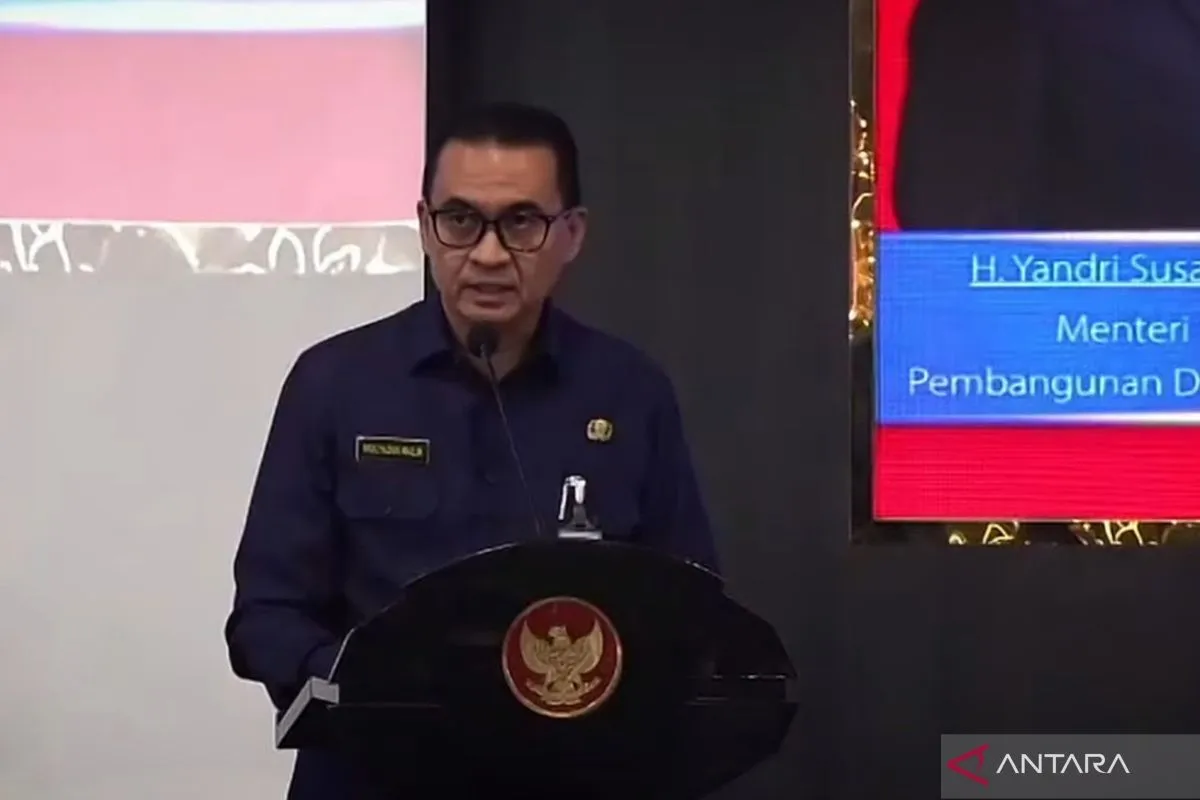
"We hope this training can serve as a joint effort to improve participants’ living standards, support family economies, and ultimately contribute to better public health in rural and disadvantaged areas," head of the ministry's information development agency, Mulyadin Malik, said here on Thursday.
During the opening of the Japanese Language Training Batch 2 at the ministry’s office, he said the training not only focuses on improving foreign language skills but also opens up job opportunities in Japan.
"This program is not only about language proficiency but also about opening new pathways and opportunities for rural and disadvantaged communities as access to skills and information expands," he said.
He explained that participants will have the option to continue to advanced training stages that will open the path to work in Japan, making the program a sustainable pathway for capacity building with clear outcomes.
He added that improving human resource capacity in villages has the potential to create a multiplier effect on the overall quality of life.
Meanwhile, Education Department Head of Mojo Indonesia Raya, Andi Irma Sarjani, said the training was part of a collaboration between the ministry and Mojo to enhance village human resources through foreign language competency.
Some 1,457 participants joined the second batch, coming from 36 provinces, 288 districts/cities, and 1,183 villages, a significant increase from 118 participants in the first batch.
"The training is divided into two stages, with an initial stage focusing on mastering hiragana and katakana, followed by an advanced stage covering basic kanji, beginner-level Japanese for daily conversation, and an introduction to tourism," she said.
Related news: Govt offers foreign language training for migrant vocational students
Related news: Indonesians need to know Japanese to work in Japan: Minister
Related news: RI, Japan deepen cooperation on forestry, conservation, climate action
Translator: Tri, Kenzu
Editor: Azis Kurmala
Copyright © ANTARA 2026


