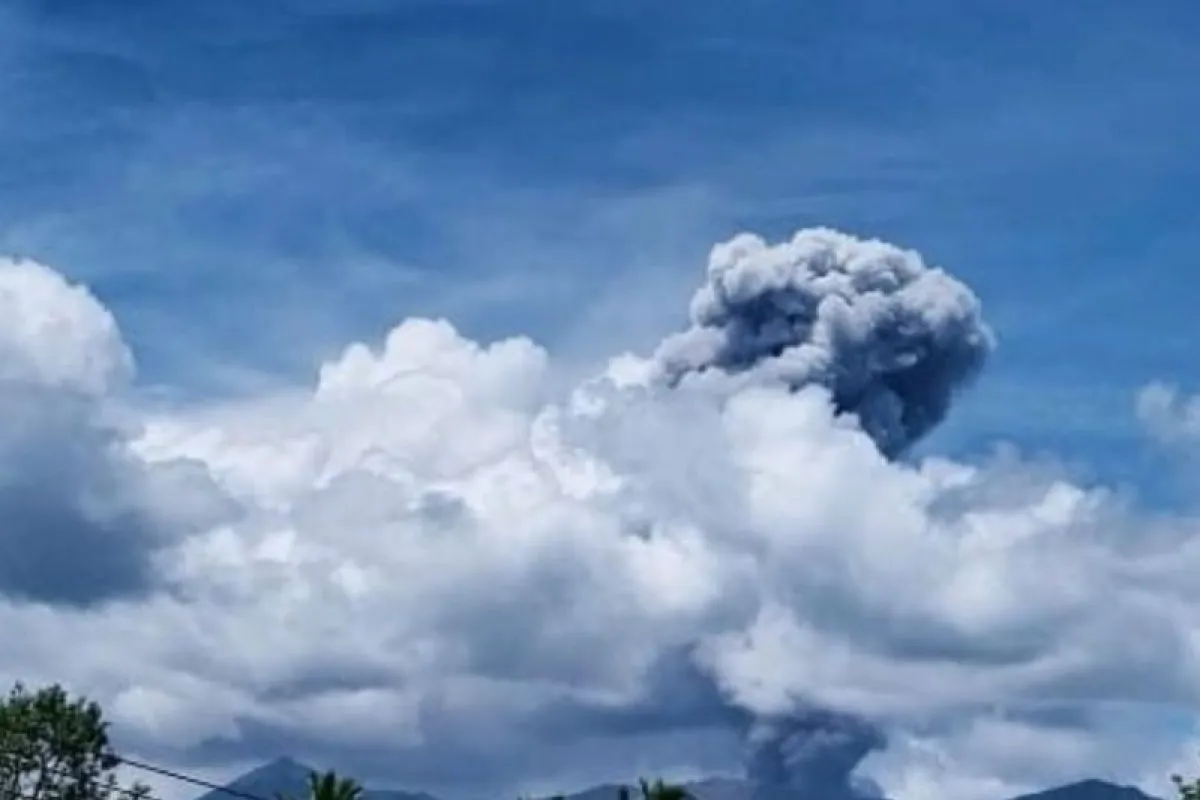
“Mount Dukono is currently showing intense activity, and we urge residents to stay vigilant,” Dukono Volcano Observation Post officer Bambang Sugiono said.
The eruption occurred at around 11:08 a.m., producing a thick gray ash plume drifting southwest in line with prevailing winds.
Seismograph readings confirmed the eruption, with a maximum amplitude of 27 mm and a duration of about 55.07 seconds.
The data indicate that Dukono’s volcanic activity remains high and occurs periodically.
The volcano, which stands at 1,087 meters above sea level, is currently at Level II, or Alert, status.
Sugiono said the status reflects above-normal activity and requires heightened public awareness, especially in surrounding areas.
The Volcanology and Geological Hazard Mitigation Agency has advised residents and tourists to avoid all activities within a 4-kilometer radius of the Malupang Warirang Crater.
Authorities warned that eruptions remain unpredictable, with ash distribution shifting depending on wind direction and speed.
“As ash is carried by the wind, the affected areas can change at any time,” Sugiono said.
In addition to the risk of falling volcanic material, ash exposure poses serious health threats, particularly to the respiratory system.
Residents and those working near affected areas are advised to wear masks or cover their noses and mouths.
Officials said monitoring of Mount Dukono remains ongoing, with volcanic activity being closely observed.
Local authorities are coordinating with relevant agencies to ensure public safety and provide updated information.
Related news: Mount Dukono spews 3,500m ash, bans activities within 4 km radius
Related news: Indonesia's Mount Dukono erupts again, spews ash 3,000 meters high
Translator: Abdul Fatah, Resinta Sulistiyandari
Editor: Rahmad Nasution
Copyright © ANTARA 2026


