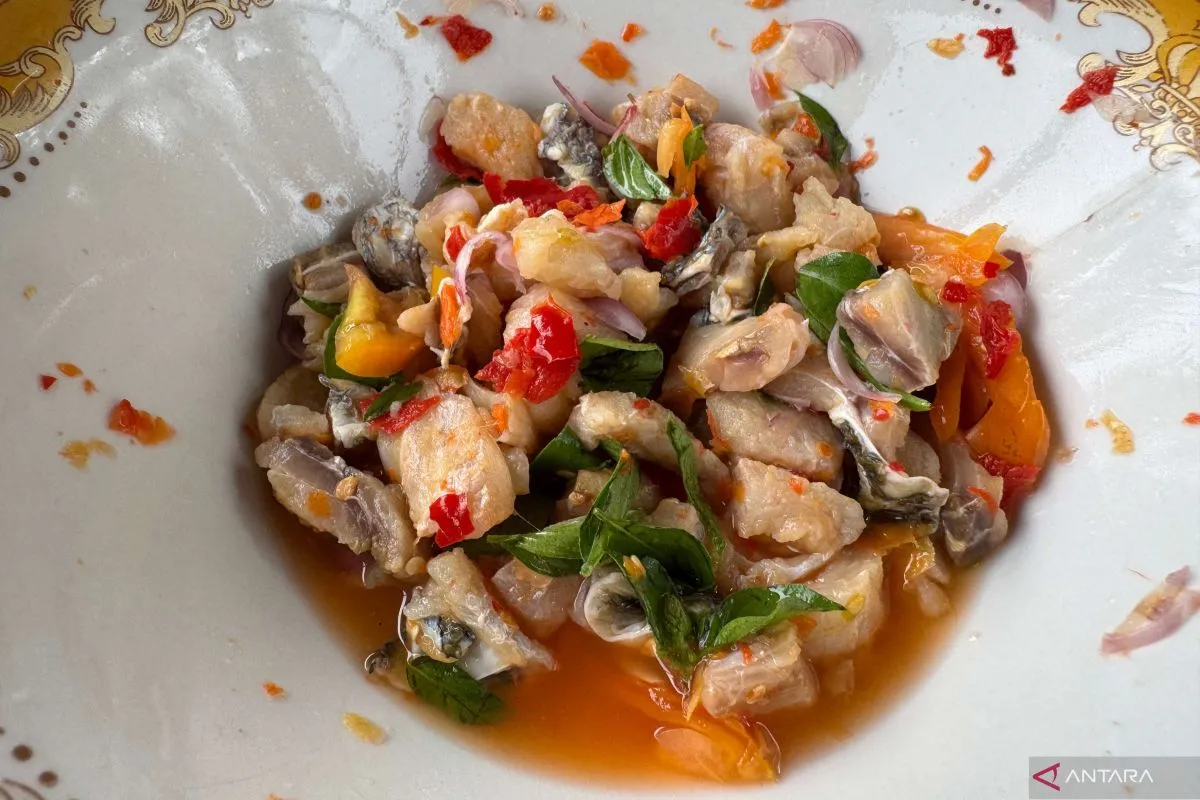
Across thousands of islands, salting has long been the primary defense against spoilage in a tropical climate.
However, deep within the Maluku province, the Teon Nila Serua (TNS) community maintains a practice that transcends simple food storage, transforming fresh catch into a cultural icon known as inasua.
The linguistic roots of the dish reflect the geography of the islands. In the Nila language, ina signifies fish and sua means salt. While the concept remains consistent across the TNS islands, local dialects offer subtle variations: it is known as inmana in Teon and inaskua in Serua..
Unlike the ubiquitous sun-dried salted fish found in Indonesian markets, inasua is a product of anaerobic fermentation.
This method avoids the hardening effects of the sun, resulting in a finished product that retains a moist, tender texture.
Often served raw after its curing period, inasua is frequently described by culinary enthusiasts as a savory, salty variation of sashimi, uniquely flavored by the deep-sea minerals of the Banda Sea.
According to Ferymon Mahulette, a researcher at Pattimura University, inasua historically served as essential provisions for Teon Nila Serua ancestors during month-long sailing trips to Ambon.
These journeys were often delayed by difficult currents, making durable food supplies vital for survival.
Furthermore, inasua was a practical solution for managing surplus catches during peak seasons and ensuring food security when harsh weather prevented fishing.
"Inasua is prepared for seasonal transitions, particularly during the windy and high-wave seasons when the weather prevents us from going to sea," Maria Lakotani Marantika (62), a Nila native now residing in Central Maluku, noted.
In the late 1970s, volcanic threats forced the indigenous communities of the Teon Nila Serua islands to relocate to Seram Island.
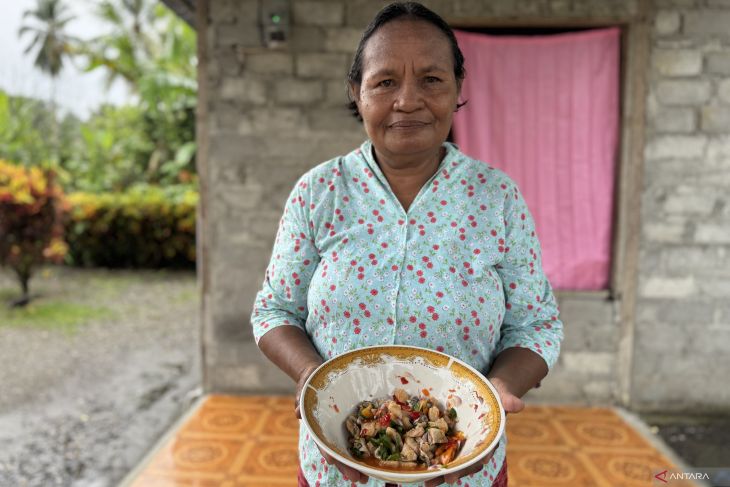
Despite this displacement, the tradition has endured.
Marantika, who was relocated at age 13, explains that the community still prepares inasua for special occasions and distributes it to the diaspora, reaching as far as Jakarta.
Ronald Wonmaly, head of the Teon Nila Serua Sub-district, confirms there is a consistent demand for the product among the community's descendants living across Indonesia.
"One local business group even ships it regularly to Jakarta to satisfy the requests of TNS people living in the capital and surrounding areas," Wonmaly said.
The role of oilfish
While inasua can be made on Seram Island, the preferred variety is oilfish (Ruvettus pretiosus), found in the deep waters of the Banda Sea.
This deep-sea fish can grow to the length of an adult human and is considered a rare, fortunate catch.
Notably, the fermentation process serves a functional purpose beyond preservation.
Raw oilfish possesses a laxative effect if consumed in large quantities, but Mahulette points out that fermentation helps minimize this effect, making the fish safer for consumption.
Additionally, if prepared under strict hygienic conditions, inasua can last for years, with the flesh gradually turning from white to a reddish hue.
The preparation methods vary slightly across the three islands.
In Serua, salt is ground into a fine powder for better absorption, whereas coarse salt is preferred in Nila. In Teon, the fish is soaked in salt overnight, rinsed, re-salted, and then pressed with weighted boards.
Traditionally stored in clay or bamboo, modern inasua is kept in sealed plastic containers.
To serve, the fish is rinsed, sliced, and mixed with colo-colo—a spicy condiment made of chili, tomatoes, shallots, and basil.
The resulting flavor profile is a complex mix of salty, sweet, and aromatic notes, typically enjoyed with staples like rice, cassava, or boiled bananas.
Preserving tradition for the future
The inasua tradition was recently highlighted at the Kor’a Inasua Festival in April 2026.
Supported by the Yayasan Konservasi Alam Nusantara (YKAN), the event aimed to modernize the packaging and marketing of the dish for a broader audience.
"Our goal is for inasua to evolve beyond a local staple. We want it to be developed, processed, and packaged attractively for a wider market," Wonmaly said.
Education also plays a role in its survival. Henderika Pormes of the Teon Nila Serua Family Association conducts workshops for students and at historical sites like Fort Amsterdam to promote the craft.
Beyond culture, YKAN’s Muhammad Ilman emphasizes that inasua aligns with conservation efforts.
By extending the shelf life and value of each catch, the process encourages moderate fishing and supports long-term food security.
Since 2015, inasua has been officially recognized as part of Indonesia’s Intangible Cultural Heritage.
Editor: Aditya Eko Sigit Wicaksono
Copyright © ANTARA 2026


