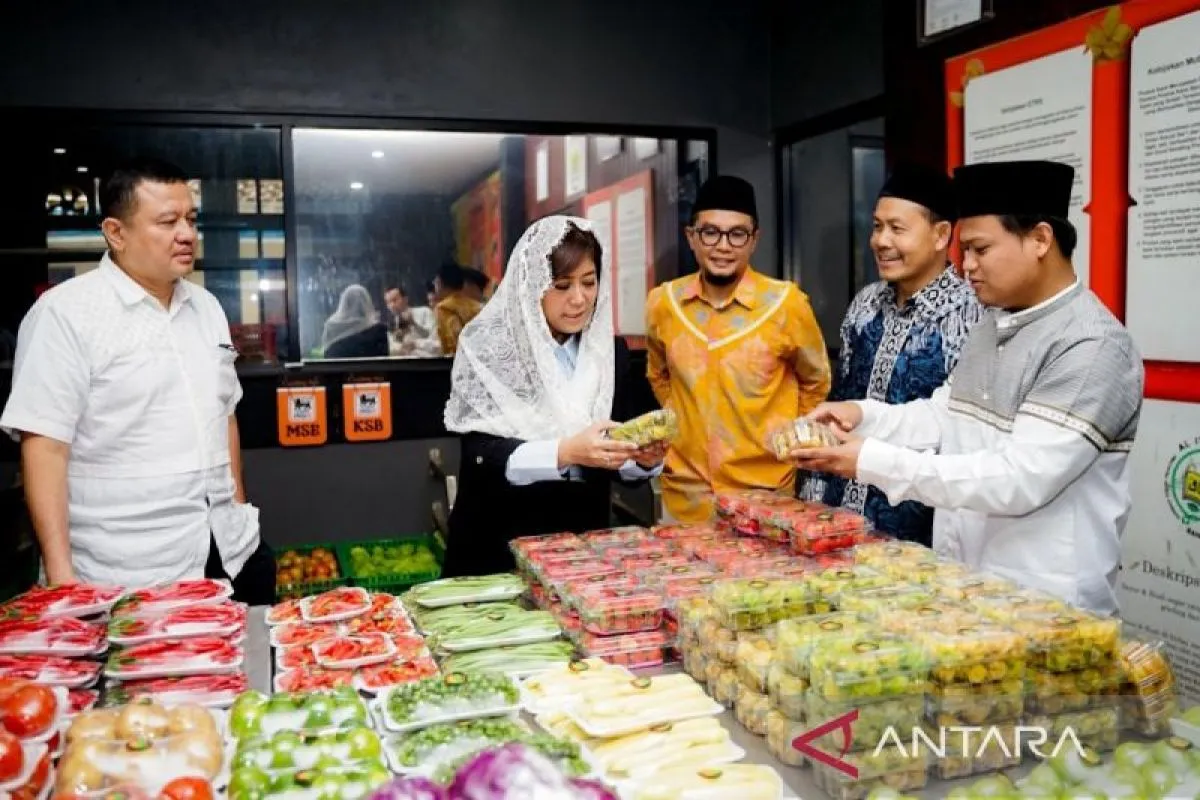
Deputy for Provision and Distribution at the agency, Suardi Samiran, emphasized the MBG programme continues to be reinforced as it represents a long-term investment in higher-quality Indonesian human resources.
"MBG is not merely a social assistance, but also a strategic innovation to enhance children’s cognitive potential and strengthen the national food security system," Samiran said in an official statement confirmed here on Tuesday.
He added that access to healthy food in schools serves as the foundation for creating a superior and globally competitive generation.
Related news: Ministry speeds up hygiene certification for 26 thousand MBG kitchens
Meanwhile, separately, expert staff at the Ministry of Communication and Digital Affairs, Molly Prabawati, said that while the MBG programme may not yet be widely felt in urban communities, it has become a crucial support system in remote, frontier, and outermost (3T) areas, especially for children.
"Indonesia is vast, consisting of more than 17,000 islands. There are large cities and remote areas, including 3T regions. This condition poses challenges for urban communities. MBG may be perceived as less relevant in urban areas; but for our children in the 3T regions, it is certainly very much needed," she added.
Prabawati stressed that to build the Golden Generation of 2045, Indonesia needs to ensure that the children receive adequate nutrition. Therefore, MBG programme is truly needed by students to help improve their focus during learning.
"I believe MBG is very much needed because when they go to school, their meals are already provided, allowing them to think clearly, and mothers’ needs are also met," she said.
Related news: Free Nutritious Meal attracts global interest, Prabowo says
Related news: Gov't ensures local food sources in MBG stabilise food prices
Translator: Lintang, Kenzu
Editor: Fransiska Ninditya
Copyright © ANTARA 2026


