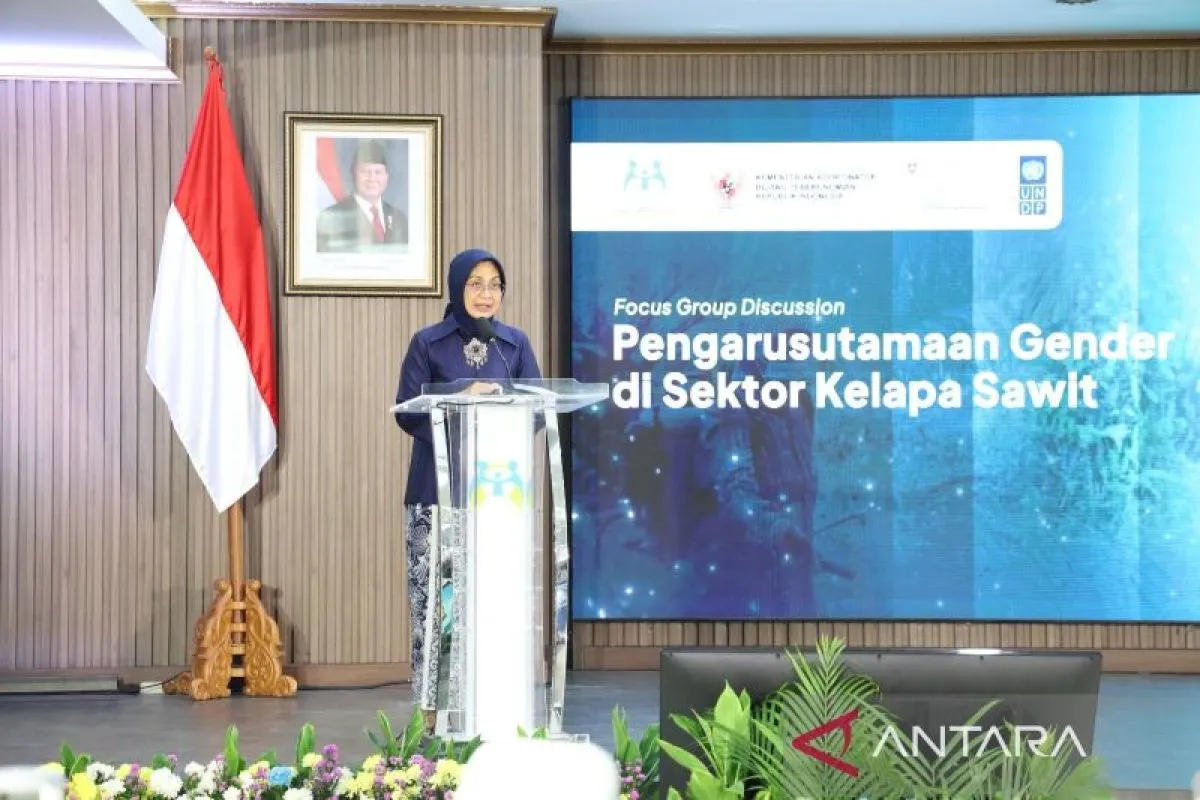
“Women play a significant role in the palm oil sector, both as workers, farmers, business actors, and members of communities around plantation areas,” Deputy for Gender Equality at the ministry, Amurwani Dwi Lestariningsih, stated here on Friday.
However, she noted that women still face various barriers in accessing resource management, financing, labor protection, and participation in decision-making processes.
She emphasized that strengthening gender perspectives in the palm oil sector is important to ensure women gain equal access, participation, and benefits from development.
According to her, the drafting of the PUG guidelines is part of the government’s efforts to promote inclusive and sustainable palm oil development by taking into account economic, social, and environmental balance.
“Gender mainstreaming needs to become an integral part of governance in sustainable, inclusive, and equitable development within the palm oil sector,” Lestariningsih stated.
In drafting the PUG guidelines for the palm oil sector, the ministry is encouraging various indicators to strengthen gender mainstreaming implementation, including the provision of gender-disaggregated data related to workers, farmers, and land ownership.
The guidelines also include indicators for stakeholder capacity building, increasing the number of regions and companies adopting gender-responsive policies, and providing childcare facilities as well as nutritional support for pregnant and breastfeeding mothers in workplaces.
Moreover, the draft guidelines include measures to reduce gender-based wage gaps and ensure the availability of monitoring reports and recommendations for continuous evaluation.
Related news: APEC urges stronger role for women in regional economy
Related news: Ministry sets 3-year target for women empowerment in remote areas
Translator: Anita, Kenzu
Editor: Primayanti
Copyright © ANTARA 2026


