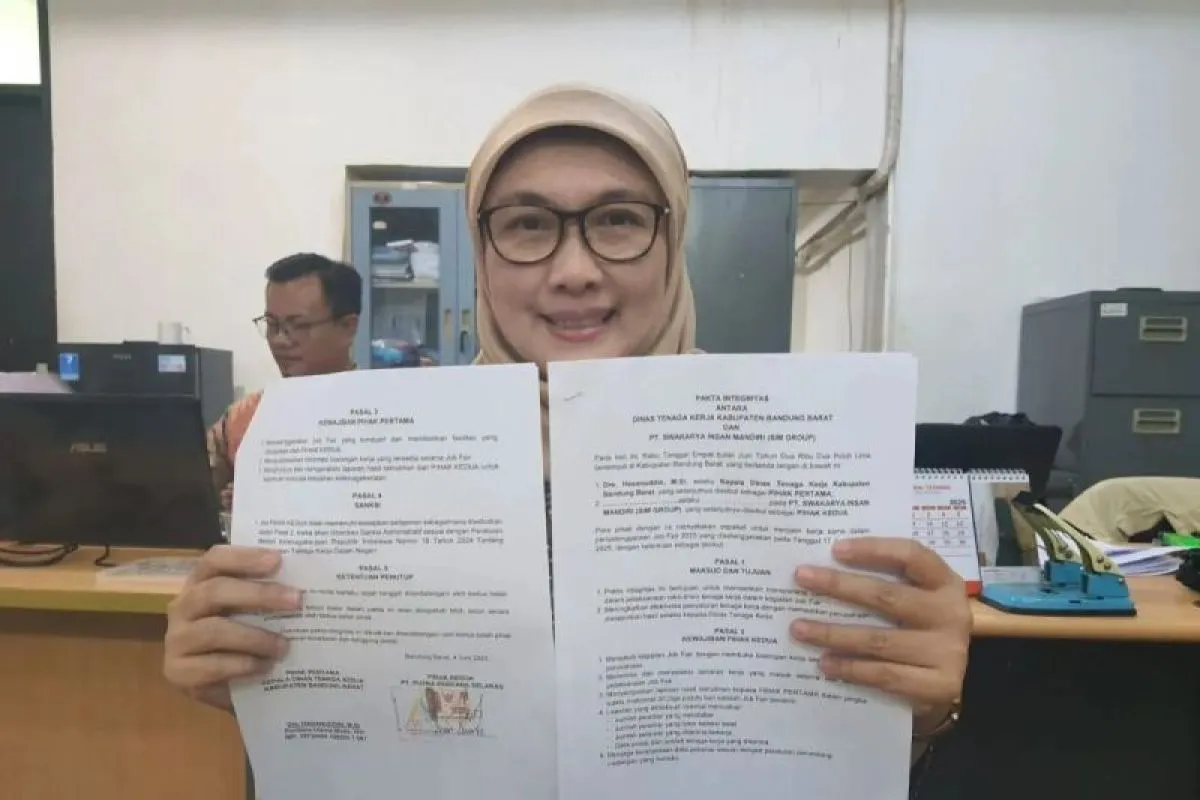
Dewi Andani, an official with the West Bandung Manpower and Transmigration Office, said the workers reported their problems and sought assistance returning home.
The workers were employed in several countries and territories, including Saudi Arabia, Libya, Hong Kong, Dubai, Cambodia, Malaysia, Turkiye and Taiwan, she said here Thursday.
Dewi said the workers had left Indonesia through unofficial channels and faced various problems abroad, including sexual harassment, unpaid wages and illness.
The West Bandung government also helped repatriate the remains of migrant workers, including five who died from illnesses while working abroad.
"Five people died from illness, and we facilitated their return. This shows the state remains present," Dewi said.
Dewi said unofficial recruitment remained popular because it was considered faster, easier and required fewer documents than official procedures.
Economic pressures, limited information, brokers or sponsors, and invitations from relatives or family members abroad also influenced people to choose unofficial channels.
"People choose unofficial channels because they seem faster and easier, with fewer requirements. But that is wrong and carries high risks," Dewi said.
The West Bandung Manpower and Transmigration Office urged people seeking overseas jobs to use official channels to obtain protection and avoid risks while working abroad.
Related news: Indonesia, IOM to renew cooperation on migrant worker protection
Related news: Minister calls for grand plan to protect Indonesian migrant workers
Translator: Ilham N, Rahmad Nasution
Editor: Primayanti
Copyright © ANTARA 2026


