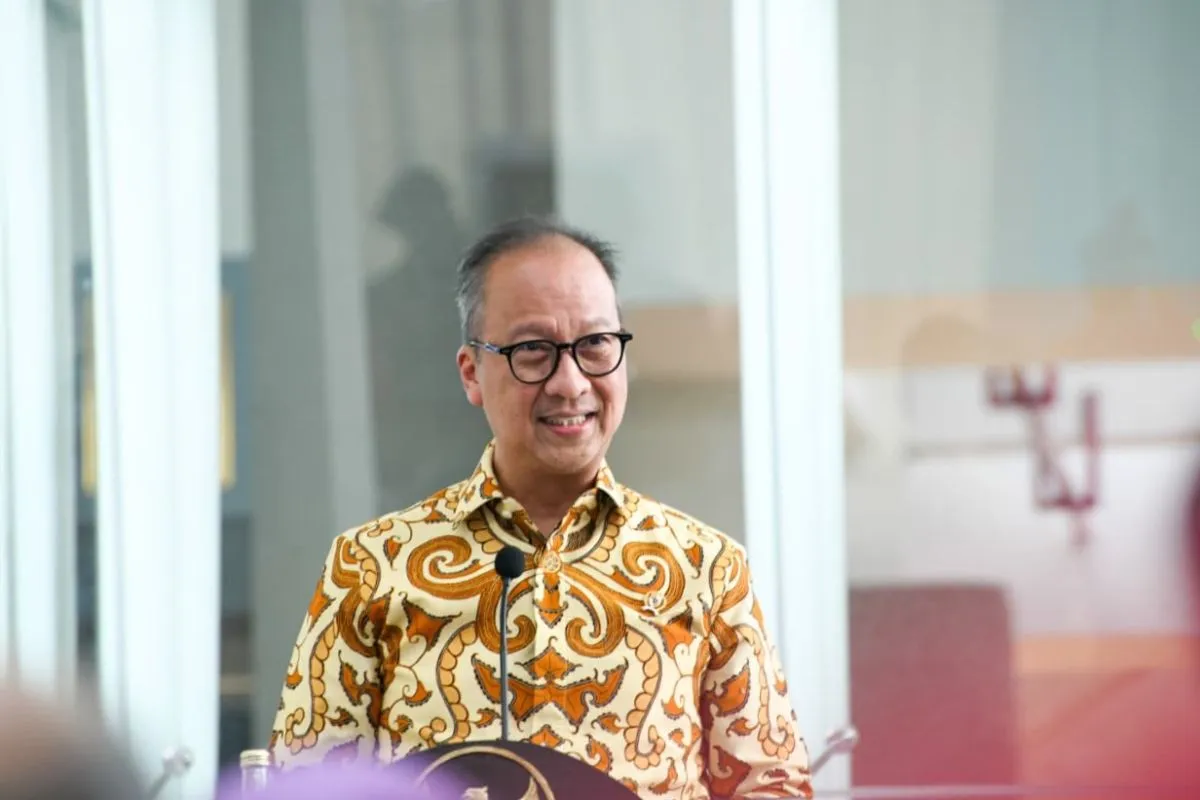
Industry Minister Agus Gumiwang Kartasasmita said industrial transformation should boost productivity and competitiveness while supporting cleaner and more sustainable production.
"The Industry Ministry continues to promote appropriate technology that can improve production efficiency while strengthening environmental sustainability," Agus said in a statement confirmed in Jakarta on Friday.
One initiative is a 3,500-liter wastewater treatment plant at the Sasirangan Timbaan small and medium industry center in Tapin district, South Kalimantan.
Laboratory tests showed the facility reduced hydrogen sulfide (H2S) by 98.75 percent, oil and grease by 97.33 percent, phenol by 91.66 percent, biochemical oxygen demand (BOD) by 81.77 percent, chemical oxygen demand (COD) by 80.44 percent, and TSC by 40.74 percent.
Almost all parameters met quality standards under South Kalimantan Governor Regulation No. 36 of 2008 and Environment Ministry Regulation No. 12 of 2025.
The facility was developed under the Accelerated Technology Utilization Program through the Industrial Technology Improvement Partnership Fund (DAPATI), which aims to speed technology adoption and improve environmental management among small and medium industries.
The Agency for Industrial Services Standardization and Policy (BSKJI) supports the program by providing industrial technology services tailored to businesses' needs in different regions.
BSKJI Head Emmy Suryandari said the program also strengthens human resource capacity so businesses can operate the technology independently and sustainably.
"DAPATI not only produces applicable innovations, but also increases human resource capacity so industrial players can operate the technology independently and sustainably," Emmy said.
The project was prompted by the direct disposal of liquid waste from Sasirangan fabric dyeing into infiltration wells without treatment, said Oktaviyanto Jimat Wibowo, head of the Banjarbaru Industrial Services Standardization and Policy Center (BSPJI Banjarbaru).
The eight-month project, conducted from March to October 2025, covered problem identification, field observations, treatment plant design, construction, technical guidance, and monitoring and evaluation.
The plant measures 450 centimeters long, 200 centimeters wide and 120 centimeters high and consists of seven treatment tanks.
These include one electrocoagulation tank using an inverter to initially settle metals, five filtration tanks using ijuk fiber, charcoal, broken roof tiles, coconut husks and purun plant waste, and one control tank before treated water enters the infiltration well.
The filtration materials were selected because they are locally available and can absorb various pollutants.
Oil and grease levels still require optimization through longer wastewater retention time in the treatment plant, according to the project findings.
Related news: Indonesia steps up packaging recycling to advance green industry
Related news: Indonesia outlines industrial transformation agenda at BRICS PartNIR
Translator: Ahmad Muzdaffar F, Martha Herlinawati Simanjuntak
Editor: Primayanti
Copyright © ANTARA 2026


