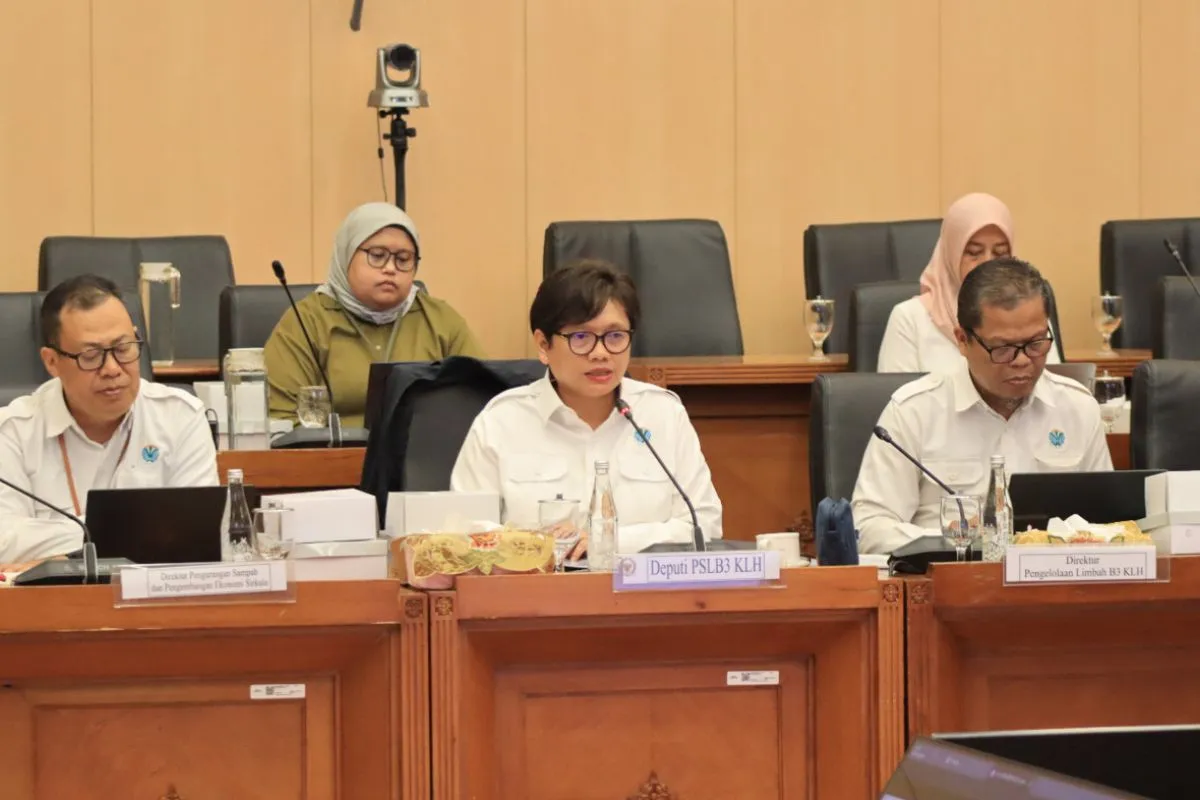
Environment Ministry Deputy Vinda Damayanti Ansjar said the roadmap would be developed in stages to meet the 2025-2029 National Medium-Term Development Plan target of 100 percent waste management.
She said 2026 priorities include improving governance, ending open dumping and reviving material recovery facilities, followed by major infrastructure development in 2027 and broader sustainability efforts through 2029.
Speaking to Parliament's Commission XII on Monday, Vinda said Indonesia generates 144,562 tons of waste daily, growing 1.48 percent annually, while the population stands at 285.4 million.
About 25 percent of the waste is managed, while most of the remainder goes to 522 landfills, 70 percent of which still use open dumping, sending about 36.59 percent into the environment.
Related news: Indonesia pushes interregional synergy to tackle growing waste crisis
Indonesia has 40,267 waste-processing facilities, including Reduce, Reuse and Recycle centers, village waste disposal sites and waste banks, although many require greater capacity.
Vinda said her office was revising Ministerial Regulation No. 75 of 2018 on producer waste reduction to clarify the Extended Producer Responsibility scheme and make it more practical for businesses.
The revised regulation would establish a Producer Responsibility Organization, a nonprofit body formed by producers to coordinate packaging waste management and recovery.
Producers would be required to pay fees to the organization to finance packaging waste management and recovery, while the obligation would also cover product and packaging importers.
Related news: Indonesia targets 30 regions for waste management improvement via LSDP
Vinda said importers would assume responsibility for products and packaging they bring into Indonesia, describing the provision as a new feature of the revised regulation.
Translator: Prisca Triferna, Resinta Sulistiyandari
Editor: Rahmad Nasution
Copyright © ANTARA 2026


