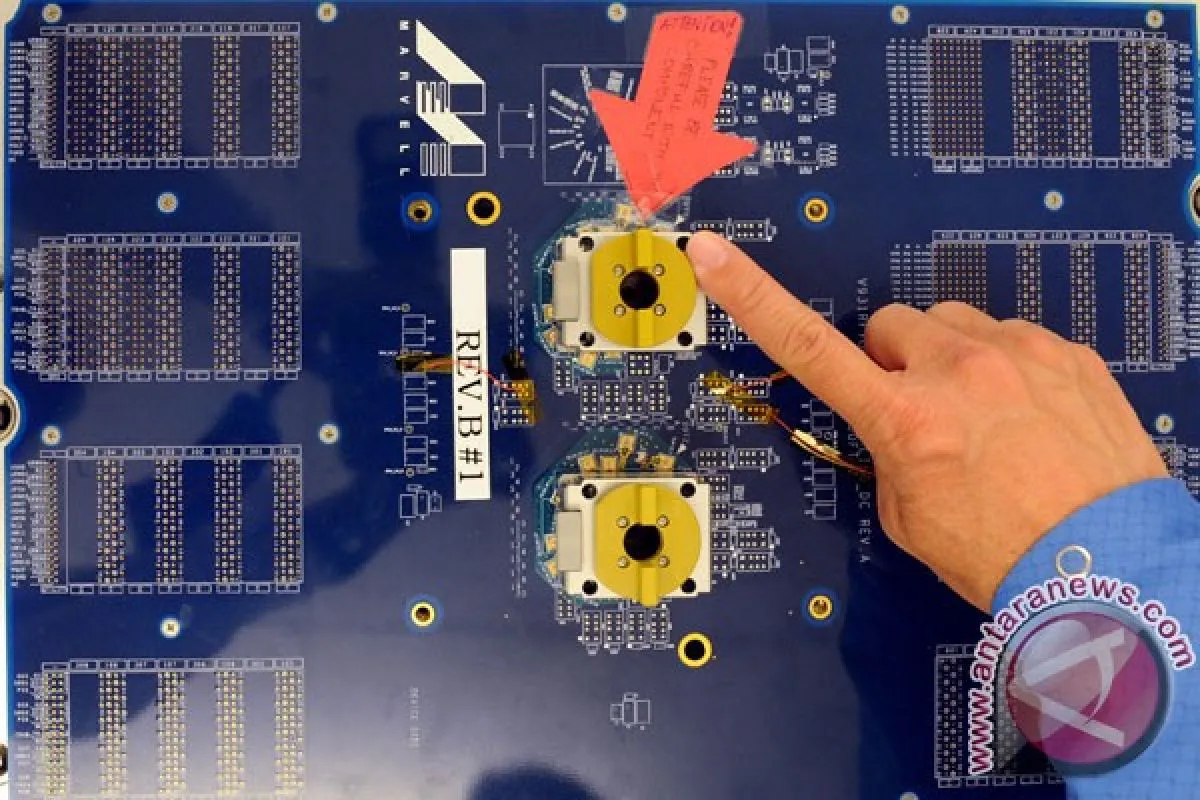
The process allows Indonesia to define its role in the semiconductor supply chain by using investment to build industrial capabilities rather than treating capital inflows as an end in themselves.
Indonesia does not need to compete in every stage of semiconductor production. It needs to identify areas where existing capabilities can be expanded and where domestic companies can move into higher-value activities.
Deputy Minister of Trade Dyah Roro Esti Widya Putri said Indonesia was pushing for an ASEAN semiconductor roadmap focused on academic research, supply chains, critical mineral infrastructure, complementary investment and harmonized incentives.
The approach is intended to build a complementary regional ecosystem and prevent unhealthy competition among ASEAN member states for semiconductor investment, Roro said.
The scale of regional competition is already evident. Thailand has attracted more than US$26.8 billion in investment applications for semiconductor and advanced electronics projects from 2023 through mid-2026. Of 880 projects submitted, printed circuit board projects accounted for US$9.85 billion.
The figures illustrate the range of locations available to companies placing different parts of their production chains in ASEAN. Costs, incentives, infrastructure, skilled labor, suppliers and proximity to end-user industries all influence those decisions.
Finding a niche
Indonesia already has a foothold in the industry, including assembly and testing facilities linked to global value chains, integrated circuit design companies and downstream industries such as electronics manufacturing services, original equipment manufacturers, and automotive production.
At the same time, semiconductor imports rose from US$2.33 billion in 2020 to US$4.87 billion in January-November 2025.
The combination points to an existing industrial base and substantial demand that domestic production does not yet fully meet. The opportunity is to expand capabilities already connected to industrial users.
The choice of production stages will be important. Chip fabrication requires substantial capital, advanced technology, reliable energy supplies and economies of scale. Design, testing, packaging, selected materials and semiconductor applications are closer to Indonesia’s existing capabilities.
The government has identified chip design as one potential path for developing the national semiconductor industry.
Chip design can connect companies, universities and industrial users, while testing and packaging can expand technical expertise and create demand for local suppliers. Over time, these activities could help companies and engineers move into more complex areas with higher value added.
Related news: Indonesia prepares training centers for green jobs
Building those activities, however, requires a broader industrial ecosystem. Dipo Satria Ramli, an economist at the Center of Reform on Economics Indonesia, said the development of semiconductors and other high-tech industries remained constrained by gaps in ecosystem readiness.
Investors need reliable supply chains, efficient logistics and predictable business and legal conditions, not just tax incentives, he said.
Production facilities also depend on suppliers, laboratories, skilled workers, research institutions and efficient business operations. Without those connections, new investment risks creating facilities with limited links to the domestic economy.
Indonesia’s semiconductor strategy therefore needs to direct investment toward capabilities that can support the next stage of industrial development. Supplier development, research partnerships, technical skills and infrastructure readiness need to develop as part of the same production chain.
Regional competition also shows why workforce development is part of the industrial equation. Malaysia has set a target of 500 billion ringgit in semiconductor investment by 2030 as it seeks to strengthen its position in advanced manufacturing.
Malaysia is also linking its semiconductor ambitions with technical and vocational education, industry training, demand for technicians and the development of skills in artificial intelligence. It has promoted cross-border recognition of technical qualifications through a pilot ASEAN Digital Skills Passport.
Indonesia has begun building its own talent pipeline. A semiconductor training program with Arm trained about 1,000 participants in its first phase and aims to develop at least 15,000 semiconductor talents over three to five years. Participants include students, researchers, recent graduates and technical professionals.
The next task is to connect training with actual industry demand. Its impact will depend on whether the skills developed match available jobs and continue to evolve with changes in semiconductor technology.
Related news: Indonesia to expand vocational training with 19 new centers in 2027
Building regional links
Indonesia’s national priorities can also be connected to a broader division of labor across ASEAN. Member states do not need to develop every capability independently. Specialization in design, manufacturing, testing, packaging, materials and supporting activities could connect production across national borders.
For Indonesia, regional specialization could provide access to capabilities that would be uneconomical to develop alone while creating markets for domestic companies whose capacity is beginning to grow.
That arrangement depends on more than identifying complementary industries. Standards, trade procedures, logistics, workforce mobility, cross-border research and component flows must work together for specialization to become an integrated production network.
The ASEAN semiconductor roadmap could provide a framework for aligning industrial priorities and connecting companies and institutions across the region. For Indonesia, its value will depend on whether the framework helps translate national capabilities into practical links with regional production.
Investment figures and project counts will remain important measures of industrial activity, but they do not show how deeply Indonesia is integrated into the semiconductor supply chain.
Policymakers will also need to examine whether projects create domestic suppliers, more technically demanding jobs, research activity and opportunities for Indonesian companies to serve regional manufacturers.
ASEAN’s semiconductor network is taking shape through investment decisions, workforce development and cross-border production links. Indonesia’s role will depend on whether the capabilities it builds can become commercially useful to manufacturers across the region.
Indonesia does not need to manufacture every type of chip to become relevant to the regional industry.
In an industry built around cross-border production, its position will depend more on whether investment helps build companies, talent and technology that connect Indonesian industry to increasingly complex parts of the regional supply chain.
*Martha Herlinawati Simanjuntak is a journalist at the ANTARA News Agency
Disclaimer: The views and opinions expressed here are those of the author and do not necessarily reflect the official policy or position of the ANTARA News Agency.
Related news: Indonesia calls for stronger ASEAN semiconductor ecosystem
Copyright © ANTARA 2026


