The long-term impact of such spending depends largely on whether manufacturers can use procurement revenue to deepen supply chains, reduce production costs, and build capabilities in upstream industries.
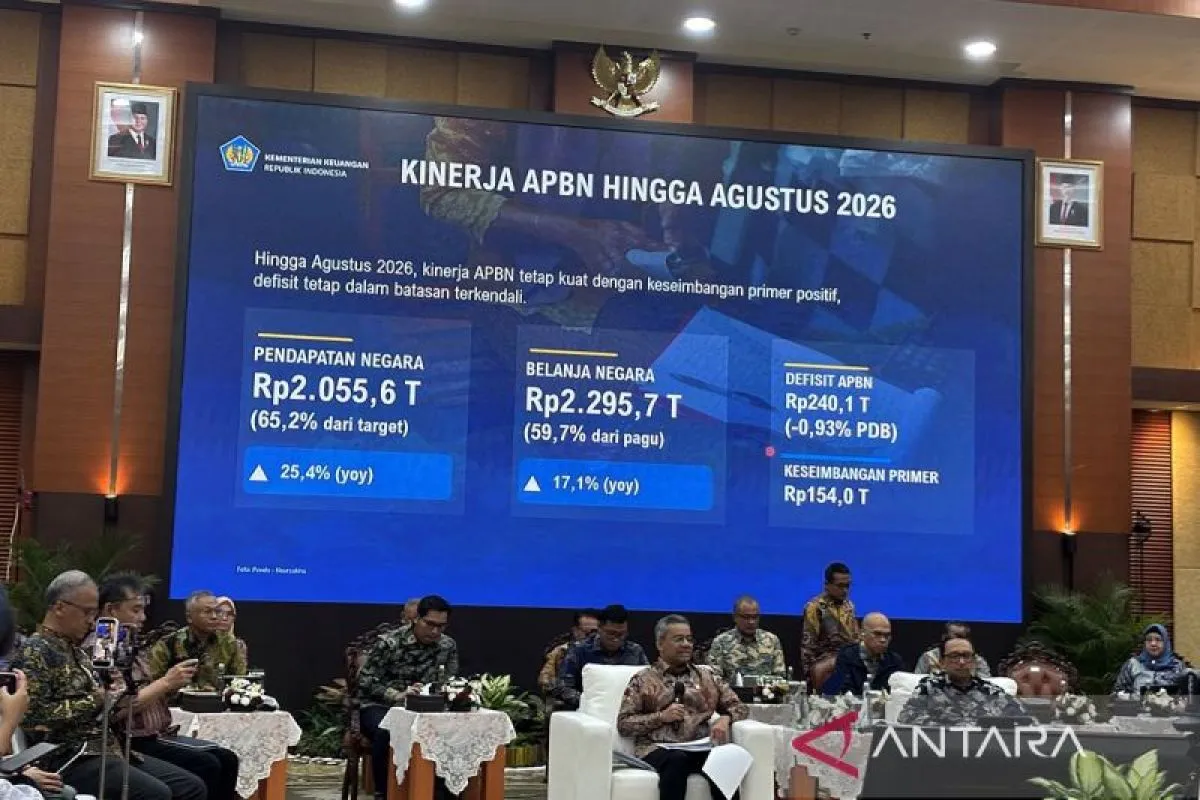
Data from the Ministry of Finance shows that central government spending reached Rp1,791.5 trillion as of August 31, 2026, or 56.9 percent of the Rp3,149.7 trillion state budget allocation.
Goods spending accounted for Rp389 trillion, while capital spending reached Rp159.8 trillion.
These figures underscore the government’s position as one of the largest buyers of goods and services in the domestic market, giving it significant influence over the direction and structure of national industry.
To serve this potential market, more than 57,000 products from 5,600 manufacturing companies had obtained Domestic Component Level (TKDN) certificates as of September 2.
The Industry Ministry said efforts to optimize the Increased Use of Domestic Products (P3DN) policy are focused on increasing domestic manufacturing value added while providing greater market certainty for national industries through government procurement.
Yet the percentage of local content stated in administrative documents does not always reflect the depth of the industrial structure on the ground.
A product may meet the required threshold for domestic content while still relying heavily on imported raw materials, lacking an independent local parts ecosystem, or carrying production costs that are less competitive outside the government market.
Securing demand
Government orders can provide local manufacturers with an initial degree of revenue certainty.
More predictable transactions give companies room to expand factory capacity, upgrade production equipment, and build stronger relationships with local raw material suppliers.
The government procurement market also gives micro and small enterprises opportunities to expand their reach through electronic government purchasing systems.
Purchases from these enterprises totaled Rp113.84 trillion as of June 5, accounting for 43.54 percent of the Rp261.45 trillion in total national goods and services procurement realized at that point.
Market access, however, addresses only part of the production challenge. Small businesses often face limited working capital to purchase raw materials and finance factory operations.
Under government procurement schemes, payments are generally released after goods have been delivered and administratively verified. The time required for administrative processing and payment can therefore constrain cash flow for companies with limited capital.
Another factor is the pattern of budget absorption. If procurement is concentrated toward the end of the year, manufacturers may face a sharp increase in orders over a short period, followed by weaker demand early the following year.
Uneven spending patterns can make it harder for businesses to plan factory capacity, allocate workers, and make long-term investments.
At the same time, preferential treatment for domestic products in government procurement needs to be managed carefully to avoid weakening manufacturers’ incentives to innovate.
While the policy is intended to strengthen local industry, easier access to government buyers without strong competitive pressure could reduce incentives for companies to lower production costs and improve quality.
Such protection could ultimately create dependence, leaving domestic products vulnerable when they compete with commercial goods in open markets.
Deepening value chains
The economic impact of government spending is maximized when procurement transactions generate production activity further upstream in the supply chain.
In the pharmaceutical and medical equipment industries, for example, PT Bio Farma has obtained 29 TKDN and Company Benefit Weight (BMP) certificates for products ranging from vaccines and diagnostic kits to medicines, with domestic content levels ranging from 44.28 percent to 95.03 percent.
The wide variation shows that local content levels still differ significantly among products and do not necessarily indicate independence in raw material supply.
Evi Sylvia, senior institutional relations specialist at PT Bio Farma, emphasized that strengthening domestic production requires manufacturing capabilities to be developed from upstream to downstream, supported by technological know-how and compliance with quality and halal standards.
That commitment to industrial deepening is also reflected in PT Bio Farma President Director Shadiq Akasya’s technology-transfer partnership with Atlantic Lifesciences in Ghana.
The initiative illustrates how technological capabilities and compliance with international quality standards can help national products enter global markets.
A similar upstream-oriented approach is being pursued in the electric vehicle sector through a national roadmap that gradually raises domestic component targets to 80 percent from 2030.
The target is intended to ensure that investment flows do not stop at assembling imported components, but instead encourage the development of factories producing batteries, drive motors, and major components while involving local supply chains.
The success of government procurement policy, therefore, should not be measured solely by the value of transactions completed or the number of certificates issued.
A more comprehensive assessment should track whether new investment is entering upstream raw material industries, whether the number of local parts manufacturers is growing, whether companies are allocating profits to research and development, and whether their products can compete in private markets and exports.
Such evaluation is important because government spending is tied to annual budget cycles and the limits of public finances. When procurement contracts end or government allocations decline, manufacturers still need the resilience to produce high-quality goods at competitive prices for commercial markets.
Government spending is a significant economic stimulus because it is planned and recurring each year.
When managed precisely and strategically, government procurement can do more than meet the operational needs of public institutions. It can deepen manufacturing value chains and help build a nationally rooted, highly competitive industrial base.
*Martha Herlinawati Simanjuntak is a journalist at the ANTARA News Agency
Disclaimer: The views and opinions expressed here are those of the author and do not necessarily reflect the official policy or position of the ANTARA News Agency.
Related news: Indonesia's 2027 spending to exceed Rp4,000 trillion
Related news: Central government spending hits Rp1,791.5 trillion by August
Copyright © ANTARA 2026