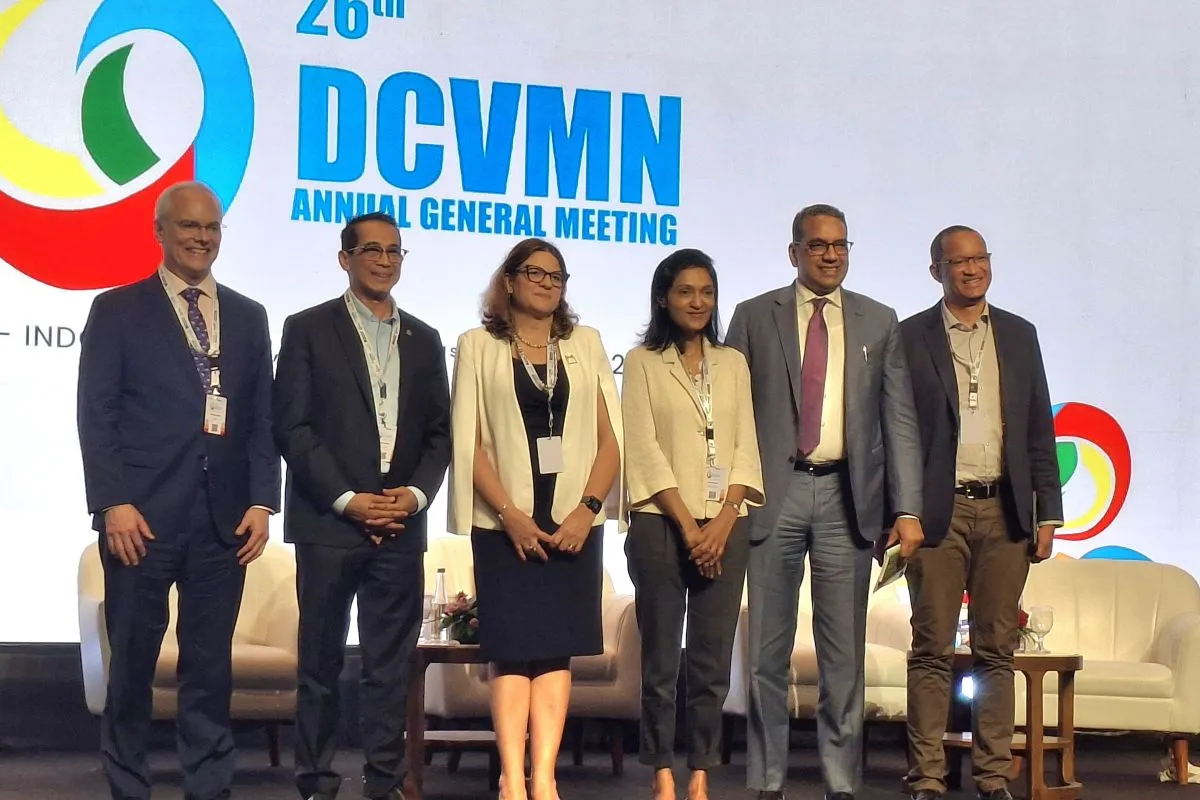
"We need more collaborative problem solving with WHO, Gavi, UNICEF, CEPI, and other donors, finding balanced solutions that protect both public health and industrial viability," said the President Director of PT Bio Farma Shadiq Akasya here on Wednesday (Oct 29).
He made the statement during the CEO Forum session of the 26th Annual General Meeting (AGM) of the Developing Countries Vaccine Manufacturers Network (DCVMN) held in Denpasar, Bali on Wednesday.
Akasya emphasized the importance of vaccines in saving millions of lives, eradicating smallpox, and bringing polio closer to eradication. Manufacturers from developing countries have been at the center of these achievements.
During the COVID-19 pandemic, collaborative efforts have demonstrated that innovation, resilience, and speed can deliver solutions at scale.
However, those manufacturers are also facing serious headwinds, as the WHO pre-qualification process, while essential for quality assurance, has become increasingly demanding.
At the same time, funding reduction from donors is shrinking the global potential market. Lower procurement volumes and tightened pricing are putting intense strain on producers that already operate on thin margin.
"We must move forward with a shared responsibility model where risks, costs, and accountability are distributed fairly across the global partners," he said.
Therefore, he encouraged collaborative problem-solving to find fairer solutions to protect public health and the sustainability of the industry.
Related news: Bio Farma co-hosts 26th DCVMN AGM to strengthen vaccine resilience
Meanwhile, CEO of the Coalition for Epidemic Preparedness Innovations (CEPI) Richard Hatchettalso emphasized the importance of cooperation with all stakeholders to overcome epidemics and pandemics.
"We know that tackling epidemics and pandemics requires vaccines to be rolled out in campaigns that reach all those at highest risk as quickly as possible, regardless of geography or income. And that's why our work with all of you is so important," he said.
In his presentation, he also highlighted the 100-day mission that is at the heart of CEPI's vision, a vision aimed at developing a safe and effective vaccine against an emerging threat within 100 days of identifying a pandemic pathogen.
"With the system we have today, low- and middle-income countries will inevitably bear the brunt of outbreaks, facing delayed access to vaccines, diagnostics, and treatments. CEPI is committed to changing that," he said.
"But we succeed only through our partners, and only if they succeed. And DCVMN members are central to this effort," he added.
DCVMN is a global network comprising 46 vaccine manufacturers from 17 developing countries across Asia, Africa, Europe, and Latin America, including Argentina, Bangladesh, Brazil, China, Ghana, India, Indonesia, Saudi Arabia, Senegal, Serbia, South Africa, South Korea, Thailand, and Vietnam.
The network aims to strengthen the capacity of vaccine manufacturers in developing countries through advocacy, fostering collaborations, increasing wallet share, and professional training on technology advancement, research and development, and knowledge transfer.
With the theme "Advancing Innovation and Building a Resilient Vaccine Ecosystem for a Safer World," the 26th AGM DCVMN 2025 is held to celebrate the progress made by the network's members in strengthening global health security.
Related news: Bio Farma promotes collaboration to build resilient vaccine ecosystem
Reporter: Katriana
Editor: Yuni Arisandy Sinaga
Copyright © ANTARA 2025


