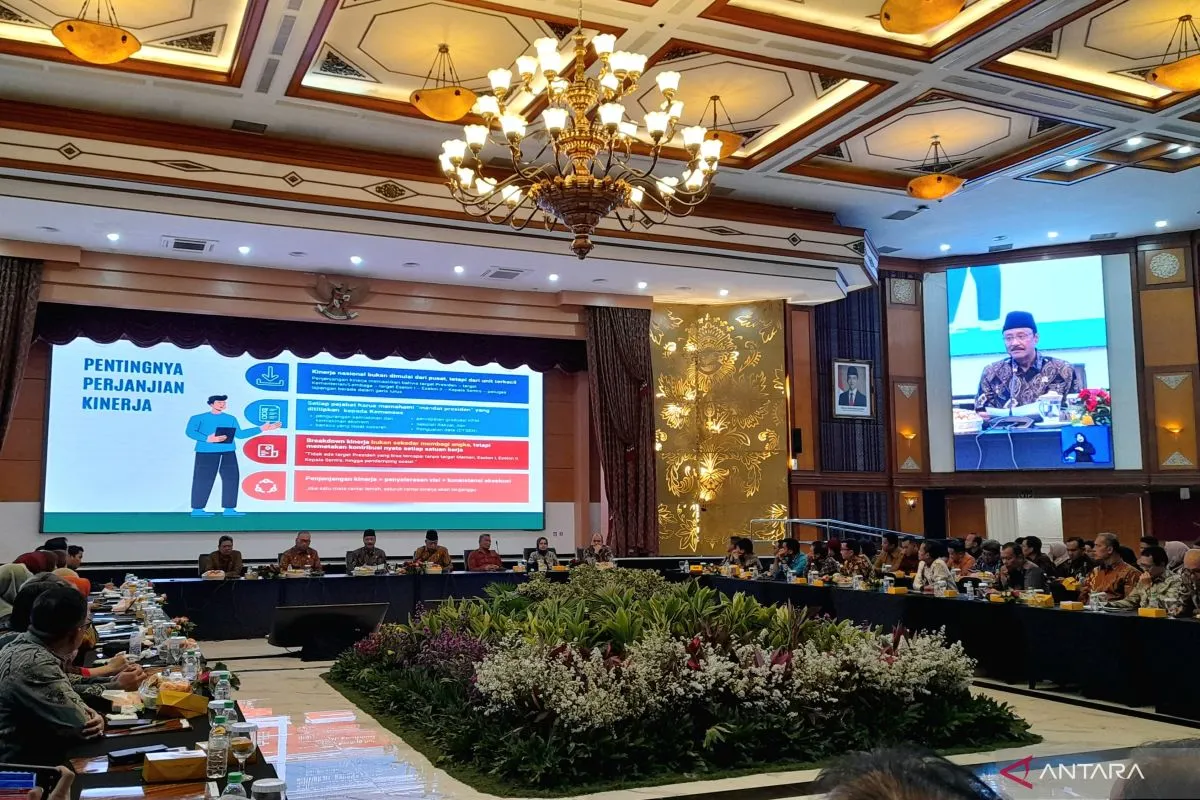
“In line with the President's directive, these centers are expected to open special education services for vulnerable communities. However, this plan is still under discussion as we are preparing the next steps,” he said here on Thursday.
The minister emphasized that every center must optimize services for people in need, ranging from social security and rehabilitation to empowerment for beneficiary families.
“These services should be provided both residually for those staying at the centers and through outreach visits to beneficiaries’ homes. This has been the ongoing practice of our centers, in addition to rapid response measures for specific cases,” he explained.
Yusuf underlined that all services must be based on accurate data, supported by scientific analysis and sound planning to ensure effective implementation, accompanied by continuous supervision and evaluation.
“With such measures, God willing, the results will be effective,” he added.
Earlier, Statistics Indonesia (BPS) Head Amalia Adininggar Widyasanti said the collaboration between BPS and the Social Affairs Ministry marked an important step toward developing a more accurate and useful National Socio-Economic Integrated Data (DTSEN).
She noted that since the second quarter of 2025, the ministry has used DTSEN as the main reference for distributing social assistance, replacing the previous Social Welfare Integrated Data (DTKS).
As of July 31, 2025, BPS recorded 94.2 million verified families out of Indonesia’s 286.7 million population, with 23.85 million individuals classified in the lowest two income deciles or the two poorest groups.
Related news: Inclusive entrepreneurship key to economic independence: Minister
Related news: IDAI promotes WHO's WASHED concept to combat worm infections
Related news: Ministry highlights women's key role in disaster management
Translator: Lintang, Kenzu
Editor: Azis Kurmala
Copyright © ANTARA 2025


